What Furniture Is Included in a Hotel Guest Room? A Complete FF&E Guide
Separate the bed frame, mattress, bedside furniture, desk, seating and storage into individual BOQ lines. Link each product to the room layout and distinguish loose furniture from built-in items so quantities and interfaces can be checked.
Hotel guest room furniture is more than a collection of individual products. Each piece needs to work within the room layout, support daily hotel operations, meet hospitality durability requirements, and contribute to a consistent guest experience.
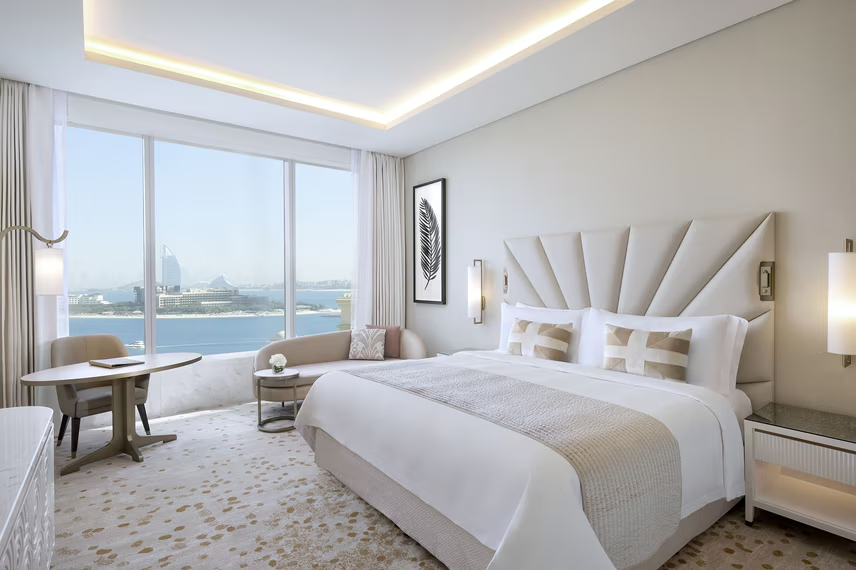
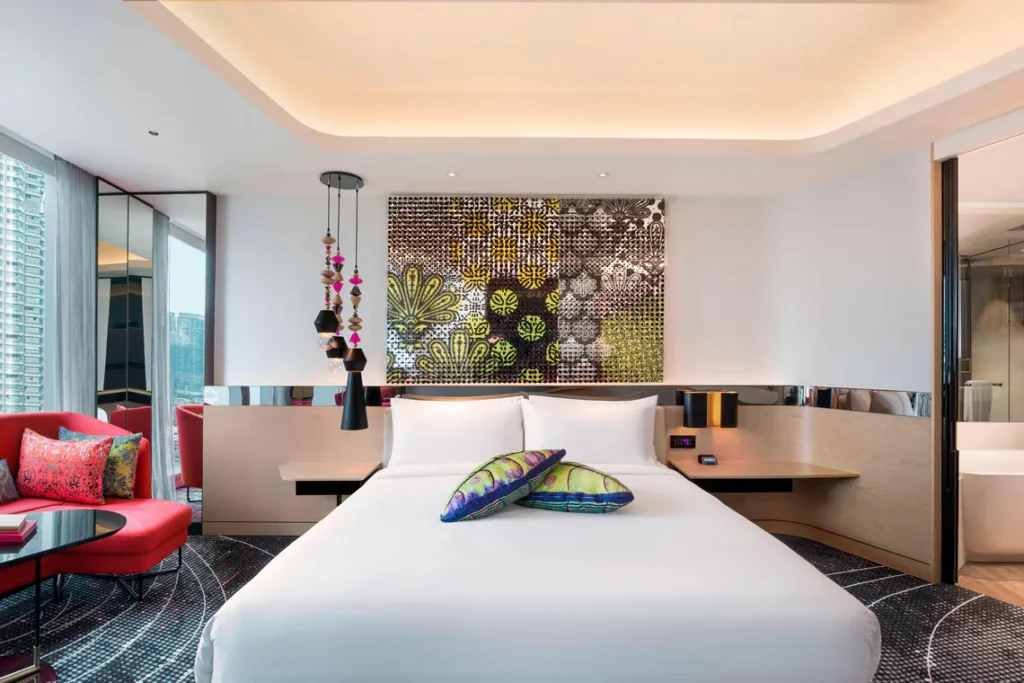
Depending on the hotel positioning and room type, a guest room FF&E package may include beds, headboards, nightstands, wardrobes, desks, seating, luggage benches, minibars, lighting, mirrors, and other furniture and accessories. Suites and luxury hotels typically require a broader range of custom furniture and more complex fixed interior elements.
This guide explains the main furniture included in a hotel guest room, the difference between loose and fixed furniture, and the key considerations when specifying a complete guest room FF&E package.
Count the Room by Item and Function
Separate the bed frame, mattress, bedside furniture, desk, seating and storage into individual BOQ lines. Link each product to the room layout and distinguish loose furniture from built-in items so quantities and interfaces can be checked.
Craftell Home manufactures furniture and coordinates sleep-system and other FF&E supply. Confirm which categories are in the project package instead of assuming that every item shown in a guestroom image is included.
1. Hotel Bed and Bed Base
The bed is the central element of most hotel guest rooms and usually determines the layout of the sleeping area.
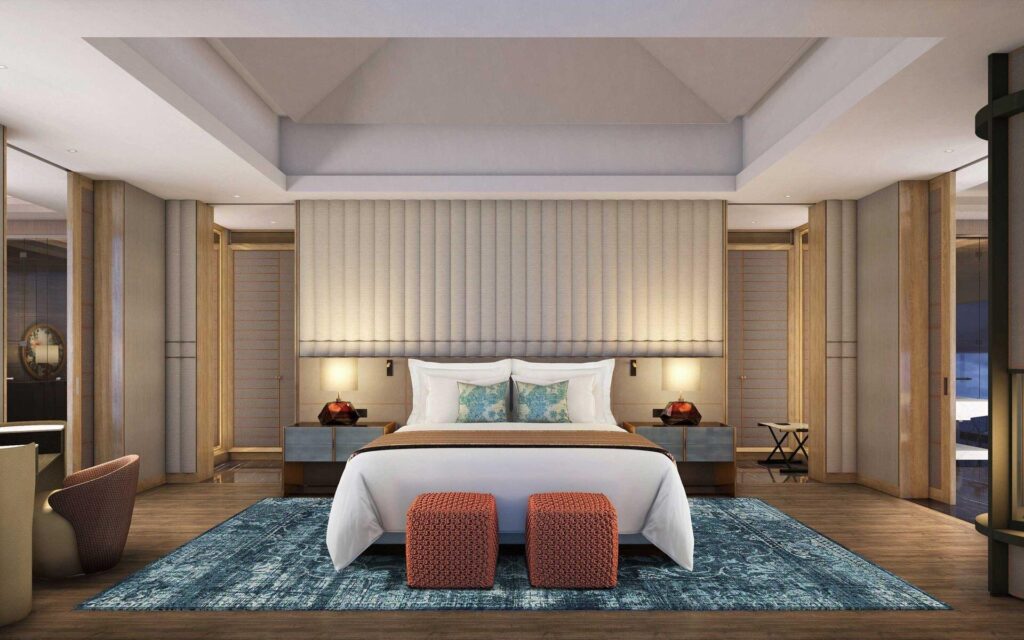
Depending on the hotel standard and room type, configurations may include king beds, queen beds, twin beds, or custom-sized beds. The furniture package may include the bed base, upholstered bed frame, or other decorative structural elements around the sleeping area.
For hospitality use, the bed structure should provide adequate support, stability, and durability while allowing housekeeping teams to maintain the room efficiently.
In luxury guest rooms, bed bases and surrounding furniture are often customized to coordinate with the headboard, nightstands, upholstery, wood finishes, metal details, and overall interior design.
2. Headboard and Bed Wall
The headboard is both a functional and visual feature of the guest room.
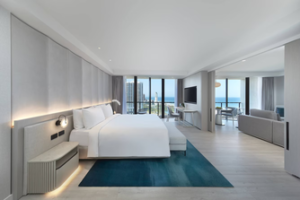
Hotel headboards can range from simple upholstered panels to full-width custom installations incorporating timber veneer, metal details, decorative panels, integrated lighting, power outlets, switches, and bedside controls.
In many upscale and luxury hotels, the headboard is part of a larger fixed bed-wall system rather than a standalone furniture item.
A custom bed wall may combine:
- Upholstered headboards
- Timber or veneer wall panels
- Decorative metal details
- Integrated bedside lighting
- Electrical outlets and switches
- Built-in nightstands
- Decorative shelving
- Acoustic or padded panels
Because these elements interface with walls, electrical services, and room dimensions, they normally require detailed shop drawings and coordination before manufacturing.
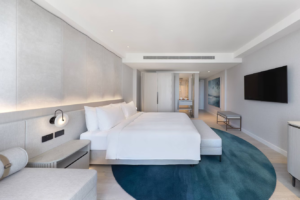
3. Nightstands and Bedside Tables
Nightstands are positioned beside the bed and provide convenient storage and surface space for guests.
Depending on the design, they may be freestanding furniture or integrated into the headboard and wall-panel system.
Common configurations include drawers, open shelving, stone or glass tops, integrated power access, and concealed cable management.
For twin rooms, king rooms, and suites, the number and dimensions of nightstands may vary according to the bed configuration and available space.
From a manufacturing perspective, nightstands should coordinate precisely with the headboard height, mattress level, lighting position, and surrounding wall details.
4. Wardrobe and Closet System
The wardrobe is one of the primary fixed furniture elements in a hotel guest room.
Depending on the hotel category and available space, the wardrobe may include:
- Hanging rails
- Shelves
- Drawers
- Luggage storage
- Shoe storage
- Full-length mirror
- Safe compartment
- Ironing equipment storage
- Integrated lighting
Luxury hotel wardrobes may use timber veneer, lacquer, glass, metal, leather, or other decorative finishes to coordinate with the room interior.
The internal configuration is equally important. Guest convenience, housekeeping access, safe placement, lighting, ventilation, and hardware durability should all be considered during development.
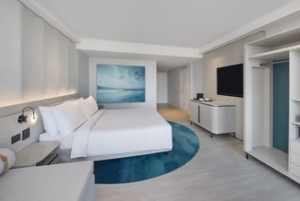
5. Desk, Writing Table and Work Area
Many hotel guest rooms include a desk or writing table that provides a workspace while also functioning as part of the room’s furniture composition.
Depending on the project, the desk may be:
- Freestanding
- Wall-mounted
- Integrated into a TV unit
- Combined with a minibar
- Combined with a vanity
- Built into a wall-panel system
Business hotels may prioritize workspace and connectivity, while luxury resorts may use a lighter console-style writing desk that integrates more subtly into the room.
Desk design should consider chair clearance, power access, cable management, lighting, storage, and the relationship with the TV or surrounding furniture.
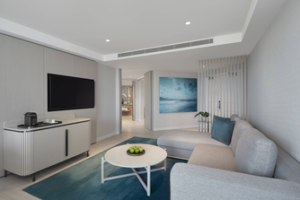
6. Desk Chair or Task Chair
Where a writing desk is provided, a desk chair or task chair is normally included in the guest room FF&E package.
Unlike conventional office seating, hotel desk chairs often need to combine functional comfort with a residential or hospitality appearance.
Upholstery, timber, metal, and leather details may be customized to coordinate with other seating pieces in the room.
For compact rooms, chair dimensions are especially important because oversized seating can interfere with circulation between the desk, bed, and other furniture.
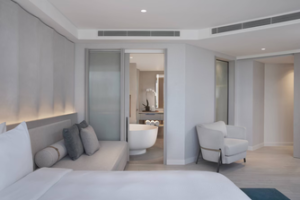
7. Lounge Chair and Side Table
A lounge chair creates a separate seating area within the guest room and is common in upscale and luxury hotels.
Depending on the room size, the arrangement may include one lounge chair with a side table, two lounge chairs with a table, or a larger seating composition in suites.
Guest room lounge chairs should balance comfort, durability, scale, and ease of maintenance.
Common upholstery considerations include fabric performance, seam construction, foam density, cushion support, and cleanability.
The side table should be proportioned to the chair and may incorporate timber, stone, glass, metal, or mixed-material construction.
8. Sofa and Coffee Table
Larger guestrooms, junior suites, and full suites may include a sofa or loveseat.
Depending on the room layout, the seating area may include:
- Two-seat sofa
- Three-seat sofa
- Loveseat
- Modular sofa
- Lounge chairs
- Coffee table
- Side tables
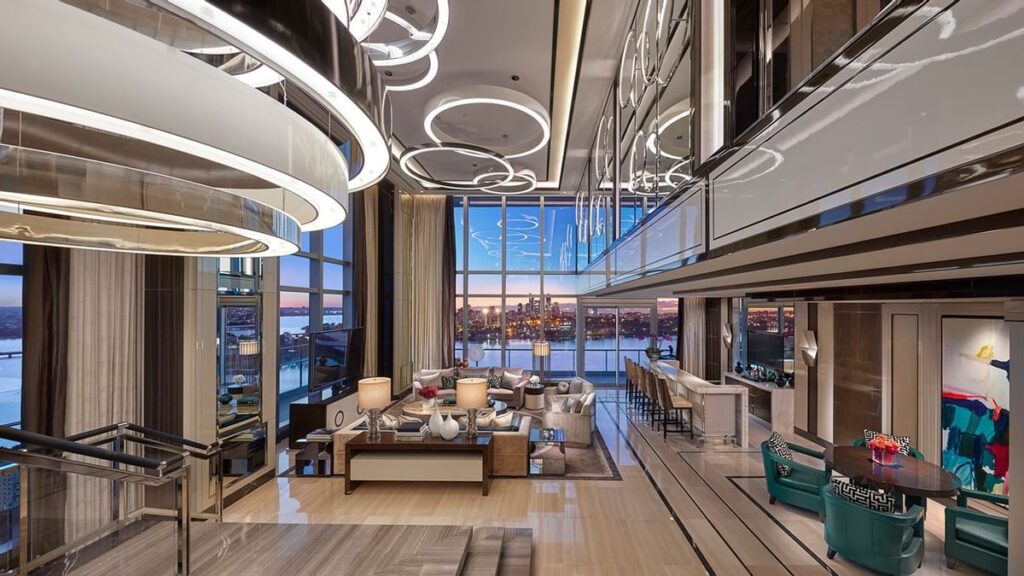
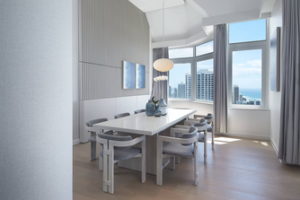
In suites, the living area may develop into a complete furniture group with sofas, lounge chairs, coffee tables, side tables, consoles, decorative lighting, and rugs.
The furniture should maintain visual consistency with the bedroom while also creating a distinct living zone.
9. Luggage Bench and Luggage Rack
A luggage bench provides guests with a convenient place to open and organize luggage without placing suitcases on the bed.
It may be positioned at the foot of the bed, beside the wardrobe, or within the entrance area.
Depending on the interior design, luggage benches can be upholstered, timber-framed, metal-framed, or integrated into fixed cabinetry.
Some designs combine luggage storage with seating, drawers, shoe storage, or open shelving.
Because luggage can be heavy and used frequently, the structure and surface materials should be suitable for repeated commercial use.
10. TV Unit and Media Console
The television area can be configured in several ways depending on the room design.
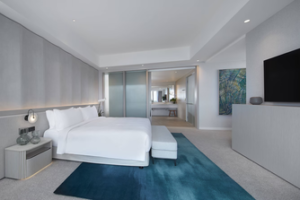
The TV may be wall-mounted above a freestanding console, integrated into decorative wall panels, incorporated into a fixed media unit, or combined with the desk and minibar.
A custom TV unit may include:
- TV panel
- Console
- Drawers
- Open shelves
- Cable management
- Power access
- Decorative panels
- Integrated storage
In luxury projects, the TV wall often forms part of the overall fixed interior package and should coordinate with the bed wall and other architectural finishes.
11. Minibar and Refreshment Cabinet
The minibar is usually integrated into custom cabinetry rather than supplied as a standalone visible appliance.
Depending on the hotel standard, the minibar cabinet may accommodate:
- Minibar refrigerator
- Coffee machine
- Kettle
- Glassware
- Bottled water
- Drawers
- Storage shelves
- Waste bin
- Electrical access
Some luxury hotels incorporate the minibar into a larger decorative cabinet or refreshment center with stone, timber, metal, glass, or integrated lighting.
Ventilation and access for maintenance should be considered during technical development.
12. Vanity and Dressing Area
Some guestrooms and most luxury suites include a dedicated vanity or dressing area.
This may consist of a vanity desk, mirror, stool, drawer storage, decorative lighting, and integrated power outlets.
In compact guestrooms, the vanity may be combined with the writing desk. In larger suites, it may form part of a separate dressing room connected to the wardrobe and bathroom.
The dimensions of the vanity, mirror height, seating position, lighting, and electrical access should all be coordinated during furniture development.
13. Mirrors and Decorative Furniture
Mirrors and decorative furniture help complete the guest room composition.
Depending on the design, this category may include:
- Full-length mirrors
- Decorative wall mirrors
- Console tables
- Decorative cabinets
- Accent tables
- Benches
- Ottomans
- Stools
Although these items may be smaller than the main furniture pieces, their dimensions, finishes, and positioning should still coordinate with the overall room design.
14. Guest Room Decorative Lighting
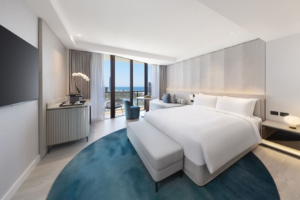
Decorative lighting is an important part of the guest room FF&E package and contributes to both function and atmosphere.
Common decorative lighting may include:
- Bedside lamps
- Wall sconces
- Desk lamps
- Floor lamps
- Pendant lights
- Decorative ceiling fixtures
Lighting should coordinate with the furniture layout, particularly around the bed, desk, lounge area, and vanity.
For custom headboards and fixed wall panels, lighting positions should be coordinated during the shop drawing stage to avoid conflicts with furniture dimensions and electrical services.
15. What Is Included in a Complete Hotel Guest Room FF&E Package?
The exact scope varies by hotel brand, room type, interior design, and procurement strategy, but a typical guest room furniture and FF&E package may include:
Sleeping Area
- Bed base
- Headboard
- Nightstands
- Bedside tables
- Bed bench or ottoman
Seating Area
- Lounge chair
- Sofa or loveseat
- Side table
- Coffee table
Work & Dressing Area
- Writing desk
- Desk chair
- Vanity
- Vanity stool
- Mirror
Storage & Fixed Furniture
- Wardrobe
- Minibar
- TV unit
- Luggage bench
- Storage cabinets
- Wall panels
Decorative & Supporting Items
- Decorative lighting
- Rugs
- Mirrors
- Selected decorative accessories
For suites, the scope may expand significantly to include separate living room furniture, dining furniture, additional fixed cabinetry, decorative lighting, and other FF&E items.
16. Loose Furniture vs. Fixed Furniture in Hotel Guest Rooms
Understanding the difference between loose and fixed furniture is important when defining the procurement scope.
Loose Furniture generally includes movable products such as:
- Lounge chairs
- Sofas
- Coffee tables
- Side tables
- Desk chairs
- Benches
- Ottomans
- Freestanding desks
Fixed Furniture & Joinery may include:
- Headboards
- Wall panels
- Wardrobes
- Minibars
- TV units
- Built-in desks
- Vanities
- Storage cabinets
Fixed furniture usually requires more technical coordination because dimensions must correspond with actual walls, electrical points, flooring, ceilings, and other architectural conditions.
For international hotel projects, fixed furniture can be manufactured in China according to approved shop drawings and site dimensions, while installation can be completed by the client’s local joinery or fit-out contractor.
17. Key Considerations When Specifying Hotel Guest Room Furniture
Selecting guest room furniture should involve more than appearance.
Hospitality furniture is exposed to frequent use and must balance aesthetics with commercial performance. Key considerations include:
- Durability and structural stability
- Guest comfort
- Material performance
- Upholstery cleanability
- Fire and safety requirements
- Ease of housekeeping
- Maintenance and replacement
- Room dimensions and circulation
- Consistency across multiple guestrooms
- Coordination between loose and fixed furniture
- Packaging and installation requirements
For projects involving multiple room types, specifications should also identify differences between standard rooms, twin rooms, king rooms, accessible rooms, junior suites, and larger suites.
Clear room-type schedules help ensure that the correct furniture quantities and configurations are manufactured and delivered for each area.
From Guest Room Specification to Project Delivery
A complete hotel guest room FF&E package requires coordination between interior design, furniture specifications, technical drawings, materials, samples, manufacturing, quality control, packaging, and installation.
Rather than treating beds, nightstands, wardrobes, desks, seating, and fixed furniture as unrelated products, the complete room should be developed as one coordinated furniture package.
Craftell Home works as a Custom Furniture Manufacturer & FF&E Project Supplier, supporting hospitality projects with custom guest room furniture, public-area furniture, restaurant furniture, fixed furniture and joinery, sleep systems, decorative lighting, and other project-specific furniture solutions.
From furniture schedules and shop drawings through sample development, manufacturing, inspection, export packaging, and delivery coordination, the objective is to maintain consistency across different room types while meeting the design and operational requirements of the hotel.
Hotel Furniture Procurement Questions
What furniture is normally included in a hotel guest room?
A typical hotel guest room may include a bed base, headboard, nightstands, wardrobe, writing desk, desk chair, lounge chair, side table, luggage bench, TV unit, minibar, mirrors, and decorative lighting. Larger rooms and suites may also include sofas, coffee tables, additional lounge chairs, dining furniture, and more extensive fixed cabinetry.
What is included in hotel guest room FF&E?
Guest room FF&E generally includes movable furniture, decorative lighting, rugs, mirrors, and other non-structural items required to furnish and equip the room. The exact scope varies by hotel brand, project specification, and procurement package.
Is a hotel headboard considered loose or fixed furniture?
It depends on the design. A simple standalone headboard may be treated as furniture, while a full-width headboard integrated with wall panels, nightstands, lighting, outlets, or switches is typically developed as part of the fixed furniture or joinery package.
What fixed furniture is commonly used in hotel guest rooms?
Common fixed furniture includes headboards, wall panels, wardrobes, minibars, TV units, built-in desks, vanities, storage cabinets, and other custom joinery integrated into the room.
Do all hotel rooms need a desk?
No. The requirement depends on the hotel positioning, room size, and brand standards. Business-oriented hotels commonly provide a dedicated work area, while some luxury resorts use a smaller writing table, console, or combined desk and vanity.
What furniture is usually added to a hotel suite?
Suites often include a larger living area with sofas, lounge chairs, coffee tables, side tables, consoles, additional storage, and sometimes dining furniture. Luxury suites may also include larger dressing areas, custom bars, additional fixed cabinetry, and more decorative lighting.
How should hotel guest room furniture be selected for commercial use?
Furniture should be evaluated for structural durability, comfort, material performance, ease of cleaning, maintenance, safety requirements, room dimensions, and consistency across multiple rooms. Approved samples and specifications should be established before mass production.
Can all guest room furniture be customized for a hotel project?
Yes. Guest room furniture can be developed according to project drawings, dimensions, materials, finishes, fabrics, room types, and brand requirements. Customization is particularly common for headboards, wardrobes, minibars, desks, TV units, lounge seating, nightstands, and other furniture that needs to coordinate with the interior design.
Material Traceability Reference
Where FSC-certified wood is specified, review the product claim and chain-of-custody documentation against the project requirement. FSC certification addresses forest-based material traceability; it does not replace furniture construction or workmanship inspection.
Published by Craftell Home · Custom Furniture Manufacturer & FF&E Project Supplier
Related hotel furniture project
Our published The St. Regis Dubai, The Palm project describes the supply of loose and fixed furniture, sleep systems, outdoor furniture and decorative lighting. Review the stated supply scope when assessing its relevance to your own project.
This article provides manufacturing and procurement guidance. The final product configuration, acceptance criteria and delivery scope are defined by the approved drawings, specifications, samples and order documents for each project.
Explore Related Hotel Project Resources
Continue with our hotel project solutions and selected hospitality projects.