How to Choose the Right Hotel Furniture Manufacturer for an FF&E Project
Key factors, practical tips, and professional insights to help hotel owners, developers, procurement companies and FF&E teams find a reliable furniture manufacturing partner.
Selecting a hotel furniture manufacturer is not simply a matter of comparing product prices or factory size. For an FF&E project, the manufacturer must be able to translate design specifications into furniture that can be produced consistently, approved efficiently and delivered according to the project schedule.
Hotel projects often involve hundreds of furniture items across guestrooms, suites, lobbies, restaurants, bars, meeting spaces and other public areas. Different materials, finishes, dimensions and construction methods may need to be coordinated within the same project.
For hotel owners, developers, procurement companies and FF&E teams, the right manufacturing partner should therefore be evaluated across the entire project process — from technical development and sampling to manufacturing, quality control, packing and export delivery.
Use a Sample to Test the Proposed Specification
When evaluating a hotel furniture supplier, review a representative upholstered item and a casegood against their drawings and materials. Confirm proportions, workmanship and functional details before treating a catalogue image as an approved product.
At Craftell Home, the residential showroom and custom project factory serve different purposes. Project-specific development and paint finishing take place at the project factory, followed by centralized final acceptance, packing and dispatch.
1. Understand Your Hotel Furniture Scope
Before evaluating manufacturers, the project team should first define what the supplier is expected to provide.
A hotel furniture package may include:
- Guestroom and suite furniture
- Lobby and public-area furniture
- Restaurant, dining, bar and lounge furniture
- Meeting and banquet furniture
- Outdoor furniture
- Headboards, wall panels, wardrobes and minibars
- Bathroom vanities and built-in cabinetry
- Decorative lighting
- Sleep systems and mattresses
Some manufacturers specialize in only one category, while others can coordinate loose furniture, fixed interiors and related FF&E products within the same project. For larger hotel developments, consolidating compatible categories with one manufacturing partner can simplify material coordination, finish matching, quality control and shipment planning.
2. Evaluate Manufacturing Capability
Factory size alone does not determine whether a manufacturer is suitable for a hotel project. A more useful question is: Can this factory repeatedly manufacture customized furniture according to approved drawings, specifications, samples and project schedules?
Important areas to review include woodworking, CNC machining, veneer processing, surface finishing, upholstery production, metal and stone coordination, furniture assembly, hardware installation, quality-control procedures and packing capability.

| Area | What to Review |
|---|---|
| Equipment | CNC, woodworking, finishing, upholstery and assembly equipment |
| Production | Current production organization and workflow |
| Technical Team | Drawing development and engineering capability |
| Materials | Storage, identification and material control |
| QC | Inspection procedures and documentation |
| Samples | Prototype and sample-development capability |
| Packing | Export packaging and product identification |
| Project Experience | Experience with comparable hospitality projects |
3. Review Customization and Technical Development
Most hotel furniture is project-specific. Even when a product appears visually simple, manufacturing may require custom dimensions, materials, finishes, hardware or structural details.
The manufacturer should be able to work from interior design drawings, furniture schedules, reference images, material specifications, BOQs, finish schedules, designer details and approved samples.
The technical team then needs to convert this information into production-ready details, including furniture dimensions, internal construction, joints, hardware, upholstery details, edge profiles, material thicknesses and installation requirements.
This stage is particularly important for fixed furniture and built-in interiors, where furniture dimensions must coordinate with architectural conditions.
4. Check Material and Finish Management
Material coordination becomes increasingly important as the number of furniture items grows. A typical hotel project may combine wood veneer, solid wood, engineered panels, laminate, paint, metal, stone, glass, fabric, leather and decorative hardware.
The manufacturer should be able to identify approved materials clearly and reproduce approved finishes throughout production. For projects involving several hundred rooms, maintaining consistency between different production batches is particularly important.

Typical Approval Process
5. Evaluate Sample Development and Approval
For custom hotel furniture, sample development is one of the most important stages before mass production. A prototype allows the project team to verify whether the manufacturer’s interpretation of the design is correct.
| Item | What Should Be Verified |
|---|---|
| Dimensions | Overall size and proportions |
| Materials | Compliance with approved specifications |
| Finish | Color, texture, sheen and consistency |
| Construction | Structure, joints and stability |
| Upholstery | Foam, fabric, stitching and comfort |
| Hardware | Function, position and finish |
| Appearance | Overall workmanship and design intent |
If changes are required, they should be documented before the sample is re-approved. Once approval is complete, the final sample can serve as a production benchmark.

6. Understand the Quality Control Process
Quality control should happen throughout production — not only when the furniture is ready for shipment.
For casegoods, inspection may focus on dimensions, veneer matching, construction, drawer and door operation, hardware and surface finishing. For upholstered furniture, additional checks may include frame construction, foam specification, fabric alignment, stitching and seating comfort. For fixed furniture, dimensions and installation-related details require particular attention.
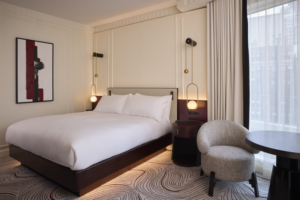
7. Review Project Management Capability
A hotel furniture project is not managed by the production line alone. It requires continuous coordination between the client, designer, procurement team, manufacturer, QC, logistics partners and project site.
The manufacturer should have a project team capable of tracking:
- Furniture schedules and BOQ quantities
- Technical drawings
- Material approvals
- Sample approvals
- Production status
- Quality inspections
- Packing and shipment schedules
Clear documentation is especially important when a project contains many SKUs and multiple room types. Changes should be recorded rather than communicated only through informal messages.

8. Check Production Capacity and Lead Times
A supplier may be capable of producing an excellent sample but still struggle with large-scale production. Buyers therefore need to distinguish between sample capability and mass-production capability.
- What is the planned production capacity?
- How many furniture categories will be produced simultaneously?
- Which processes are completed in-house?
- Which processes are outsourced?
- How will different production batches be controlled?
- How is the production schedule monitored?
- What happens if materials are delayed?
- Is sufficient time allocated for QC and packing?
A realistic schedule is usually more valuable than an unrealistically short promised lead time.
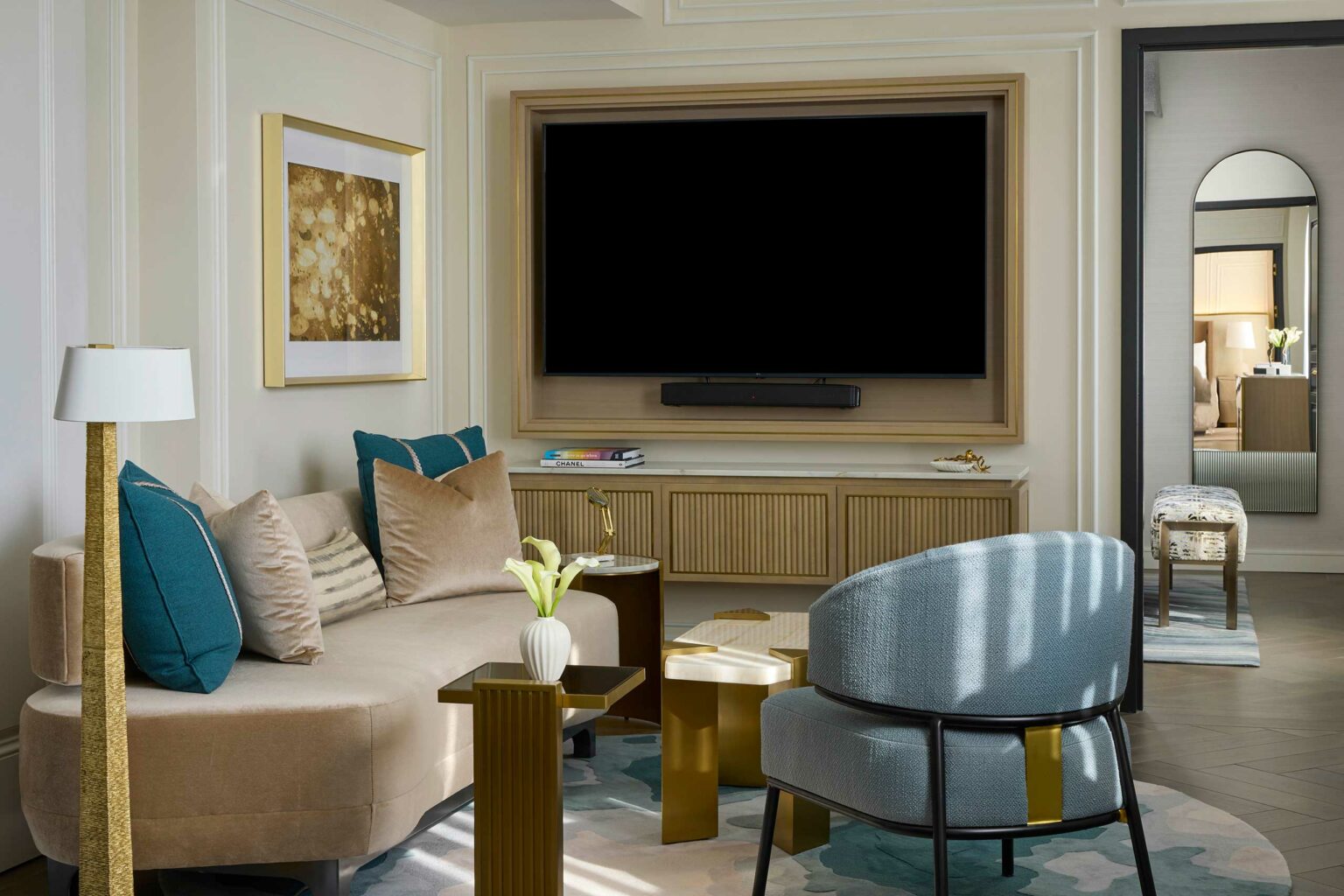
9. Evaluate Packing and Export Delivery
For an overseas hotel project, furniture is not successfully supplied simply because it leaves the production line in good condition. It must also arrive at the destination properly protected and correctly identified.
- Protective wrapping and corner protection
- Cartons and crates where required
- Product labels, room numbers and area identification
- Packing lists
- Container loading plans
- Export documentation and shipment scheduling
Room-by-room or area-by-area labeling can make receiving and installation easier for larger projects. For projects shipped in several containers, shipment sequencing may also need to coordinate with the construction or installation schedule.

10. Questions to Ask Before Selecting a Hotel Furniture Manufacturer
| Area | Questions to Ask |
|---|---|
| Manufacturing | Which furniture categories do you manufacture? Which processes are completed in-house? Can we inspect the production facilities? |
| Technical Development | Can you work from designer drawings and furniture schedules? Do you prepare shop drawings? How are technical changes recorded? |
| Materials | Can you source specified materials or approved alternatives? How are material and finish samples controlled? |
| Sampling | Can you produce prototypes before mass production? How are approved samples used during production? |
| Quality Control | What inspections are performed during manufacturing? Can QC reports be provided? How are non-conforming products handled? |
| Project Delivery | How are products labeled and packed? Can packing be organized by room or area? Do you coordinate container loading and export documentation? |

11. Conclusion
The right hotel furniture manufacturer should provide more than production capacity. For a successful FF&E project, the manufacturing process needs to connect Technical Development → Material Coordination → Sample Approval → Manufacturing → Quality Control → Packing → Export Delivery.
Hotel owners, developers, procurement companies and FF&E teams should evaluate suppliers based on their ability to manage this complete process while maintaining the project’s approved design, specifications, quality requirements and delivery schedule.
Selecting a manufacturing partner on this basis can help reduce avoidable project risks and create a clearer path from design documentation to finished furniture.
Hotel Furniture Procurement Questions
What information should be prepared before contacting a hotel furniture manufacturer?
Before contacting a hotel furniture manufacturer, buyers should prepare the project type, room numbers or area schedule, furniture scope, design drawings, specifications, material requirements, quantities and delivery timeline. Complete project information allows manufacturers to better understand the requirements and provide more accurate quotations and suitable project solutions.
What furniture categories are usually included in a hotel furniture project?
A hotel furniture project may include guestroom furniture, suite furniture, lobby and public area furniture, restaurant and bar furniture, meeting and banquet furniture, outdoor furniture, as well as fixed furniture and custom joinery.
The final supply scope depends on the hotel positioning, design concept and procurement requirements. Some projects may require a complete FF&E package, while others may focus on specific furniture categories.
Why are drawings and material finish approvals important before production?
Approved drawings, material specifications and finish samples are important references before manufacturing begins. They ensure that the final products match the design intent and project requirements.
Before mass production, manufacturers usually confirm product dimensions, construction details, materials, fabrics, finishes, colors and hardware specifications. A clear approval process helps reduce misunderstandings and avoids unnecessary changes during production.
Should hotel furniture samples be approved before mass production?
For customized hotel furniture projects, sample approval is an important step before mass production. Samples or prototypes allow buyers and design teams to review the appearance, materials, comfort, construction details and finish quality before full production starts.
Once approved, the sample can be used as a production reference to maintain consistency across the complete order.
How long does hotel furniture production usually take?
The production timeline depends on the project scale, customization requirements, material availability, sample approval process and order quantities.
Large hospitality projects usually require early coordination because design confirmation, production, quality inspection, packing and international shipping schedules all affect the final delivery timeline.
How can buyers control hotel furniture quality before delivery?
A professional quality control process should cover the complete manufacturing process, from raw material inspection to final shipment inspection.
Manufacturers may conduct checks on materials, production progress, product dimensions, structure, finishes, hardware and final appearance. Quality inspection records help buyers monitor project progress and ensure that products meet the approved specifications.
Can a hotel furniture manufacturer provide customized solutions based on design drawings?
Yes. Custom furniture manufacturers can develop products based on design drawings, renderings, reference images, material specifications, BOQ documents and brand standards.
Through technical development, engineering review, sample approval and production coordination, manufacturers transform design concepts into practical furniture solutions suitable for commercial projects.
Does the furniture manufacturer handle export packing and international delivery?
The service scope depends on the supplier and project requirements. Professional hotel furniture and FF&E suppliers can coordinate export packing, product labeling, packing lists, container loading and export documentation.
Before the project starts, buyers should confirm delivery terms, responsibilities and logistics requirements.
What should buyers evaluate when selecting a hotel furniture manufacturer?
When selecting a hotel furniture manufacturer, buyers should evaluate the supplier’s manufacturing capability, hospitality project experience, customization ability, quality control system, production capacity, export experience and project communication ability.
A suitable manufacturing partner should not only provide furniture production but also support the complete process from design confirmation, sample approval and manufacturing coordination to final project delivery.
What is the difference between hotel furniture procurement and normal furniture purchasing?
Hotel furniture procurement is more than purchasing individual products. It is a complete project coordination process involving design interpretation, technical development, material approval, sample confirmation, manufacturing, quality control, packing and delivery planning.
Compared with standard furniture purchasing, hospitality projects require stronger project management, production coordination and consistency control due to their larger scale and stricter requirements.
How early should a hotel project contact a furniture manufacturer?
Early communication with a furniture manufacturer helps coordinate design feasibility, material selection, budget control, production planning and delivery schedules.
Involving the manufacturer during the early project stage can help identify potential issues, improve communication efficiency and reduce risks before mass production begins.
Published by Craftell Home · Custom Furniture Manufacturer & FF&E Project Supplier
Related hotel furniture project
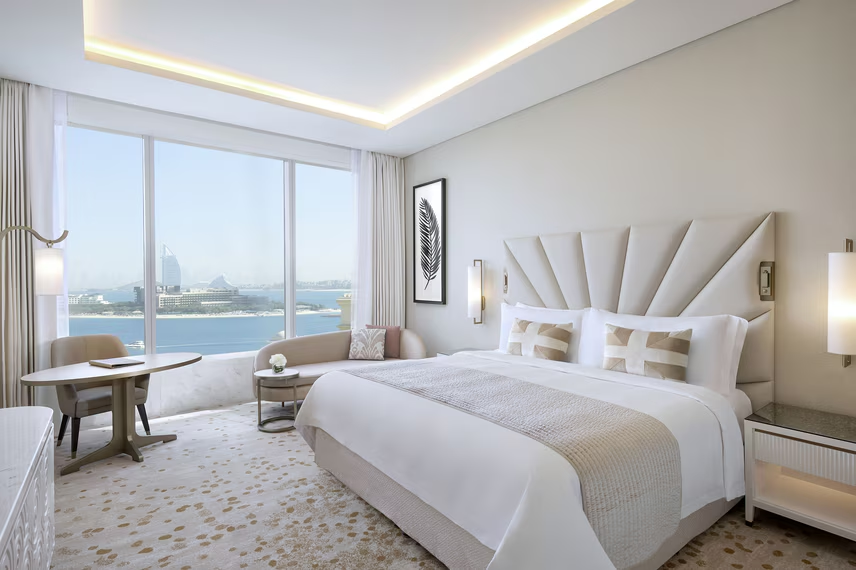
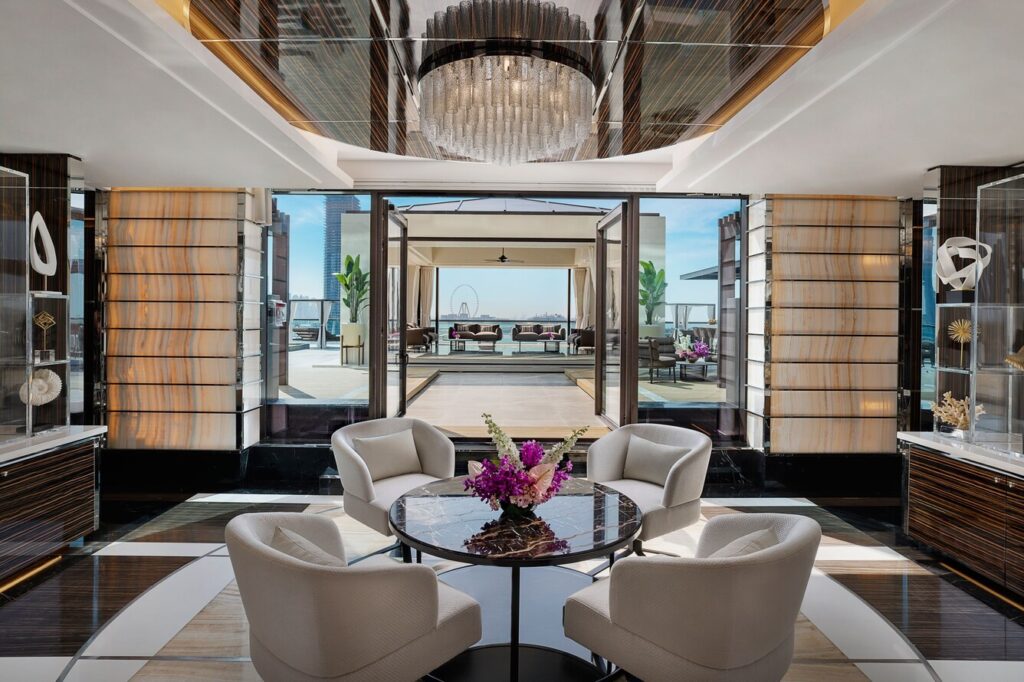
Our published The St. Regis Dubai, The Palm project describes the supply of loose and fixed furniture, sleep systems, outdoor furniture and decorative lighting. Review the stated supply scope when assessing its relevance to your own project.
This article provides manufacturing and procurement guidance. The final product configuration, acceptance criteria and delivery scope are defined by the approved drawings, specifications, samples and order documents for each project.
Explore Related Hotel Project Resources
Continue with our hotel project solutions and selected hospitality projects.