How to Choose a Fixed Furniture Manufacturer for a Project
Ask the manufacturer to explain how a drawing becomes a machining reference, finish sample and final inspection record. Review the same item throughout the discussion. This reveals whether the technical, woodworking, finishing and quality teams are using one approved revision.
Choosing the right fixed furniture manufacturer is an important procurement decision for hotel, luxury residential, apartment, restaurant, retail and commercial projects. Fixed furniture is closely integrated with the architecture, which means manufacturing accuracy, shop drawing capability, material control and dimensional coordination are just as important as appearance.
A manufacturer should be able to translate architectural drawings, interior design specifications and approved finishes into production-ready fixed furniture while maintaining consistency across different project areas. For large international projects, the manufacturer also needs sufficient production capacity, quality control procedures, project-based packing and export delivery experience.
This guide explains the key factors project buyers, developers, contractors, hotel groups and FF&E procurement companies should evaluate when selecting a fixed furniture manufacturer.
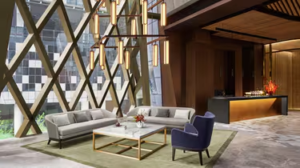
Follow One Joinery Item Through the Factory
Ask the manufacturer to explain how a drawing becomes a machining reference, finish sample and final inspection record. Review the same item throughout the discussion. This reveals whether the technical, woodworking, finishing and quality teams are using one approved revision.
Our custom project factory also provides woodworking support and paint finishing for residential production, with final checking and dispatch handled there. For project evaluation, the useful evidence is the actual process and reference documents for the proposed item; factory size alone does not show how revisions and finish consistency are controlled.
1. Start with the Project Scope
Before comparing manufacturers, define exactly what fixed furniture the project requires.
The scope can include:
| Guest Room Fixed Furniture | Public Area Fixed Furniture |
| Restaurant & Bar Fixed Furniture | Banquet & Meeting Fixed Furniture |
| Spa Fixed Furniture | Custom Joinery & Wall Panels |
A manufacturer suitable for a small wardrobe package may not necessarily have the technical capability or production capacity to manage a complete hotel or commercial fixed furniture package.
The evaluation should therefore begin with the actual project scope rather than individual product photographs.
2. Check the Manufacturer’s Fixed Furniture Categories
A capable fixed furniture manufacturer should be able to manufacture multiple product categories according to project drawings.
For hotel projects, this includes:
| Headboards & Wall Panels | Wardrobes |
| Minibars & TV Units | Built-In Desks |
| Vanities & Storage | Reception Counters |
| Banquettes & Booths | Bar Counters & Back Bars |
| Buffet & Service Counters | Custom Architectural Joinery |
For residential and commercial projects, the scope can also include built-in cabinets, media units, display units, reception furniture, retail fixtures and other project-specific joinery.
A broader manufacturing capability makes it easier to coordinate materials and finishes across the complete project.
3. Evaluate Shop Drawing Capability
Shop drawing capability is one of the most important factors when selecting a fixed furniture manufacturer.
The manufacturer needs to convert design information into detailed production drawings showing:
| Overall Dimensions | Internal Dimensions |
| Construction Details | Material Thickness |
| Joint Details | Hardware |
| Finish References | Architectural Interfaces |
Fixed furniture cannot be manufactured accurately from inspiration images or general design concepts alone.
The technical team should be able to understand architectural drawings, interior elevations, sections, furniture details and specifications before developing manufacturing information.
4. Check Experience with Architectural Interfaces
Fixed furniture interacts directly with the surrounding architecture.
A manufacturer should understand how furniture coordinates with:
| Walls | Floors |
| Ceilings | Skirting |
| Doors & Windows | Columns |
| Electrical Points | Lighting |
| MEP Requirements | Equipment Openings |
For example, a hotel wardrobe may need to coordinate with ceiling height, skirting, electrical outlets, internal lighting and minibar equipment.
These conditions need to be considered before manufacturing begins.
5. Confirm How Site Dimensions Are Managed
Dimensions are particularly important for fixed furniture because many products are manufactured for exact architectural locations.
The manufacturer should clearly understand the dimensional basis used for production.
Critical information can include wall-to-wall dimensions, floor-to-ceiling heights, structural conditions, door openings, ceiling details and service locations.
If site conditions differ from the original architectural drawings, those differences can directly affect the finished furniture.
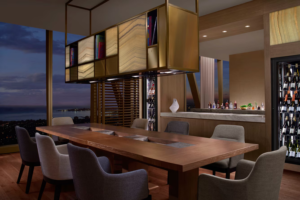
6. Review Material Manufacturing Capability
Fixed furniture frequently combines several different materials within one product.
A manufacturer may need to work with:
| Wood Veneer | Solid Wood |
| Engineered Panels | Laminate |
| Lacquer | Metal |
| Stone | Glass |
| Fabric & Leather | Decorative Hardware |
A reception counter, bar counter or feature wall can combine four or five different materials in one design.
The manufacturer should therefore have experience coordinating different material systems rather than only producing standard panel furniture.
7. Check Finish Management
Finish consistency becomes increasingly important as project quantities increase.
The manufacturer should be able to control:
| Veneer Tone | Veneer Grain |
| Lacquer Color | Gloss Level |
| Metal Finish | Stone Appearance |
| Upholstery Color | Decorative Details |
Approved material and finish references should be clearly identified before production.
For hotel guestrooms, apartments and other repeated spaces, production batches should be controlled so that visible differences between units are minimized.
8. Evaluate Veneer and Woodwork Quality
Wood veneer is widely used in hotel, residential and commercial fixed furniture.
When reviewing a manufacturer, pay attention to veneer selection, grain direction, color consistency, edge treatment and panel matching.
Large wall panels, wardrobes and reception counters can make inconsistencies particularly visible.
The quality of veneer work should therefore be evaluated across complete furniture pieces rather than from small material samples alone.
9. Check Lacquer and Painted Finishes
Lacquered surfaces require consistent preparation and finishing.
Important points include:
| Surface Flatness | Color Consistency |
| Edge Quality | Gloss Consistency |
| Joint Appearance | Surface Defects |
Large quantities of painted fixed furniture should maintain the same approved color and finish standard across different production batches.
This is particularly important when several items appear together within the same room or public area.
10. Review Metal, Stone and Glass Coordination
Fixed furniture increasingly combines joinery with metal, stone and glass components.
A manufacturer should be able to coordinate these materials accurately with the main furniture construction.
For example, a bar counter may combine timber cabinetry, stone worktops, metal details, glass shelving and lighting.
Dimensional tolerances between these materials need to be considered during technical development.
11. Check Hardware Specifications
Hardware affects both functionality and long-term furniture performance.
Typical hardware includes:
| Hinges | Drawer Runners |
| Handles | Locks |
| Sliding Systems | Shelf Supports |
| Hanging Systems | Door Hardware |
The manufacturer should be able to work according to specified hardware requirements and integrate the selected components into shop drawings and production.
Hardware should not be treated as an afterthought after cabinet construction has already been determined.
12. Evaluate Construction Details
Two fixed furniture products can look similar externally while using very different internal construction.
Review how the manufacturer approaches:
| Panel Construction | Joint Strength |
| Structural Support | Edge Treatment |
| Load Requirements | Hardware Fixing |
| Internal Reinforcement | Long-Term Durability |
Construction should be appropriate for the product type and intended use.
Hotel, restaurant and commercial furniture can experience frequent daily use, so structural details need to support long-term project performance.
13. Review Previous Fixed Furniture Projects
Project experience helps demonstrate whether a manufacturer has handled similar technical and production requirements.
Look for projects involving comparable:
| Project Types | Product Categories |
| Material Combinations | Production Quantities |
| Technical Complexity | Finish Requirements |
A manufacturer experienced only in loose furniture should not automatically be assumed to have the same capability in fixed furniture and architectural joinery.
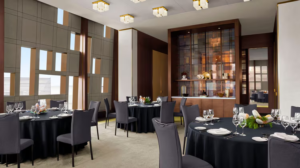
14. Check Experience with Repeated Hotel Guestrooms
Hotel guestroom projects can involve hundreds of repeated fixed furniture items.
A typical room package can contain headboards, wall panels, wardrobes, minibars, TV units, built-in desks, vanities and storage.
The manufacturer needs to maintain dimensional, material and finish consistency across the complete production quantity.
Experience with repeated room types is therefore particularly valuable for large hotel projects.
15. Check Public Area Joinery Capability
Public-area fixed furniture can be more complex than guestroom furniture because individual items are often larger and more decorative.
Reception counters, feature walls, screens and display joinery may combine different materials, curved forms, decorative metalwork, stone and integrated lighting.
The manufacturer should demonstrate the ability to manufacture these elements according to detailed project drawings.
16. Check Restaurant & Bar Joinery Capability
Restaurant and bar fixed furniture has its own functional requirements.
The manufacturer should understand products such as:
| Banquette Seating | Booth Seating |
| Bar Counters | Back Bars |
| Buffet Counters | Service Counters |
| Display Joinery | Feature Joinery |
Bar and back-bar construction can require coordination between cabinetry, equipment, worktops, shelving and decorative materials.
Banquette seating also requires coordination between fixed bases, upholstery, dimensions and restaurant layouts.
17. Evaluate Residential Fixed Furniture Capability
Luxury residential fixed furniture requires close attention to detail and finish coordination.
Typical products include wardrobes, walk-in closets, TV units, built-in cabinets, bedroom headboards, wall panels, vanities and display storage.
The manufacturer should be able to maintain consistent materials and finishes across different rooms while responding to different dimensions and functional requirements.
18. Evaluate Commercial and Retail Capability
Commercial fixed furniture can include reception counters, display units, retail fixtures, built-in storage, meeting-room cabinetry and feature walls.
Retail and showroom projects may also require close coordination with brand design standards and product-display requirements.
A manufacturer serving commercial projects should therefore be comfortable working from detailed design packages rather than relying on standardized furniture models.
19. Review Production Facilities
Fixed furniture production requires appropriate manufacturing equipment and organized production processes.
When reviewing a factory, consider whether it has the capability to handle:
| Panel Processing | Veneer Work |
| Solid Wood Components | Lacquer Finishing |
| Joinery Assembly | Upholstery Where Required |
| Hardware Installation | Final Inspection |
The relevant question is not simply how large the factory is, but whether its production system matches the requirements of the project.
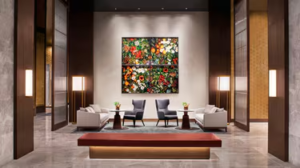
20. Check Production Capacity
Production capacity should be evaluated in relation to the project quantity and schedule.
A large hotel, apartment or commercial development may contain thousands of components across different product categories.
The manufacturer needs to plan material procurement, production batches, inspections, packing and delivery without losing control of item identification or finish consistency.
Ask how the project would be divided into production batches and how progress would be tracked.
21. Understand the Production Workflow
A structured fixed furniture manufacturing process typically follows:
Project Brief → Scope & BOQ → Technical / Shop Drawings → Material & Finish Approval → Production → Quality Control → Project-Based Packing → Export Delivery
The manufacturer should be able to explain how information moves through these stages.
A clear workflow reduces the risk of manufacturing from outdated drawings, incorrect finishes or unapproved specifications.
22. Check Drawing and Revision Control
Fixed furniture projects often involve drawing revisions during technical development.
The manufacturer should have a clear method for identifying:
| Drawing Numbers | Revision Numbers |
| Approval Status | Updated Dimensions |
| Material Changes | Production Release Status |
Manufacturing from an obsolete drawing can affect an entire batch of furniture.
Revision control is therefore an important part of project management.
23. Review Material Approval Procedures
Material approvals should establish clear references for production.
Depending on the project, approvals can cover veneer, lacquer, metal, stone, glass, upholstery and hardware.
The approved references should then be connected to the relevant item codes and production information.
This creates a consistent standard for manufacturing and quality inspection.
24. Evaluate Quality Control
Quality control should take place throughout production rather than only when the furniture is finished.
Important inspection points include:
| Dimensions | Materials |
| Construction | Workmanship |
| Finish Quality | Hardware |
| Function | Item Identification |
For repeated furniture, consistency between different production batches should also be checked.
Quality control records can provide useful traceability before packing and export.
25. Check How Defects Are Managed
Manufacturing problems can occur in any custom furniture project. What matters is how they are identified and corrected.
A manufacturer should have procedures for recording defects, determining corrective action and confirming that corrected products meet the approved requirements.
This is particularly important before products are packed for international shipment, where later corrections become significantly more difficult.
26. Review Project Management Capability
Large fixed furniture projects require coordination between technical, purchasing, production, quality control, packing and logistics teams.
The manufacturer should be able to track:
| BOQ Status | Drawing Status |
| Material Approvals | Production Progress |
| Quality Inspection | Packing Status |
| Shipping Documentation | Delivery Schedule |
Project management becomes increasingly important when several furniture categories are being produced simultaneously.
27. Check Packing Standards
Fixed furniture often contains large finished panels, decorative surfaces, glass, stone, metal components and hardware.
Packing should protect these elements during handling and international transportation.
The packing system should consider:
| Surface Protection | Corner Protection |
| Component Separation | Hardware Protection |
| Package Identification | Project-Area Labeling |
Products should also be packed in a way that allows different packages and components to be identified clearly when they reach the project destination.
28. Check Labeling and Traceability
Large projects can contain many visually similar components.
Each package should therefore be connected to clear project information such as item code, room or area reference, quantity and package number.
The same coding logic should ideally appear across the BOQ, drawings, production records and packing lists.
This improves traceability throughout manufacturing and delivery.
29. Evaluate Export Experience
International fixed furniture projects require more than manufacturing capability.
The supplier should understand export packing, shipping documentation, container planning and international delivery coordination.
Experience with overseas projects is particularly useful when furniture needs to be organized by hotel room, apartment unit, floor, zone or commercial area.
30. Compare Quotations on the Same Scope
A lower quotation does not necessarily represent the same product or manufacturing specification.
When comparing suppliers, confirm that quotations are based on the same:
| Dimensions | Quantities |
| Materials | Finishes |
| Hardware | Construction |
| Product Scope | Packing Requirements |
If one quotation excludes important materials, hardware or components, a direct price comparison can be misleading.
The BOQ and specifications should therefore be aligned before commercial comparison.
31. Ask the Right Questions Before Selecting a Manufacturer
Before placing an order, project buyers should clarify the manufacturer’s technical and production capabilities.
Important questions include:
| Can you develop detailed shop drawings? | Can you manufacture all required fixed furniture categories? |
| How are finishes controlled? | How are drawing revisions managed? |
| How is production quality inspected? | How are project items labeled? |
| How is export packing organized? | What international projects have you completed? |
The answers should relate directly to the requirements of the project rather than general company claims.
32. Look Beyond Product Price
Fixed furniture procurement should not be evaluated on unit price alone.
Technical capability, material control, manufacturing quality, production capacity, project management, packing and delivery all affect the final project outcome.
A lower initial price can lose its advantage if drawings require repeated corrections, finishes are inconsistent, quantities are incorrectly identified or products require replacement.
The objective is to select a manufacturer capable of delivering the specified fixed furniture package consistently.
33. From Project Brief to Export Delivery
A suitable fixed furniture manufacturer should support the manufacturing process from the initial project information through to export delivery.
The workflow should remain clear:
Project Brief → Fixed Furniture Scope & BOQ → Technical / Shop Drawings → Material & Finish Approval → Production → Quality Control → Project-Based Packing → Export Delivery
For international projects, on-site installation is not included in Craftell Home’s scope of supply and is handled by the client or local contractor.
The manufacturer’s responsibility is to ensure that the fixed furniture is developed and manufactured according to approved project information, inspected before shipment, correctly identified and properly prepared for export delivery.
Conclusion
Choosing a fixed furniture manufacturer requires evaluating much more than design appearance or quotation price. The manufacturer needs the technical capability to understand architectural information, develop production drawings, coordinate dimensions and materials, manufacture multiple fixed furniture categories and maintain consistent quality across the project.
For hotel, residential and commercial projects, buyers should evaluate shop drawing capability, material and finish management, construction quality, production capacity, project management, quality control, packing and international delivery experience as part of the same decision.
A clearly defined scope and a structured manufacturing process make it easier to compare suppliers on the same basis and select a manufacturer that can support the actual technical and production requirements of the project.
Fixed Furniture Procurement & Production Questions
What should I look for in a fixed furniture manufacturer?
Look for shop drawing capability, custom joinery manufacturing experience, material and finish control, production capacity, quality control, project management, project-based packing and international delivery experience.
Should a fixed furniture manufacturer provide shop drawings?
For custom project furniture, detailed shop drawings are an important part of technical development. They establish dimensions, construction, materials, hardware, finishes and relevant architectural interfaces before manufacturing.
How can I compare quotations from different fixed furniture manufacturers?
Compare quotations against the same BOQ, dimensions, materials, finishes, hardware, construction requirements, quantities and packing scope. Price comparisons are less meaningful when suppliers are quoting different specifications.
What fixed furniture can be manufactured for hotel projects?
Hotel fixed furniture includes headboards, wall panels, wardrobes, minibars, TV units, built-in desks, vanities, reception counters, banquettes, bar counters, back bars, buffet counters, service counters and other custom joinery.
Can one manufacturer supply fixed furniture for different project areas?
Yes. A manufacturer with suitable technical and production capabilities can manufacture coordinated fixed furniture for guestrooms, public areas, restaurants, banquet spaces, spas, residential interiors and commercial spaces.
Is on-site installation included in the fixed furniture supply?
On-site installation is not included in Craftell Home’s scope of supply. Installation and local fit-out are handled by the client or local contractor.
Published by Craftell Home · Custom Furniture Manufacturer & FF&E Project Supplier
Related fixed furniture project
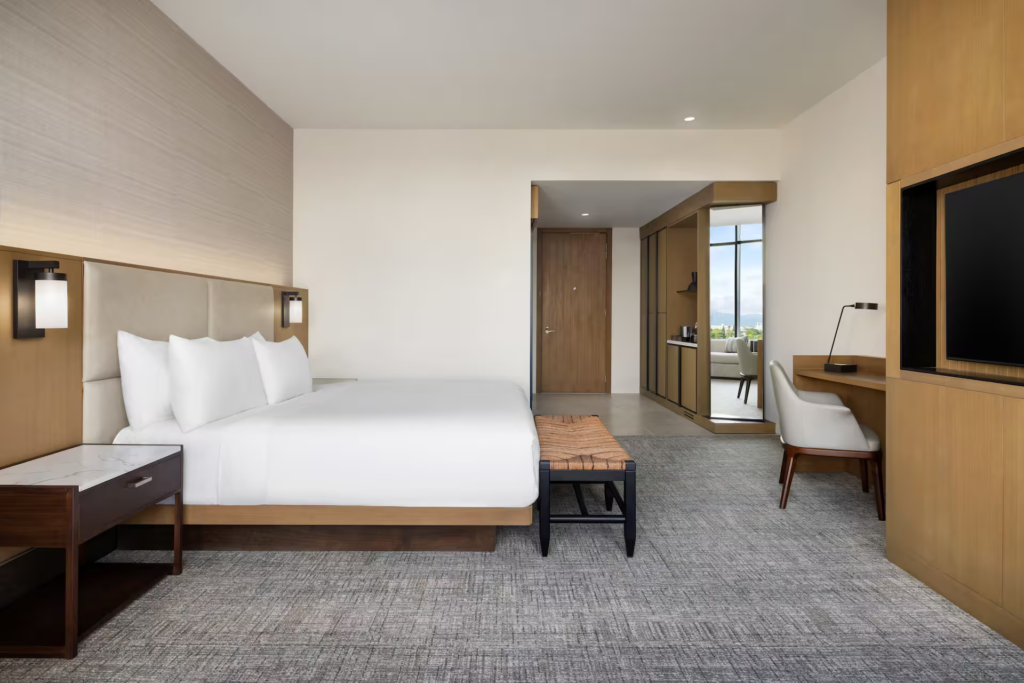
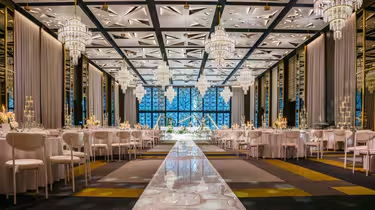
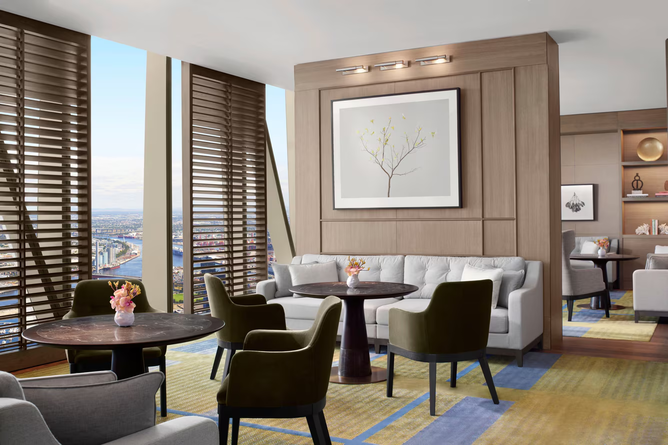
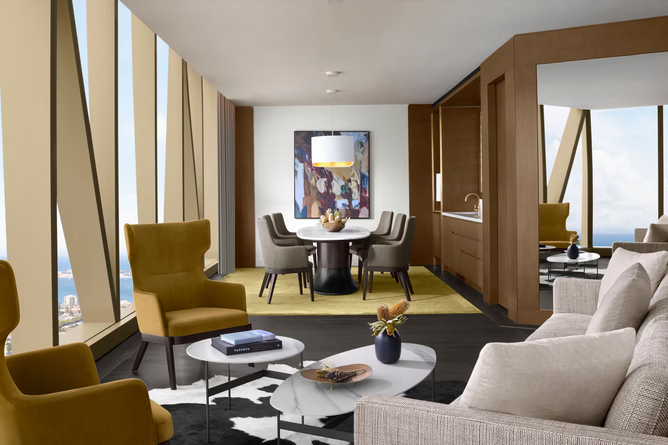
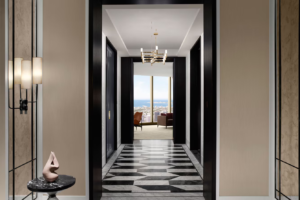
Our published The Ritz-Carlton, Melbourne project describes the supply of custom furniture, fixed furniture and millwork across guestrooms and public areas. Review the stated supply scope when assessing its relevance to your own project.
This article provides manufacturing and procurement guidance. The final product configuration, acceptance criteria and delivery scope are defined by the approved drawings, specifications, samples and order documents for each project.
Explore Fixed Furniture Project Resources
Continue with our fixed furniture solutions and selected fixed furniture projects.