Fixed Furniture vs Loose Furniture: What’s the Difference?
The distinction is not simply whether a product is heavy or can be moved. A freestanding cabinet can still need restraint or service coordination, while a built-in assembly depends on its surrounding construction. Identify the actual fixing and service interfaces for each item instead of relying only on a loose/fixed label.
Fixed furniture and loose furniture are two major furniture categories used in hotel, residential and commercial projects. Although both contribute to the function and appearance of an interior, they differ significantly in how they are designed, manufactured, coordinated and supplied.
Fixed furniture is developed for specific architectural locations and normally requires close coordination with room dimensions, walls, floors, ceilings, finishes and building services. Loose furniture is manufactured as independent furniture pieces that can generally be positioned, moved or replaced without affecting the surrounding architecture.
For developers, hotel groups, contractors, designers and FF&E procurement teams, understanding this difference is important when preparing furniture scopes, BOQs, drawings and procurement packages.
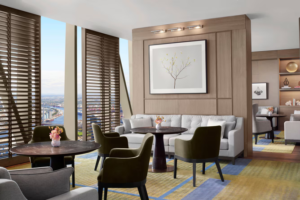
Classify Furniture by Its Interfaces
The distinction is not simply whether a product is heavy or can be moved. A freestanding cabinet can still need restraint or service coordination, while a built-in assembly depends on its surrounding construction. Identify the actual fixing and service interfaces for each item instead of relying only on a loose/fixed label.
This classification affects drawing detail, packing and the information that must be confirmed before production. For example, a bedside table with integrated power needs a clearer component and access specification than a similar table without electrical features. Keep those requirements under the individual item code.
1. What Is Fixed Furniture?
Fixed furniture refers to furniture, cabinetry and custom joinery designed for a specific position within an interior space.
Typical fixed furniture includes:
| Headboards & Wall Panels | Wardrobes & Built-In Storage |
| Minibars & TV Units | Built-In Desks & Vanities |
| Reception Counters | Banquette & Booth Seating |
| Bar Counters & Back Bars | Feature Walls & Screens |
| Display Joinery | Service & Buffet Counters |
These products are normally manufactured according to project drawings, architectural dimensions, material specifications and approved finishes.
Because they interact directly with the surrounding interior, dimensions and architectural interfaces must be considered during technical development.
2. What Is Loose Furniture?
Loose furniture refers to independent furniture pieces that can generally be moved, repositioned or replaced without changing the architectural structure of the space.
Typical loose furniture includes:
| Sofas | Lounge Chairs |
| Dining Chairs | Dining Tables |
| Coffee Tables | Side Tables |
| Bedside Tables | Ottomans |
| Bar Stools | Outdoor Furniture |
Loose furniture is still customized for many hotel, residential and commercial projects, but it does not normally require the same level of architectural integration as fixed furniture.
3. The Main Difference Between Fixed and Loose Furniture
The main difference is how each category relates to the architecture.
| Fixed Furniture | Loose Furniture |
|---|---|
| Designed for a specific location | Manufactured as independent furniture |
| Closely coordinated with architecture | Primarily coordinated with furniture layouts |
| Site dimensions can affect production | Less dependent on exact site dimensions |
| Requires detailed shop drawings | Usually developed from product drawings |
| Often interfaces with building services | Normally has fewer service interfaces |
| Difficult to relocate after completion | Can generally be repositioned |
| Often project-specific joinery | Can be customized or standardized |
This difference affects the entire procurement process, from BOQ preparation and technical drawings to production and packing.
4. Fixed Furniture Is Part of the Interior Architecture
Fixed furniture often forms a visual and functional connection between furniture and architecture.
A hotel headboard can extend across an entire wall. A wardrobe can occupy the full height between floor and ceiling. A reception counter can coordinate with flooring, lighting and feature walls.
These items cannot be considered independently from the spaces where they will be used.
Loose furniture, by comparison, is placed within the completed space rather than integrated directly into the architecture.
5. Loose Furniture Provides Greater Flexibility
Loose furniture provides more flexibility when layouts need to change.
A lounge chair can be repositioned. Dining tables can be rearranged. Sofas can be replaced or moved to another area.
This flexibility is particularly useful in:
| Hotel Lobbies | Restaurants |
| Lounges | Meeting Areas |
| Residential Living Rooms | Outdoor Spaces |
Fixed furniture is generally intended to remain in its designated location.
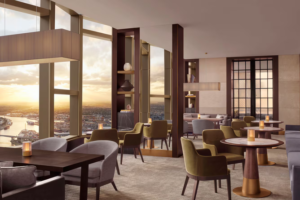
6. Fixed Furniture Requires More Dimensional Coordination
Dimensions have a direct impact on fixed furniture manufacturing.
Important information includes:
| Wall-to-Wall Dimensions | Floor-to-Ceiling Heights |
| Door & Window Positions | Columns |
| Skirting Details | Ceiling Conditions |
| Electrical Points | MEP Locations |
A wardrobe manufactured to incorrect dimensions may not coordinate correctly with the surrounding wall or ceiling conditions.
Loose furniture dimensions remain important for scale, circulation and functionality, but small variations in architectural dimensions usually have less direct impact on manufacturing.
7. Shop Drawings Are Different
Fixed furniture requires detailed shop drawings because the products need to coordinate with architectural conditions.
Fixed furniture drawings typically define:
| Overall Dimensions | Internal Dimensions |
| Construction Details | Material Thickness |
| Joint Details | Hardware |
| Finish References | Architectural Interfaces |
Loose furniture drawings focus more on the product itself, including dimensions, construction, materials, upholstery, finishes and furniture details.
The technical drawing process is therefore different for the two categories.
8. Architectural Interfaces Matter More for Fixed Furniture
Fixed furniture can interface with several architectural elements simultaneously.
For example, a hotel minibar unit can interact with the wall, flooring, electrical supply, lighting, ventilation and equipment dimensions.
A wall panel can interact with doors, sockets, switches and lighting.
A reception counter can coordinate with flooring, electrical points, stone surfaces and surrounding architectural finishes.
These interfaces must be identified before production.
9. Fixed Furniture Often Combines More Materials
Fixed furniture frequently incorporates several material systems within one item.
These include:
| Wood Veneer | Engineered Panels |
| Solid Wood | Lacquer |
| Laminate | Metal |
| Stone | Glass |
| Fabric & Leather | Decorative Hardware |
A hotel bar counter, for example, can combine cabinetry, veneer, stone, stainless steel, glass and lighting.
Loose furniture can also combine multiple materials, but the product normally remains an independent furniture piece.
10. Construction Methods Are Different
Fixed furniture construction focuses heavily on cabinetry, joinery, panels, built-in structures and architectural connections.
Loose furniture construction can involve solid wood frames, metal frames, upholstery, foam, springs, webbing and other furniture-specific structures.
For this reason, a manufacturer experienced in sofas and chairs does not automatically have the same capability in wardrobes, wall panels, reception counters or complex joinery.
The production capabilities required for the two categories overlap in some areas but are not identical.
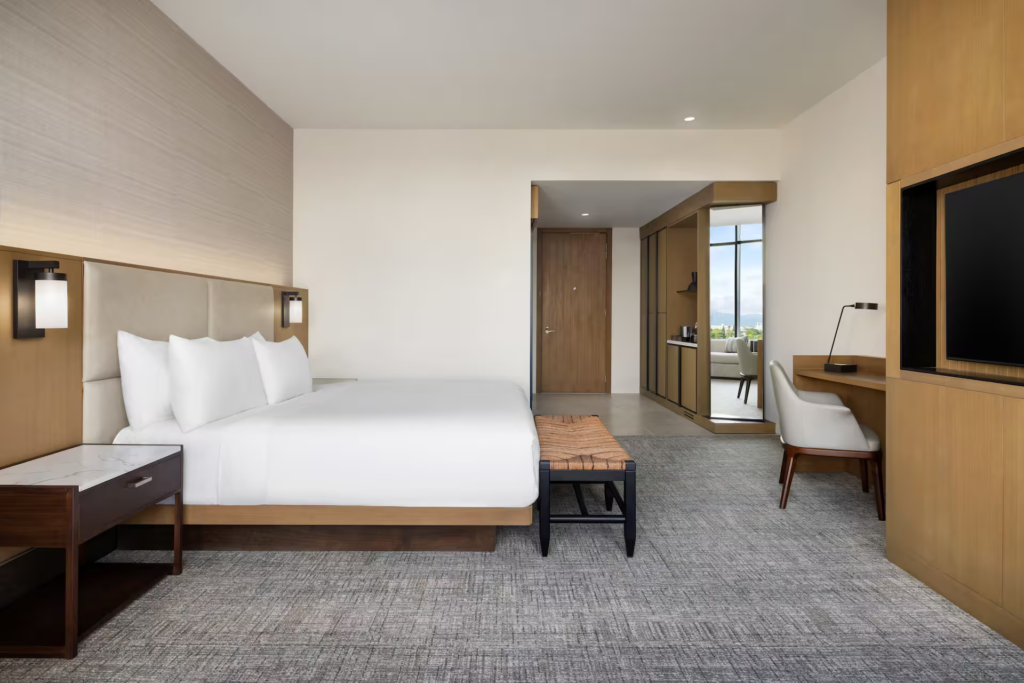
11. Fixed Furniture in Hotel Guestrooms
Hotel guestrooms commonly combine fixed and loose furniture within the same room.
Fixed furniture includes:
| Headboards | Wall Panels |
| Wardrobes | Minibars |
| TV Units | Built-In Desks |
| Vanities | Fixed Storage |
Loose furniture includes:
| Lounge Chairs | Bedside Tables |
| Coffee Tables | Side Tables |
| Dining Chairs | Ottomans |
Both categories should follow the same interior design concept, but their technical development and manufacturing requirements are different.
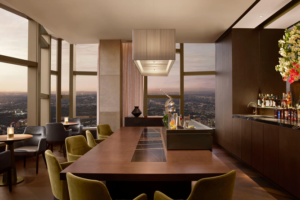
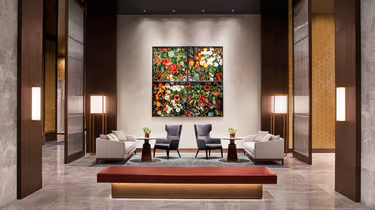
12. Fixed and Loose Furniture in Hotel Public Areas
Hotel public spaces also combine both furniture systems.
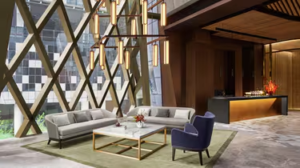
A lobby can include fixed reception counters, concierge counters, wall panels, decorative screens and built-in display units.
The same space can contain loose sofas, lounge chairs, coffee tables, side tables and occasional furniture.
Fixed furniture creates the architectural framework, while loose furniture provides flexible seating and functional arrangements within that framework.
13. Restaurants Use Both Furniture Categories
Restaurants are a good example of why the distinction matters.
Fixed restaurant furniture includes:
| Banquette Seating | Booth Seating |
| Bar Counters | Back Bars |
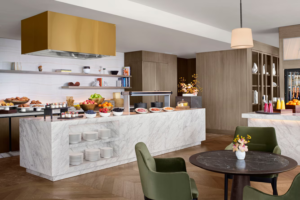
| Buffet Counters | Service Counters |
Loose restaurant furniture includes:
| Dining Tables | Dining Chairs |
| Bar Stools | Lounge Chairs |
| Loose Sofas | Side Tables |
A complete restaurant furniture package can therefore involve both fixed joinery and movable furniture.
14. Luxury Residential Projects Use Both Systems
Luxury villas, apartments and penthouses also combine fixed and loose furniture.
Fixed residential furniture includes wardrobes, walk-in closets, TV units, built-in cabinets, headboards, wall panels, vanities and storage systems.
Loose furniture includes sofas, armchairs, dining tables, dining chairs, beds, bedside tables, coffee tables and occasional furniture.
Coordinating both systems helps maintain consistent proportions, materials, finishes and design language throughout the residence.
15. Commercial Projects Require Clear Classification
Commercial projects can contain a wide range of furniture.
Fixed commercial furniture includes reception counters, built-in storage, display units, retail fixtures, feature walls and meeting-room cabinetry.
Loose commercial furniture includes desks, task chairs, meeting tables, lounge furniture and movable display furniture.
The BOQ should identify the category of each item clearly because the technical development and manufacturing processes can be different.
16. Material Coordination Connects Both Categories
Although fixed and loose furniture are technically different, their materials and finishes often need to coordinate.
For example, the wood veneer used on a hotel wardrobe may need to visually coordinate with loose bedside tables or a desk chair.
Metal finishes used on fixed joinery may also appear on coffee tables, dining chairs or decorative furniture.
A coordinated material schedule helps maintain consistency across the complete furniture package.
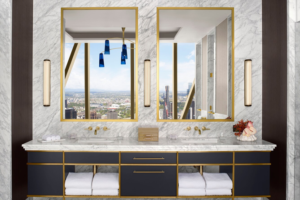
17. Finish Control Is Important for Both
Both fixed and loose furniture require finish control.
Important references include:
| Veneer Tone | Lacquer Color |
| Metal Finish | Stone Selection |
| Fabric | Leather |
| Glass | Decorative Details |
The difference is that fixed furniture often covers larger continuous surfaces, making inconsistencies more visible.
Wall panels, wardrobes and reception counters can occupy significant areas of an interior, so finish consistency becomes particularly important.
18. Hardware Requirements Are Different
Fixed furniture commonly uses cabinetry hardware such as hinges, drawer runners, sliding systems, locks and wardrobe accessories.
Loose furniture may use different functional components depending on the product, including furniture glides, mechanisms, connectors and upholstery components.
Hardware should therefore be specified according to the individual product rather than treated as one standard category across the project.
19. Production Planning Is Different
Fixed furniture production is closely linked to architectural areas, room types and approved dimensions.
Loose furniture production is more commonly organized according to furniture models, quantities, materials and finishes.
For a hotel project, fixed furniture may be grouped by:
| Room Type | Floor |
| Project Area | Joinery Package |
Loose furniture may be grouped by:
| Product Model | Furniture Category |
| Fabric / Finish | Project Area |
Both systems require clear item codes and production tracking.
20. Quality Control Focus Is Different
Quality control requirements overlap, but the inspection priorities differ.
For fixed furniture, particular attention should be given to dimensions, joinery construction, panel alignment, finish consistency, hardware and architectural interfaces.
For loose furniture, inspection may focus more heavily on structural stability, upholstery workmanship, comfort, dimensions, finishes and product functionality.
Both categories should be inspected against approved drawings and specifications.
21. Packing Requirements Are Different
Fixed furniture can contain large panels, cabinetry components, glass, stone and irregular joinery pieces.
Loose furniture may contain upholstered furniture, tables, chairs and other independent products.
Packing should therefore be designed according to the product rather than applying one method to the entire furniture package.
For fixed furniture, component identification is particularly important when several packages combine to form one finished item.
22. Labeling Is Critical for Fixed Furniture
A loose chair can normally be identified as one complete product.
A fixed furniture item may arrive as several separate packages containing panels, doors, shelves, hardware and other components.
Labels should clearly identify:
| Project | Area |
| Room / Unit | Item Code |
| Package Number | Component Reference |
This becomes especially important for hotels, apartments and large commercial developments containing repeated room types.
23. BOQ Structure Should Separate the Categories
The BOQ should clearly distinguish fixed furniture from loose furniture.
A useful structure can include:
| Category | Examples |
|---|---|
| Fixed Furniture | Wardrobes, wall panels, built-in cabinets, reception counters |
| Loose Furniture | Sofas, chairs, tables, bedside tables |
| Outdoor Furniture | Outdoor sofas, loungers, dining sets |
| Sleep Products | Mattresses, duvets, pillows |
| Decorative Products | Lighting, rugs, artwork, accessories |
Clear classification helps procurement teams understand the complete scope and compare quotations more accurately.
24. Pricing Is Calculated Differently
Fixed and loose furniture are not always priced using the same logic.
Fixed furniture pricing is influenced by dimensions, construction, materials, hardware, joinery complexity, finish requirements and quantities.
Loose furniture pricing is influenced by product dimensions, frame construction, materials, upholstery, foam, hardware, finishes and quantities.
For this reason, fixed furniture should not be estimated simply by comparing it with a visually similar loose furniture product.
25. Fixed Furniture Requires Earlier Technical Coordination
Because fixed furniture interacts with architecture, technical information should generally be resolved earlier.
Delays in confirming dimensions, wall conditions, MEP locations or finish details can affect manufacturing information.
Loose furniture can often proceed with fewer architectural dependencies once product drawings, materials and finishes are approved.
This difference should be considered when developing the procurement schedule.
26. Which Furniture Should Be Fixed?
The decision depends on the function of the product and the interior design.
Furniture is generally developed as fixed furniture when it needs to:
| Fit a Specific Architectural Location | Integrate with Walls or Panels |
| Conceal Services or Equipment | Provide Built-In Storage |
| Form Part of an Architectural Feature | Maintain a Permanent Position |
Products that require flexibility or frequent repositioning are generally better suited to loose furniture.
27. Which Furniture Should Remain Loose?
Loose furniture is appropriate when flexibility is important.
This includes furniture that needs to be:
| Repositioned | Reconfigured |
| Replaced Independently | Moved for Cleaning |
| Adapted to Different Layouts | Used in Multiple Locations |
Restaurants, lounges, meeting spaces and residential living areas often benefit from this flexibility.
28. Can Fixed and Loose Furniture Be Supplied Together?
Yes. Many hotel, residential and commercial projects procure fixed and loose furniture as part of a coordinated furniture package.
This can help coordinate:
| Materials | Finishes |
| Dimensions | Design Details |
| Production Schedule | Quality Standards |
| Packing | Export Delivery |
However, the two categories should still remain clearly separated in drawings, BOQs and production documentation because their technical requirements are different.
29. How Should Project Buyers Organize the Furniture Scope?
Start by separating the project into major furniture systems.
Then divide each system by area, product category and item code.
For example:
Guest Room → Fixed Furniture → Wardrobe → GR-WD-01
Guest Room → Loose Furniture → Lounge Chair → GR-LC-01
This structure can then be carried through the BOQ, drawings, production records, quality inspection and packing documentation.
30. Common Procurement Mistakes
Common problems occur when fixed and loose furniture are treated as one undifferentiated furniture package.
Examples include:
| Fixed Furniture Missing Site Dimensions | Unclear BOQ Classification |
| Architectural Interfaces Not Identified | Materials Not Coordinated |
| Wrong Drawing Type Used | Item Codes Are Inconsistent |
| Packing Components Not Identified | Scope Boundaries Are Unclear |
Separating the two categories early makes the project easier to manage.
31. How to Choose the Right Manufacturer
When a project contains both fixed and loose furniture, check whether the manufacturer has the production capabilities required for both categories.
For fixed furniture, evaluate shop drawing development, joinery manufacturing, material coordination, dimensional control and project-based packing.
For loose furniture, evaluate frame construction, upholstery, furniture manufacturing, finish quality and product consistency.
The supplier should be evaluated against the actual scope rather than the number of product categories shown in a catalog.
32. From Furniture Scope to Export Delivery
A coordinated project can follow:
Project Brief → Furniture Scope & BOQ → Fixed / Loose Furniture Classification → Technical Drawings → Material & Finish Approval → Production → Quality Control → Project-Based Packing → Export Delivery
Fixed and loose furniture follow different technical development paths but can be coordinated within the same overall project schedule.
For international fixed furniture projects, on-site installation is not included in Craftell Home’s scope of supply and is handled by the client or local contractor.
Conclusion
Fixed furniture and loose furniture are both essential parts of hotel, residential and commercial interiors, but they perform different roles and require different approaches to technical development and manufacturing.
Fixed furniture is closely integrated with architecture and requires greater attention to dimensions, shop drawings, architectural interfaces and component identification. Loose furniture provides greater flexibility and is generally developed as independent movable products.
For project procurement, the two categories should be clearly separated in the BOQ and technical documentation while remaining coordinated in materials, finishes, design language, production planning and delivery.
Understanding these differences helps project teams define the furniture scope more accurately and establish a more efficient procurement and manufacturing process.
Fixed Furniture Procurement & Production Questions
What is the main difference between fixed furniture and loose furniture?
Fixed furniture is designed for a specific architectural location and is closely coordinated with the surrounding interior. Loose furniture is manufactured as independent furniture that can generally be moved or repositioned.
Is a hotel headboard fixed furniture?
A built-in headboard or headboard wall system is fixed furniture when it is designed for a specific wall location and integrated with surrounding panels, lighting or other architectural elements.
Are wardrobes considered fixed furniture?
Built-in wardrobes designed according to room dimensions are fixed furniture. Freestanding wardrobes that can be moved independently are generally classified as loose furniture.
Is banquette seating fixed or loose furniture?
Built-in banquette and booth seating is generally fixed furniture. Freestanding restaurant sofas or benches that can be repositioned are loose furniture.
Can fixed and loose furniture use the same materials and finishes?
Yes. Coordinating veneer, lacquer, metal, stone, fabric and other finishes across both categories helps create a consistent interior design.
Can fixed and loose furniture be manufactured as part of the same project?
Yes. Both categories can be coordinated within the same project, while maintaining separate BOQs, drawings and technical requirements for each furniture system.
Published by Craftell Home · Custom Furniture Manufacturer & FF&E Project Supplier
Related fixed furniture project
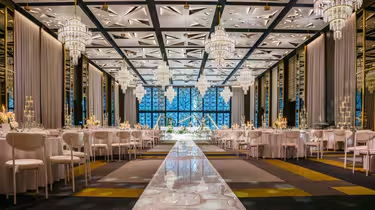
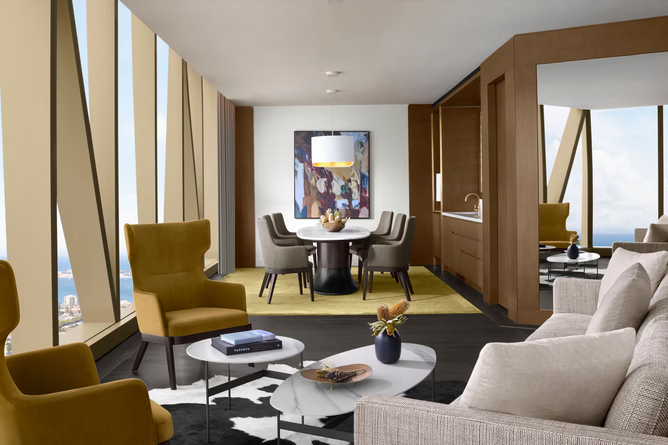
Our published The Ritz-Carlton, Melbourne project describes the supply of custom furniture, fixed furniture and millwork across guestrooms and public areas. Review the stated supply scope when assessing its relevance to your own project.
This article provides manufacturing and procurement guidance. The final product configuration, acceptance criteria and delivery scope are defined by the approved drawings, specifications, samples and order documents for each project.
Explore Fixed Furniture Project Resources
Continue with our fixed furniture solutions and selected fixed furniture projects.