How to Choose a Commercial Furniture Manufacturer for a Project
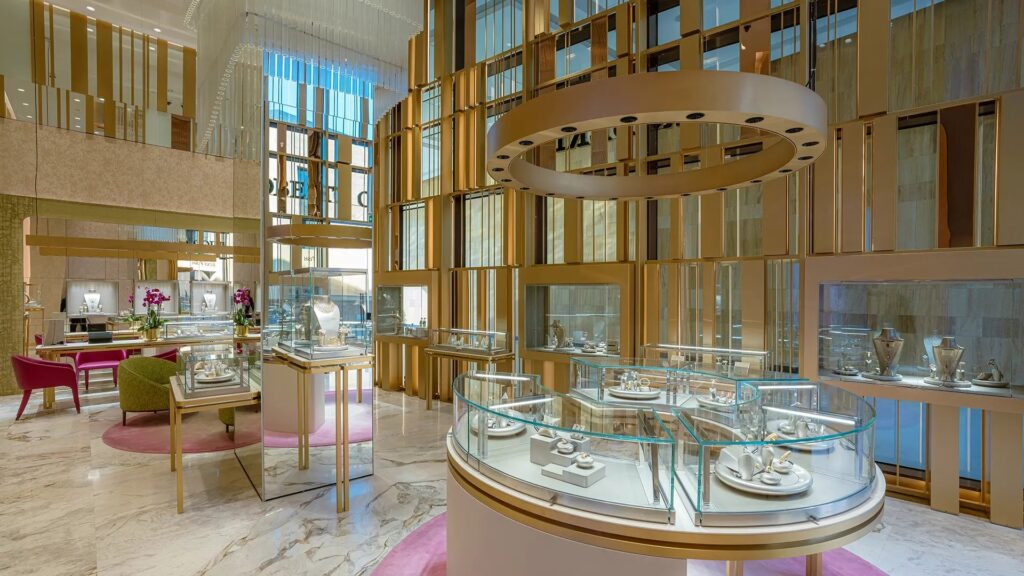
For commercial procurement, compare a physical sample with its construction drawing and material specification. A display cabinet and an upholstered lounge chair need different inspection points; a polished showroom presentation alone does not establish control of both.
Commercial furniture projects often involve multiple spaces, product categories, materials, finishes and custom requirements. Offices, retail stores, showrooms, reception areas and other commercial environments may require loose furniture, fixed interiors and custom-built products to be manufactured under one coordinated project specification.
For developers, procurement companies, contractors, brands and project buyers, selecting the right commercial furniture manufacturer requires more than comparing product appearance and unit prices. Manufacturing capability, technical development, material and finish control, production capacity, quality control, packing and export delivery all affect the final project result.
This guide explains the key factors to evaluate when selecting a commercial furniture manufacturer for an international project.
Assess the Product and Factory Together
For commercial procurement, compare a physical sample with its construction drawing and material specification. A display cabinet and an upholstered lounge chair need different inspection points; a polished showroom presentation alone does not establish control of both.
Craftell Home’s project factory handles custom development, woodworking support and paint finishing. Final acceptance, packing and dispatch are centralized there, so a factory review should follow the item through those stages.
1. Start with the Commercial Project Type
The first step is to identify the type of commercial project and how the space will be used.
Commercial projects include:
| Corporate offices | Executive offices |
| Retail stores | Brand showrooms |
| Reception areas | Commercial lounges |
| Meeting spaces | Customer areas |
| Display spaces | Shared commercial areas |
Different commercial environments create different furniture requirements.
Office projects usually focus on workstations, executive furniture, meeting furniture, storage and collaborative spaces. Retail and showroom projects place greater emphasis on display furniture, counters, customer seating and feature pieces.
A suitable manufacturer should understand these differences rather than treating every commercial project as a standard furniture order.
2. Define the Complete Furniture Scope
Before evaluating manufacturers, establish exactly what needs to be supplied.
A commercial furniture package includes:
| Desks & worktables | Office & meeting chairs |
| Meeting tables | Reception furniture |
| Sofas & lounge chairs | Coffee & side tables |
| Retail display furniture | Counters |
| Storage furniture | Fixed interiors |
Depending on the project, the scope can also include custom joinery, wall panels, screens, built-in storage and other project-specific furniture.
A clearly defined scope allows manufacturers to evaluate the project accurately and helps buyers compare quotations on the same basis.
3. Organize Furniture by Project Area
For larger projects, furniture should be organized according to the actual commercial space.
An office project can be divided into:
| Reception | Executive offices |
| Open work areas | Meeting rooms |
| Conference rooms | Breakout areas |
| Lounge areas | Storage areas |
A retail or showroom project can be divided into:
| Entrance | Product display areas |
| Customer areas | Consultation areas |
| Sales counters | Lounge areas |
| Feature zones | Back-of-house areas |
This structure creates a clear relationship between floor plans, furniture schedules, BOQ, drawings and final delivery.
4. Review Relevant Commercial Project Experience
A manufacturer should have experience with projects that are technically relevant to your own.
Do not evaluate experience only by the number of projects shown in a portfolio.
Review whether previous projects involved similar:
| Product categories | Project quantities |
| Custom dimensions | Material combinations |
| Fixed interiors | Repeated products |
| Finish requirements | Export requirements |
A manufacturer experienced only in standard office desks may not have the same capability required for a luxury retail flagship combining veneer, stone, metal, glass and custom joinery.
Relevant manufacturing experience is more important than simply having a long project list.
5. Evaluate Custom Furniture Manufacturing Capability
Commercial spaces frequently require furniture designed specifically for the project.
Custom manufacturing includes:
| Project-specific dimensions | Custom construction |
| Custom materials | Custom finishes |
| Upholstery | Metal details |
| Stone & glass details | Project-specific hardware |
The manufacturer should be able to manufacture according to drawings, specifications and approved materials rather than limiting the project to standard catalog dimensions.
This is particularly important for reception desks, executive furniture, retail displays, counters and feature furniture.
6. Check Technical Drawing Capability
Technical development is one of the most important capabilities to evaluate.
Design drawings and renderings communicate design intent, but manufacturing requires much more detailed information.
Production drawings should define:
| Overall dimensions | Internal construction |
| Material specifications | Finish references |
| Edge details | Joinery |
| Hardware | Upholstery details |
For products combining wood, metal, stone or glass, drawings should also clearly show how the different materials connect.
Technical drawings create the bridge between design information and factory production.
7. Check Loose Furniture Manufacturing Capability
Commercial projects often contain a broad range of loose furniture.
Typical categories include:
| Desks | Meeting tables |
| Office chairs | Meeting chairs |
| Sofas | Lounge chairs |
| Coffee tables | Side tables |
| Consoles | Storage furniture |
A manufacturer supplying multiple categories should be able to maintain consistent dimensions, materials and finishes across the complete package.
This becomes especially important when different products share the same veneer, metal finish, upholstery or design language.
8. Evaluate Office Furniture Capability
For office projects, furniture must support both functional requirements and the overall workplace design.
Office furniture includes:
| Executive desks | Worktables |
| Meeting tables | Conference tables |
| Task chairs | Meeting chairs |
| Credenzas | Storage cabinets |
| Sofas | Lounge furniture |
Furniture dimensions should be coordinated with room layouts, circulation, workstation planning and functional requirements.
For executive offices and premium corporate environments, material quality and finish consistency are also important parts of the project specification.
9. Evaluate Retail and Showroom Furniture Capability
Retail and showroom projects often require a higher level of customization because furniture forms part of the customer experience and brand presentation.
Typical products include:
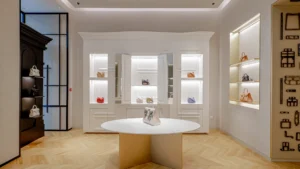
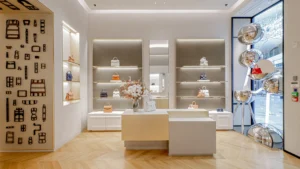
| Display tables | Display cabinets |
| Product shelving | Sales counters |
| Consultation tables | Customer seating |
| Feature furniture | Storage units |
These products can combine decorative finishes with demanding functional requirements.
The manufacturer should be able to reproduce approved materials and details consistently across both feature pieces and repeated furniture.
10. Evaluate Reception and Lounge Furniture
Reception and lounge spaces often create the first impression of a commercial environment.
Furniture includes:
| Reception desks | Sofas |
| Lounge chairs | Coffee tables |
| Side tables | Consoles |
| Waiting benches | Feature furniture |
These areas frequently combine multiple materials and custom finishes.
The manufacturer should therefore demonstrate strong capability in woodworking, upholstery, metal fabrication and mixed-material furniture production.
11. Review Fixed Interiors and Custom Joinery Capability
Commercial projects frequently combine loose furniture with fixed interiors.
Fixed interior products include:
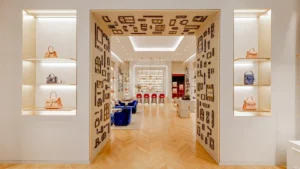
| Reception counters | Built-in storage |
| Display joinery | Wall panels |
| Feature walls | Decorative screens |
| Service counters | Custom cabinets |
Unlike loose furniture, fixed products must coordinate closely with architectural dimensions and surrounding finishes.
Drawings should clearly identify dimensions, materials, construction and site interfaces before manufacturing begins.
On-site installation is not included in Craftell Home’s scope of supply and is handled by the client or local contractor.
12. Evaluate Mixed-Material Manufacturing
Commercial furniture increasingly combines several materials within a single product.
For example:
Reception Counter → Veneer + Stone + Metal + Glass
Display Table → Painted Panels + Metal + Stone
Lounge Chair → Timber + Metal + Upholstery
Each material has different manufacturing tolerances and finishing requirements.
The manufacturer must understand how these materials connect structurally while maintaining clean joints, consistent gaps and the intended appearance.
13. Review Woodworking and Veneer Quality
Wood and veneer are widely used across commercial furniture and fixed interiors.
Important details include:
| Veneer selection | Grain direction |
| Edge treatment | Joinery |
| Surface preparation | Stain consistency |
| Lacquer quality | Internal construction |
For repeated products, veneer color and grain variation should remain within the approved project standard.
Poor veneer management can create visible differences between furniture pieces even when the same material specification is used.
14. Review Metal, Stone and Glass Capability
Commercial furniture often requires specialist materials beyond timber.
Metal components should be checked for:
| Material thickness | Welding quality |
| Structural stability | Joint finishing |
| Plating | Powder coating |
Stone and glass require control of thickness, edge treatment, support structure and protection during packing.
When these materials are combined within one furniture item, the manufacturer should coordinate them during technical development rather than treating them as independent components.
15. Review Upholstery Capability
Commercial sofas, lounge chairs, benches and upholstered seating require both visual quality and suitable construction.
Review:
| Internal frame | Foam construction |
| Fabric / leather | Stitching |
| Piping | Cushion shape |
| Comfort | Appearance consistency |
Fabric direction, pattern alignment and stitching details should be defined where they affect the approved design.
For repeated upholstered products, consistency between pieces is particularly important.
16. Check Material Sourcing Capability
Commercial projects can involve many materials from different suppliers.
These include:
| Wood & veneer | Engineered panels |
| Metal | Stone |
| Glass | Fabric |
| Leather | Hardware |
Before production, the manufacturer should confirm material availability, specification, quantity and lead time.
For imported or project-specified materials, procurement timing should be considered within the overall production schedule.
17. Establish Material and Finish Control
Every approved material should have a clear project reference.
A practical control system is:
Material Code → Supplier Reference → Finish / Color → Approved Reference → Related Products
This prevents ambiguous descriptions such as “dark bronze,” “light oak” or “beige fabric” from becoming the manufacturing standard.
The same approved reference should be used for production and final quality inspection.
18. Check Finish Consistency Across the Project
One finish can appear across many different products and project areas.
For example, the same veneer can be used on:
Reception Desk → Meeting Table → Storage Cabinet → Display Furniture
The manufacturer should control:
| Material | Main Control Point |
|---|---|
| Veneer | Color and grain |
| Paint / Lacquer | Color and sheen |
| Metal | Tone and texture |
| Stone | Approved natural variation |
| Fabric | Color and direction |
| Leather | Color and texture |
Consistency becomes increasingly important when products are manufactured in different production batches.
19. Review Material and Finish Approval
Material approval should be completed before production.
Approved references provide a benchmark for:
| Color | Texture |
| Grain | Sheen |
| Surface quality | Material combination |
Natural materials such as timber, veneer, leather and stone will contain variation.
The acceptable range should therefore be understood before production rather than judged only after furniture is completed.
20. Evaluate Factory Production Capability
Factory capability should match the actual furniture scope.
Review whether the manufacturer can manage:
| Wood furniture | Upholstered furniture |
| Metal components | Mixed-material products |
| Fixed interiors | Repeated furniture |
| Custom products | Project packing |
A large production area alone does not demonstrate project capability.
The important factor is whether the required furniture categories can be manufactured and controlled within one coordinated production system.
21. Review Production Capacity and Scheduling
Production capacity should be evaluated against the quantity and delivery schedule of the project.
A commercial project can include both repeated products and one-off custom pieces.
The manufacturer should therefore be able to coordinate:
| Material procurement | Production scheduling |
| Repeated furniture | Custom furniture |
| Different product categories | Quality inspections |
| Packing | Shipment preparation |
The objective is not simply to manufacture quickly, but to maintain consistent quality throughout the production schedule.
22. Check Production Management
A controlled commercial furniture project should follow a clear sequence:
BOQ → Drawings → Materials → Approvals → Production → Quality Control → Packing → Export Delivery
Each product should remain connected to its item code and approved project information throughout this process.
This allows the manufacturer and project buyer to trace products from the original BOQ through production and delivery.
23. Control Repeated Furniture Before Full Production
Commercial projects frequently contain repeated furniture.
Examples include:
| Office desks | Meeting tables |
| Meeting chairs | Lounge chairs |
| Display units | Storage furniture |
| Side tables | Repeated casegoods |
The first completed product should be checked against approved dimensions, drawings, materials, finishes, hardware and construction before the remaining quantity continues.
This reduces the risk of repeating the same error across an entire production batch.
24. Review Quality-Control Procedures
Quality control should be based on approved project requirements.
Inspection includes:
| Inspection Area | Main Check |
|---|---|
| Dimensions | Width, depth and height |
| Construction | Stability and joints |
| Finish | Color, sheen and surface |
| Upholstery | Fabric, stitching and comfort |
| Metalwork | Alignment and finish |
| Hardware | Model and function |
| Appearance | Damage and cleanliness |
Products that do not meet the approved requirements should be corrected and inspected again before packing.
25. Check Revision Management
Commercial projects often change during design development and procurement.
Revisions can affect:
| Dimensions | Quantities |
| Materials | Finishes |
| Hardware | Furniture layouts |
| Drawings | Delivery phases |
Each revision should identify the item code, revision number, date and approval status.
The manufacturer should ensure that superseded drawings or specifications are not accidentally used for production.
26. Compare Quotations on the Same Specification
Commercial furniture quotations should be compared only when manufacturers are pricing the same scope and specification.
Price differences can result from:
| Internal construction | Material grade |
| Veneer specification | Upholstery |
| Hardware | Metal thickness |
| Stone specification | Finish process |
| Packing standard | Project quantity |
A lower unit price can represent a different material, construction or commercial scope.
For this reason, quotation comparison should begin with specification comparison.
27. Clarify What Is Included in the Quotation
Before placing an order, confirm exactly what the quotation includes.
| Item | Confirm |
|---|---|
| Furniture | Included product categories |
| Quantity | Item quantities |
| Materials | Specification |
| Finishes | Finish standard |
| Hardware | Included where applicable |
| Packing | Export packing |
| Freight | Included or excluded |
| Taxes / Duties | Included or excluded |
| On-Site Installation | Not included |
| Delivery Terms | Clearly stated |
Clear commercial terms reduce disputes later in the project.
28. Evaluate Total Project Cost, Not Only Unit Price
The lowest unit price is not always the lowest project cost.
Commercial furniture sourcing should consider:
Furniture Cost + Quality Risk + Replacement Risk + Coordination Cost + Packing Risk + Delivery Risk
For repeated products, a small manufacturing problem can affect dozens or hundreds of pieces.
Reliable technical development and quality control can therefore have a significant effect on total project cost.
29. Review Export Packing Standards
Furniture should be packed according to the material, finish and transportation risk.
Different products require different protection.
| Product / Finish | Main Protection |
|---|---|
| Timber / Veneer | Surface, edge and corner protection |
| Lacquer | Scratch and abrasion protection |
| Polished Metal | Surface isolation |
| Stone | Rigid protection |
| Glass | Fragile protection |
| Upholstery | Dust and moisture protection |
One packing method should not automatically be used for every furniture category.
30. Check Project-Based Labeling
Every package should be traceable to the project.
A useful label includes:
| Project name | Building / floor |
| Project area | Item code |
| Product name | Package number |
For example:
Project → Level 03 → Executive Lounge → LG-SF-01 → Sofa → Package 128
This makes receiving, sorting and distribution more efficient.
31. Review Packing Lists and Shipment Organization
The packing list should connect each package with the project information.
Important information includes:
| Item code | Product description |
| Quantity | Project area |
| Package number | Package dimensions |
| Weight | CBM |
For larger projects, shipments can be organized by building, floor, project zone or delivery phase where required.
32. Evaluate Export and International Delivery Capability
International commercial projects require more than manufacturing furniture.
The supplier should be able to coordinate:
| Export packing | Packing lists |
| Container planning | Loading records |
| Commercial documents | Shipment information |
| Delivery destination | Project schedule |
Furniture should remain identifiable from factory packing through international delivery.
33. Evaluate Communication and Project Coordination
Commercial furniture projects generate continuous technical and commercial information.
The manufacturer should be able to maintain clear records of:
| Drawing status | Material approvals |
| Quantity revisions | Production status |
| Quality-control status | Packing status |
| Shipment status | Delivery information |
Good communication is particularly important when a project contains many product categories, custom details and different commercial areas.
34. Use a Final Manufacturer Evaluation Checklist
Before selecting a commercial furniture manufacturer, review the complete project capability.
| Relevant commercial experience | Custom manufacturing capability |
| Technical drawing capability | Loose furniture manufacturing |
| Fixed interior manufacturing | Mixed-material capability |
| Material sourcing | Finish management |
| Production capacity | Production management |
| Quality control | Revision control |
| Export packing | Project labeling |
| Container planning | International delivery |
The manufacturer should be evaluated as a project supply partner rather than only as a source of individual furniture products.
Conclusion
Choosing the right commercial furniture manufacturer requires a structured evaluation of the complete manufacturing and supply process.
For office, retail, showroom and other commercial projects, the process should connect:
Project Brief → Furniture Scope & BOQ → Technical Drawings → Materials & Finish Approval → Production → Quality Control → Project-Based Packing → Export Delivery
A capable manufacturer should be able to translate project drawings and specifications into controlled furniture production while maintaining consistency across materials, finishes, dimensions and repeated products.
For project buyers, the objective is not simply to purchase furniture at a competitive unit price. It is to establish a reliable manufacturing and supply process that keeps the project specification traceable from the initial BOQ through final export delivery.
Commercial Furniture Procurement Questions
What information should I prepare before requesting a commercial furniture quotation?
Prepare the furniture BOQ, quantities, floor plans, furniture layouts, available drawings, dimensions, material specifications, finish references, delivery destination and expected project schedule. The more complete the project information, the more accurately the manufacturer can evaluate the scope and quotation.
What types of commercial furniture can be custom manufactured?
Custom commercial furniture includes office desks, meeting tables, reception furniture, sofas, lounge chairs, retail displays, counters, storage furniture, feature pieces, fixed interiors and custom joinery. Dimensions, materials, finishes and construction can be developed according to project requirements.
How should I compare commercial furniture manufacturers?
Compare relevant project experience, manufacturing capability, technical drawing support, material and finish control, production capacity, quality-control procedures, packing standards and international delivery capability. Price should be compared only after confirming that manufacturers are quoting the same specification and scope.
Why are technical drawings important for custom commercial furniture?
Technical drawings define the dimensions, construction, materials, finishes, hardware and interfaces required for manufacturing. They reduce ambiguity between design intent and factory production.
How can finish consistency be controlled across a commercial project?
Use approved material and finish references with clear codes, and apply the same references during production and quality inspection. Repeated finishes should be checked across different products and production batches.
How should repeated furniture be controlled during production?
Repeated products should use the same approved drawings, material references and quality standards. The first completed product should be checked before the remaining production quantity continues.
What should be checked before commercial furniture is packed?
Check item codes, quantities, dimensions, construction, finishes, upholstery, hardware, appearance and QC status. Products should be corrected and re-inspected if they do not meet approved requirements.
Does Craftell Home provide on-site installation?
On-site installation is not included in Craftell Home’s scope of supply. Craftell Home focuses on furniture manufacturing, quality control, packing, export and project delivery. Installation is handled by the client or local contractor.
How should furniture be labeled for a large commercial project?
Package labels should identify the project, building or floor where applicable, project area, item code, product name and package number. The same item-code system should connect the BOQ, drawings, production records and packing list.
What should I check before selecting a commercial furniture manufacturer?
Confirm the manufacturer’s relevant commercial experience, custom manufacturing capability, technical development, material and finish management, production capacity, quality-control process, packing system and international delivery capability.
Published by Craftell Home · Custom Furniture Manufacturer & FF&E Project Supplier
Related commercial furniture project
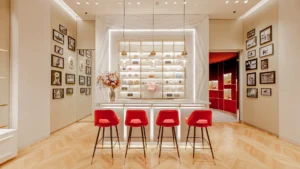
Our published Printemps Doha project describes the supply of custom millwork, retail display furniture and loose furniture. Review the stated supply scope when assessing its relevance to your own project.
This article provides manufacturing and procurement guidance. The final product configuration, acceptance criteria and delivery scope are defined by the approved drawings, specifications, samples and order documents for each project.
Explore Commercial Furniture Project Resources
Continue with our commercial furniture solutions and selected projects.