Custom Office Furniture Buying Guide for Commercial Projects
A desk dimension alone does not establish a usable workstation. Review the proposed monitor, cable routes, storage movement and chair position together. Access to power and data should be defined with the relevant project team before the furniture structure is released.
Office furniture procurement for a commercial project is different from purchasing individual desks or chairs for a small workplace. Corporate offices, headquarters, executive suites and large commercial developments can contain multiple furniture categories, different room types, repeated workstations, custom executive furniture, meeting spaces, reception areas and fixed interiors within one coordinated project.
The furniture must meet functional requirements while remaining consistent with the architectural design, material palette and project specifications.
For developers, procurement companies, contractors and corporate project teams, a successful office furniture package depends on clearly defining the scope, coordinating furniture with the floor plan, controlling materials and finishes, managing repeated products and maintaining consistent quality from production through export delivery.
This guide explains the key considerations when sourcing custom office furniture for commercial projects.
Review Workstations with Their Actual Accessories
A desk dimension alone does not establish a usable workstation. Review the proposed monitor, cable routes, storage movement and chair position together. Access to power and data should be defined with the relevant project team before the furniture structure is released.
For an illustrative mock-up, place the intended accessories and chair around a representative desk, then record the movement and clearance issues found. Confirm any structural or ergonomic performance requirements separately. The purpose is to resolve the actual workstation configuration, rather than assuming all desks with the same width perform identically.
1. Define the Office Project Type
Start by identifying the type of workplace being furnished.
Office projects include:
| Corporate headquarters | Executive offices |
| Commercial offices | Professional offices |
| Open-plan workplaces | Private offices |
| Meeting & conference spaces | Reception & waiting areas |
| Collaborative spaces | Staff lounges |
The furniture requirements for a corporate headquarters can be very different from those of a standard commercial office.
Project type affects furniture quantity, customization level, materials, finishes and overall procurement strategy.
2. Divide the Office into Functional Areas
The furniture scope should follow the actual office layout.
Typical areas include:
| Reception | Executive offices |
| Private offices | Open work areas |
| Meeting rooms | Conference rooms |
| Collaborative areas | Waiting areas |
| Staff lounges | Storage areas |
Organizing furniture by area makes it easier to connect the floor plan, furniture schedule, BOQ, drawings and packing information.
3. Define the Complete Office Furniture Scope
A commercial office furniture package includes more than desks and task chairs.
Typical categories include:
| Executive desks | Workstations |
| Meeting tables | Conference tables |
| Task chairs | Meeting chairs |
| Credenzas | Storage cabinets |
| Reception furniture | Sofas |
| Lounge chairs | Coffee & side tables |
| Fixed interiors | Custom joinery |
The final scope should reflect the project drawings and actual procurement requirements.
4. Prepare a Furniture BOQ
The furniture BOQ should become the main reference for quotation, production and delivery.
Each item should record:
| BOQ Field | Information |
|---|---|
| Item Code | Unique furniture reference |
| Area | Furniture location |
| Product | Furniture type |
| Dimensions | W × D × H |
| Quantity | Required number |
| Material | Main specification |
| Finish | Finish reference |
| Drawing | Related drawing number |
Using one item-code system throughout the project improves traceability.
5. Coordinate Furniture with the Office Floor Plan
Office furniture cannot be selected independently from the architectural layout.
Furniture dimensions should be checked against:
| Room dimensions | Circulation |
| Doors | Columns |
| Wall conditions | Workstation planning |
| Meeting capacity | Storage requirements |
| Power locations | Functional clearances |
A desk that works visually in a rendering can still create problems if its actual dimensions interfere with circulation or surrounding architectural conditions.
6. Establish Standard and Custom Furniture Categories
Not every office product requires the same level of customization.
A project can use a combination of:
| Standardized / Repeated | Custom / Project-Specific |
|---|---|
| Workstations | Executive desks |
| Task chairs | Reception desks |
| Meeting chairs | Feature meeting tables |
| Standard storage | Custom credenzas |
| Side tables | Feature lounge furniture |
Standardizing repeated products can improve production consistency, while custom furniture can be concentrated in high-visibility or project-specific spaces.
7. Plan Executive Office Furniture
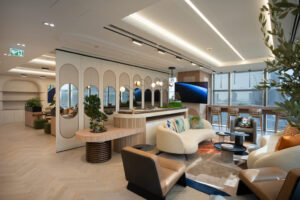
Executive spaces usually require a higher level of customization and material coordination.
Furniture includes:
| Executive desks | Executive chairs |
| Visitor chairs | Credenzas |
| Storage cabinets | Meeting tables |
| Sofas | Lounge chairs |
| Coffee tables | Side tables |
Executive furniture should be coordinated as a complete room rather than purchased as unrelated individual pieces.
Dimensions, materials and finishes should support both function and the overall interior design.
8. Plan Workstations and Open Office Furniture
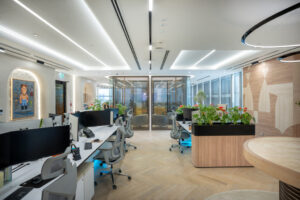
Workstations are often one of the largest repeated furniture categories in an office project.
Important considerations include:
| Workstation dimensions | Number of users |
| Desk configuration | Storage requirements |
| Privacy requirements | Cable management |
| Screen / divider requirements | Chair clearance |
Because workstation quantities can be high, small specification differences can have a significant effect on total project cost.
Dimensions and construction should therefore be finalized before production quantities are confirmed.
9. Plan Meeting and Conference Furniture
Meeting spaces require furniture to match room capacity and functional use.
Typical products include:
| Meeting tables | Conference tables |
| Meeting chairs | Credenzas |
| Side cabinets | Presentation furniture |
Table dimensions should be coordinated with the number of seats and required circulation.
For larger conference tables, structural support, cable management and modular construction can also affect manufacturing and transportation.
10. Plan Reception Furniture
Reception furniture plays both a functional and visual role.
The reception package includes:
| Reception desks | Waiting sofas |
| Lounge chairs | Coffee tables |
| Side tables | Consoles |
| Waiting benches | Feature furniture |
Reception desks frequently combine veneer, painted panels, metal, stone and other materials.
They therefore require detailed technical drawings before manufacturing.
11. Plan Office Lounge and Collaborative Furniture
Modern workplaces often contain informal meeting and collaborative spaces in addition to traditional workstations.
Furniture includes:
| Sofas | Lounge chairs |
| Modular seating | Coffee tables |
| Side tables | High tables |
| Collaborative tables | Casual meeting furniture |
These spaces require a balance between comfort, flexibility and commercial durability.
12. Define Storage Requirements
Office storage should be planned according to both capacity and location.
Products include:
| Credenzas | Filing cabinets |
| Low storage | Tall cabinets |
| Mobile pedestals | Built-in storage |
| Executive storage | Meeting-room storage |
For custom storage furniture, internal configuration is as important as external appearance.
Shelf positions, drawer sizes, doors, locks and hardware should be shown clearly in drawings.
13. Separate Loose Furniture from Fixed Interiors
Office projects can include both movable furniture and architectural fixed products.
| Loose Furniture | Fixed Interiors |
|---|---|
| Desks | Built-in desks |
| Tables | Reception counters |
| Chairs | Built-in storage |
| Sofas | Wall panels |
| Lounge furniture | Screens |
| Freestanding storage | Feature joinery |
The two categories should be identified separately because their technical coordination requirements are different.
On-site installation is not included in Craftell Home’s scope of supply and is handled by the client or local contractor.
14. Develop Technical Drawings Before Production
Custom office furniture requires production-ready drawings.
Drawings should define:
| Overall dimensions | Internal construction |
| Materials | Finishes |
| Edge details | Joinery |
| Hardware | Cable management |
| Upholstery | Mixed-material connections |
For repeated furniture, the approved drawing becomes the manufacturing reference for the entire quantity.
15. Select Materials According to Furniture Use
Material selection should consider where and how the furniture will be used.
Common office furniture materials include:
| Wood veneer | Solid wood |
| Engineered panels | Laminate |
| Painted finishes | Metal |
| Stone | Glass |
| Fabric | Leather |
High-use products and decorative executive furniture can require different material strategies.
The specification should therefore be based on the individual furniture category rather than applying one material standard to the entire project.
16. Control Veneer and Wood Finishes
Veneer is widely used for executive desks, meeting tables, credenzas and storage furniture.
The specification should identify:
| Wood species | Veneer cut |
| Grain direction | Stain color |
| Sheen level | Edge treatment |
| Surface finish | Approved reference |
For large meeting tables or repeated furniture, veneer selection and grain direction can have a significant effect on the final appearance.
17. Coordinate Metal, Stone and Glass
Office furniture increasingly combines decorative materials.
Examples include:
Executive Desk → Veneer + Metal + Leather
Reception Desk → Veneer + Stone + Metal
Meeting Table → Veneer + Metal + Cable Components
Coffee Table → Stone + Metal + Glass
The manufacturer should coordinate material thickness, structural support, joints and finishing during technical development.
18. Select Upholstery for Commercial Office Use
Office lounges, reception spaces and executive areas frequently contain upholstered furniture.
The specification should consider:
| Fabric / leather | Color |
| Texture | Foam construction |
| Stitching | Piping |
| Cushion construction | Expected use |
For repeated seating, fabric direction and upholstery details should remain consistent throughout production.
19. Establish a Project Finish Schedule
A coordinated office interior often uses the same finishes across different furniture categories.
Create controlled finish references for:
| Veneer | Paint |
| Metal | Stone |
| Fabric | Leather |
| Glass | Hardware |
A finish code should connect each material to its approved project reference.
This is more reliable than descriptions such as “dark walnut” or “champagne metal.”
20. Maintain Finish Consistency Across the Office
A single finish can appear in many different areas.
For example:
Walnut Veneer → Executive Desk → Meeting Table → Credenza → Reception Furniture
The manufacturer should maintain the approved visual range across products and production batches.
Important checks include:
| Material | Main Control |
|---|---|
| Veneer | Color and grain |
| Paint | Color and sheen |
| Metal | Tone and texture |
| Stone | Natural variation |
| Fabric | Color and direction |
| Leather | Color and texture |
21. Review Hardware and Functional Components
Hardware affects both furniture function and long-term performance.
Office furniture can require:
| Drawer slides | Hinges |
| Locks | Handles |
| Adjustable feet | Cable covers |
| Power-access components | Connecting hardware |
The hardware specification should be confirmed before production, especially where dimensions affect the internal furniture construction.
22. Plan Cable Management Early
Desks and meeting tables often require coordination with power and data access.
Cable management can affect:
| Desktop openings | Cable trays |
| Access panels | Table structure |
| Leg positions | Internal routing |
| Power-box dimensions | Removable components |
These requirements should be incorporated into technical drawings before manufacturing.
Adding them after furniture construction has already been finalized can create unnecessary modifications.
23. Review Commercial Durability Requirements
Office furniture is often used for many hours each day.
Construction should therefore reflect the expected commercial use.
Review:
| Frame stability | Table structure |
| Edge durability | Surface durability |
| Hardware performance | Upholstery construction |
| Joint strength | Storage function |
Durability should be considered during specification and construction rather than only during final inspection.
24. Evaluate Production Capacity
Office projects can contain large quantities of repeated furniture together with smaller quantities of highly customized products.
The manufacturer should be able to coordinate:
| Workstations | Executive furniture |
| Meeting furniture | Reception furniture |
| Lounge furniture | Storage |
| Fixed interiors | Custom pieces |
Production planning should account for the different manufacturing processes required by each category.
25. Control Repeated Furniture Production
Repeated furniture requires particularly strong production control.
Examples include:
| Workstations | Task chairs |
| Meeting chairs | Side tables |
| Storage units | Repeated desks |
Before the full quantity continues, the first completed product should be checked against the approved drawing, dimensions, materials, finish, construction and hardware.
This reduces the risk of repeating one manufacturing error across a large quantity.
26. Establish Office Furniture Quality Control
Quality inspection should follow the approved project information.
Important checks include:
| Inspection Area | Main Check |
|---|---|
| Dimensions | Approved measurements |
| Construction | Stability and joints |
| Veneer / Paint | Color and surface |
| Metal | Finish and alignment |
| Upholstery | Fabric and stitching |
| Hardware | Function |
| Storage | Doors and drawers |
| Appearance | Damage and cleanliness |
Repeated products should be checked for consistency as well as individual quality.
27. Compare Office Furniture Quotations Correctly
Two office furniture quotations can look similar while being based on very different specifications.
Compare:
| Dimensions | Internal construction |
| Material grade | Veneer specification |
| Finish process | Hardware |
| Upholstery | Metal specification |
| Quantity | Packing standard |
The specification should be normalized before comparing unit prices.
28. Understand What Affects Office Furniture Cost
The main cost drivers include:
Dimensions + Materials + Construction + Finish + Hardware + Upholstery + Customization + Quantity
Repeated workstations can benefit from production efficiency, while highly customized executive or reception furniture can have a higher manufacturing cost per piece.
The overall project budget should therefore be evaluated by furniture category rather than applying one cost assumption across the entire office.
29. Balance Standardization and Customization
Commercial office projects benefit from using customization strategically.
Repeated products can be standardized where appropriate:
| Standardize | Customize |
|---|---|
| Workstations | Executive desks |
| Standard storage | Reception desks |
| Meeting chairs | Feature meeting tables |
| Side tables | Executive credenzas |
| Repeated cabinets | Feature lounge furniture |
This approach helps maintain design identity while controlling complexity across larger furniture quantities.
30. Plan Export Packing by Furniture Type
Office furniture contains different materials and therefore requires different packing methods.
| Furniture / Finish | Protection Focus |
|---|---|
| Veneer furniture | Surface and corners |
| Lacquer furniture | Scratch protection |
| Metal components | Surface isolation |
| Stone | Rigid protection |
| Glass | Fragile protection |
| Upholstery | Dust and moisture |
Hardware and removable components should be secured and clearly identified.
31. Use Area-Based Package Labeling
Large office projects benefit from labeling furniture according to its final destination.
A practical structure is:
Project → Floor → Area → Item Code → Package Number
For example:
Head Office → Level 08 → Executive Office → EX-DK-01 → PKG-086
This helps the receiving team identify where each package belongs.
32. Coordinate Packing Lists and Export Documents
Packing lists should connect every package with the furniture BOQ.
Important information includes:
| Item code | Product description |
| Quantity | Floor / area |
| Package number | Dimensions |
| Weight | CBM |
For international projects, shipment information and commercial documents should also be prepared according to the destination and agreed delivery terms.
33. Review the Complete Procurement Process
A structured office furniture procurement process follows:
Project Brief → Floor Plan → Furniture Scope → BOQ → Technical Drawings → Material & Finish Approval → Production → Quality Control → Packing → Export Delivery
Each stage should use the same project codes and approved information.
This creates traceability from the initial furniture schedule through final shipment.
34. Use a Final Office Furniture Buying Checklist
Before confirming the order, review:
| Complete furniture scope | Final BOQ |
| Approved dimensions | Technical drawings |
| Material specifications | Finish references |
| Hardware | Upholstery |
| Quantities | Production schedule |
| Quality requirements | Packing standard |
| Package labeling | Export requirements |
| Delivery destination | Delivery schedule |
A complete procurement package reduces ambiguity and provides a clear basis for manufacturing.
Conclusion
Custom office furniture procurement should begin with the workplace layout and project requirements rather than with individual product selection.
A successful commercial office package coordinates executive furniture, workstations, meeting furniture, reception furniture, lounge furniture, storage and fixed interiors within one controlled system.
The most effective procurement workflow is:
Office Layout → Furniture Scope & BOQ → Technical Drawings → Materials & Finish Approval → Production → Quality Control → Area-Based Packing → Export Delivery
For project buyers, the objective is to create an office furniture package that meets the functional requirements of each space while maintaining consistent dimensions, materials, finishes and manufacturing quality throughout the project.
Commercial & Office Procurement & Production Questions
What furniture is included in a commercial office furniture package?
A commercial office furniture package includes executive desks, workstations, meeting and conference tables, task and meeting chairs, credenzas, storage furniture, reception furniture, sofas, lounge chairs, coffee tables, side tables, fixed interiors and custom joinery according to the project scope.
What information is required for an office furniture quotation?
Provide floor plans, furniture layouts, BOQ, quantities, product dimensions, available drawings, material specifications, finish references, delivery destination and expected schedule.
Can office furniture be customized according to architectural drawings?
Yes. Custom office furniture can be manufactured according to project drawings, room dimensions, furniture layouts and approved material specifications.
How should office workstations be planned for a large project?
Workstation planning should consider user quantity, desk dimensions, configuration, storage, circulation, privacy requirements, cable management and power access. Repeated workstation types should be clearly coded in the BOQ and drawings.
What should be considered when ordering custom executive furniture?
Review room dimensions, desk size, storage requirements, material combinations, veneer direction, metal details, leather or upholstery, hardware, cable management and coordination with the overall executive-office design.
How can material and finish consistency be controlled?
Use clearly coded approved material and finish references throughout drawings, production and quality inspection. The same veneer, metal, paint, fabric or leather reference should remain within the approved visual range across related products.
How should repeated office furniture be controlled during production?
Use the same approved drawing and specification for every repeated item. The first completed product should be inspected before the remaining production quantity continues.
What affects the cost of custom office furniture?
Cost is affected by dimensions, construction, materials, veneer, metal, stone, upholstery, hardware, finish complexity, customization level, quantity and packing requirements.
Does Craftell Home provide on-site installation for office projects?
On-site installation is not included in Craftell Home’s scope of supply. Craftell Home focuses on furniture manufacturing, quality control, packing, export and project delivery. Installation is handled by the client or local contractor.
How should office furniture be packed for an international project?
Packing should be selected according to furniture type and finish, with protection for surfaces, edges, corners, upholstery, glass, stone and metal components. Packages should be labeled by project, floor, area, item code and package number.
Published by Craftell Home · Custom Furniture Manufacturer & FF&E Project Supplier
Related office furniture project
Our published RP-Sanjiv Goenka Group Corporate Office project describes the supply of workstations, desks, meeting furniture, seating and storage. Review the stated supply scope when assessing its relevance to your own project.
This article provides manufacturing and procurement guidance. The final product configuration, acceptance criteria and delivery scope are defined by the approved drawings, specifications, samples and order documents for each project.
Explore Office Furniture Project Resources
Continue with our office furniture solutions and selected projects.