Best Materials for Commercial Outdoor Furniture: Aluminum, Teak, Rope & More
An aluminium frame still depends on weld quality, surface preparation, coating and compatible fixings. Timber selection also involves the intended appearance, joints and maintenance expectations. Rope and cushion performance cannot be assessed from colour alone.
Material selection is one of the most important decisions in commercial outdoor furniture procurement. Furniture used in hotel pool areas, resort terraces, outdoor restaurants, rooftop lounges and beach clubs is exposed to conditions that indoor furniture does not face, including strong sunlight, rain, humidity, temperature changes and, in coastal locations, salt air.
The correct material should therefore be selected according to the project environment, furniture type, expected usage, design requirements and maintenance conditions. Aluminum, teak, rope, outdoor fabrics, quick-dry foam, stone and other exterior-suitable materials each perform a different function within a complete outdoor furniture system.
For hospitality projects, the objective is not simply to identify one “best” material. It is to create the right combination of frame, surface, upholstery and finishing materials for the intended application.
Compare Material Systems, Not Material Names Alone
An aluminium frame still depends on weld quality, surface preparation, coating and compatible fixings. Timber selection also involves the intended appearance, joints and maintenance expectations. Rope and cushion performance cannot be assessed from colour alone.
Compare each proposed combination against the actual exposure and project specification. Ask which properties are documented and which are assumptions awaiting sample review or testing. Avoid treating a coating label, a timber species or a fabric marketing name as proof that the complete furniture is suitable for every outdoor setting.
1. Start with the Outdoor Environment
Before selecting materials, identify the conditions in which the furniture will be used.
Important factors include:
| UV Exposure | Rain & Humidity |
| Temperature | Coastal Salt Air |
| Poolside Moisture | Wind Exposure |
| Covered or Uncovered Area | Frequency of Use |
A material specification suitable for a covered restaurant terrace does not automatically make it suitable for a beachfront pool deck.
Environmental conditions should therefore be considered before appearance alone.
2. Match Materials to Commercial Use
Commercial outdoor furniture is generally used more frequently than furniture in a private residential setting.
Hotels, resorts and restaurants can have guests using the same furniture throughout the day.
Material selection should therefore consider:
| Structural Stability | Surface Durability |
| Cleaning | Maintenance |
| Moisture Resistance | Finish Performance |
| Comfort | Replacement Requirements |
The complete furniture construction matters as much as the visible material.
3. Aluminum
Aluminum is one of the most widely used frame materials for commercial outdoor furniture.
It is commonly used for:
| Outdoor Sofas | Lounge Chairs |
| Dining Chairs | Dining Tables |
| Sun Loungers | Daybeds |
| Bar Furniture | Side Tables |
Its relatively low weight makes furniture easier to move, while its corrosion characteristics make it suitable for many exterior applications when properly specified and finished.
4. Why Aluminum Works Well for Hospitality Projects
One of aluminum’s main advantages is its versatility.
Aluminum frames can be manufactured in different profiles and combined with upholstery, rope, woven materials, timber details and various tabletop materials.
For hotels and resorts, this makes it possible to create coordinated collections across pool, dining and lounge areas while retaining a common structural material.
5. Aluminum Specification Matters
Not all aluminum furniture is constructed to the same standard.
When evaluating an aluminum frame, consider:
| Tube Profile | Wall Thickness |
| Internal Reinforcement | Welding |
| Joint Construction | Frame Geometry |
| Surface Preparation | Final Finish |
Simply writing “aluminum frame” in a specification does not provide enough information to evaluate construction quality.
6. Powder-Coated Aluminum
Powder coating is commonly used to finish aluminum outdoor furniture.
It provides the visible color and surface texture while also forming part of the protective finish system.
Projects should establish:
| Color Reference | Texture |
| Gloss Level | Surface Quality |
| Coating Coverage | Approved Sample |
For large hospitality projects, the same approved finish reference should be maintained across different furniture categories.
7. Aluminum for Coastal Projects
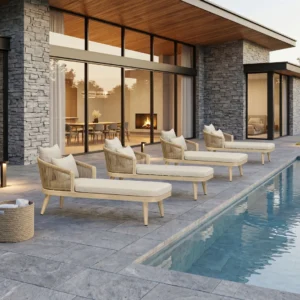
Coastal environments require additional attention because furniture can be exposed to salt-laden air and moisture.
The complete product should be considered rather than the aluminum frame alone.
Fasteners, connectors, hardware and other metal components also need to be appropriate for the intended environment.
A well-specified frame combined with unsuitable secondary components can still create maintenance issues.
8. Teak
Teak is widely associated with premium outdoor furniture and is frequently used in resorts, villas, pool areas and outdoor dining environments.
It can be used for complete furniture frames or as a design detail combined with aluminum, rope or other materials.
Common applications include:
| Dining Tables | Dining Chairs |
| Lounge Chairs | Sun Loungers |
| Side Tables | Coffee Tables |
| Sofa Details | Daybeds |
Its natural appearance works particularly well in resort and landscape-oriented environments.
9. Teak Quality and Selection
The word “teak” alone does not define the quality of a finished product.
Material selection should consider timber quality, moisture condition, component selection and the intended construction.
Consistency is particularly important when multiple furniture pieces are placed together because significant differences in timber appearance can become visually noticeable.
10. Teak Changes Outdoors
Natural timber does not remain visually identical throughout exterior use.
Teak can change appearance as it is exposed to sunlight, moisture and weather.
This should be considered when establishing the design expectation for a hospitality project.
The required maintenance approach should also be understood before the furniture is placed into operation.
11. Teak and Aluminum Combinations
Combining teak with aluminum is common in contemporary hospitality furniture.
Aluminum can provide the main structural frame while teak is introduced on armrests, tabletops, back details or decorative components.
This combination can create a warmer visual appearance without requiring the complete furniture structure to be manufactured from timber.
12. Rope
Outdoor rope has become an important design material for contemporary resort and hospitality furniture.
It is commonly used on:
| Lounge Chairs | Dining Chairs |
| Outdoor Sofas | Bar Stools |
| Daybeds | Accent Seating |
Rope can create a lighter, more open visual appearance than solid upholstery or conventional woven furniture.
It also allows manufacturers to develop different patterns, textures and color combinations.
13. Outdoor Rope Is Not Ordinary Rope
Material specification is important.
Rope used for exterior furniture should be selected for the intended outdoor application rather than chosen only according to appearance.
The project should consider:
| UV Exposure | Moisture |
| Color Stability | Surface Texture |
| Flexibility | Cleaning |
| Weaving Construction | Project Environment |
The supporting frame underneath the rope remains equally important.
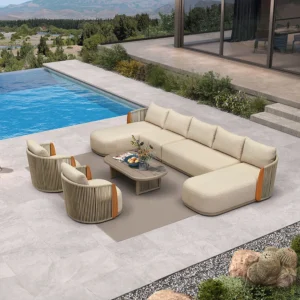
14. Rope Weaving Quality
Even when the same rope material is used, workmanship can change the appearance of the finished furniture significantly.
Important details include:
| Weaving Pattern | Tension |
| Spacing | Edge Treatment |
| Connections | Symmetry |
For repeated hospitality furniture, the weaving should remain visually consistent across the production quantity.
15. Synthetic Woven Materials
Synthetic woven materials remain widely used for commercial outdoor furniture, particularly in resort environments.
They can create different visual effects depending on width, profile, color and weaving pattern.
Common applications include sofas, lounge chairs, dining chairs, daybeds and decorative panels.
As with rope, exterior suitability and production consistency should be evaluated together.
16. Aluminum vs Teak vs Rope
These materials are not always direct alternatives because they often perform different functions within the same product.
| Material | Common Function | Typical Applications |
|---|---|---|
| Aluminum | Main structural frame | Sofas, chairs, tables, loungers |
| Teak | Frame, tabletop or decorative detail | Dining, lounge, pool furniture |
| Rope | Seat/back surface or decorative weaving | Chairs, sofas, daybeds |
| Synthetic Weave | Seat/back/body surface | Resort seating and loungers |
A single outdoor lounge chair, for example, can combine an aluminum frame, rope backrest, teak arm detail and upholstered cushion.
17. Stainless Steel
Stainless steel can be used where a slimmer metal appearance or particular design detail is required.
Applications can include furniture frames, table bases, hardware and decorative elements.
However, material grade, surface treatment and the actual project environment need to be considered.
Coastal exposure deserves particular attention when specifying metal components.
18. Outdoor Fabrics
Fabric selection has a major influence on both the appearance and performance of upholstered outdoor furniture.
Outdoor fabrics are commonly used for:
| Sofa Cushions | Lounge Chairs |
| Sun Loungers | Daybeds |
| Decorative Cushions | Dining Seating |
The selected fabric should correspond with the required exterior application and approved project specification.
19. What to Check in Outdoor Fabrics
For commercial hospitality projects, consider:
| UV Performance | Color Stability |
| Moisture Conditions | Cleaning |
| Abrasion | Texture |
| Color | Project Application |
A premium fabric does not eliminate the need for correct cushion construction underneath it.
The fabric, foam and internal cushion design should work together as a system.
20. Quick-Dry Foam
Quick-dry foam is frequently specified for outdoor sofas, lounge chairs, sun loungers and daybeds exposed to moisture.
Its purpose is to support better moisture movement through the cushion system.
For exposed hospitality seating, the complete construction should consider:
| Foam Type | Thickness |
| Cushion Shape | Drainage |
| Fabric Construction | Removable Covers |
The cushion should be developed as part of the outdoor product rather than treated as an indoor cushion with a different fabric.
21. Cushion Comfort Still Matters
Outdoor performance does not mean comfort should be ignored.
Hotel and resort guests may spend long periods using lounge furniture.
Seat height, seat depth, back angle, cushion thickness and foam construction should therefore be coordinated with the intended use.
Pool loungers, dining chairs and deep lounge sofas require different comfort characteristics.
22. Stone Tabletops
Stone can create a premium appearance for outdoor dining, coffee and side tables.
However, the exact stone and project conditions should be evaluated carefully.
Considerations include:
| Material Type | Thickness |
| Weight | Surface Finish |
| Edge Detail | Supporting Structure |
| Exposure | Maintenance |
The weight of a stone top also affects table-base construction, handling and export packing.
23. Sintered Stone and Engineered Surfaces
Sintered and other specified exterior-suitable surfaces can provide alternatives for outdoor tabletops.
They can support a wide range of design appearances while allowing the project team to coordinate surfaces with the overall interior and exterior palette.
The selected material should still be reviewed according to its intended exterior application and manufacturer specification.
24. HPL and Compact Surfaces
Exterior-suitable HPL or compact surfaces are commonly used for commercial outdoor tables where practical maintenance and consistent appearance are important.
They can be particularly useful for restaurant and café applications.
The correct product specification, edge treatment, fixing method and supporting frame should be coordinated during technical development.
25. Glass
Glass can be used for certain outdoor tabletops and decorative applications.
Its specification should consider safety, thickness, edge treatment, support and the furniture design.
The manufacturer should also plan appropriate protection during packing and transportation because glass components require different handling from metal or upholstered furniture.
26. Ceramic and Porcelain Surfaces
Ceramic and porcelain-type surfaces can also be used for outdoor tables depending on the project specification.
They are often selected when the design requires a stone-like or decorative surface appearance.
As with stone, the tabletop and supporting structure should be engineered together rather than selected independently.
27. Hardware and Fasteners
Hardware is easy to overlook because it represents a relatively small portion of the visible furniture.
However, exterior furniture performance depends on more than the main frame.
Hardware can include:
| Screws & Bolts | Connectors |
| Hinges | Adjustable Mechanisms |
| Glides | Brackets |
| Reclining Components | Parasol Components |
The materials and finishes of these components should correspond with the outdoor environment.
28. Parasols and Shade Materials
Parasols combine several material systems within one product.
These can include:
| Metal or Timber Frames | Outdoor Canopy Fabric |
| Mechanical Components | Bases |
| Fasteners | Adjustment Systems |
For hospitality projects, parasols should also coordinate visually with the surrounding outdoor furniture package.
29. Material Selection for Poolside Furniture
Poolside furniture commonly includes sun loungers, side tables, lounge seating, daybeds and parasols.
Material selection should pay particular attention to:
| Moisture | Strong Sunlight |
| Wet Swimwear | Cleaning |
| Frequent Movement | Guest Turnover |
Aluminum frames, outdoor fabrics and appropriate cushion systems are therefore frequently used in these environments.
30. Material Selection for Beach Resorts
Beachfront environments introduce additional exposure to salt air, moisture and sand.
The complete furniture system should therefore be evaluated.
This includes frames, coatings, hardware, fabrics, cushions, tabletops and moving components.
Cleaning and maintenance requirements should also be considered because sand can enter joints and mechanical parts.
31. Material Selection for Outdoor Restaurants
Outdoor restaurant furniture has different priorities from pool lounge furniture.
Dining chairs and tables often experience frequent movement, cleaning and repeated guest turnover.
Important considerations include:
| Stable Table Bases | Durable Chair Frames |
| Easy-to-Clean Surfaces | Practical Upholstery |
| Furniture Weight | Stackability Where Required |
| Surface Maintenance | Consistent Dimensions |
Material decisions should therefore respond to restaurant operations as well as exterior exposure.
32. Material Selection for Rooftop Terraces
Rooftop furniture can experience strong sunlight, wind and exposure depending on the building location.
Furniture weight, stability and layout should therefore be considered together with material performance.
The project team should also evaluate site-specific requirements when planning parasols and other larger outdoor elements.
33. Material Selection for Covered Outdoor Areas
Covered terraces and semi-outdoor areas can experience less direct rain and sunlight than fully exposed locations, but they are still exterior environments.
Humidity, temperature and indirect weather exposure can remain important.
Material specifications should therefore reflect the actual degree of protection rather than automatically applying indoor furniture standards.
34. Consider Cleaning and Maintenance
Commercial outdoor furniture requires ongoing cleaning and maintenance.
When selecting materials, buyers should consider how easily surfaces can be cleaned and whether finishes require specialized maintenance.
Complex textures, deep weaving, natural timber and light-colored fabrics can create different maintenance requirements.
The best material choice therefore depends partly on the operating model of the hotel, resort or restaurant.
35. Coordinate Materials Across a Complete Collection
Hospitality projects often contain several outdoor furniture categories within the same visual environment.
Rather than selecting each product independently, materials can be coordinated across the complete package.
For example:
Powder-Coated Aluminum Frame → Teak Details → Coordinated Rope → Outdoor Fabric → Matching Tabletop
The same palette can then be applied to sofas, lounge chairs, dining furniture, loungers and side tables.
This creates stronger visual consistency across the project.
36. Control Approved Material Samples
Once materials and finishes have been selected, approved references should be established before production.
These can include:
| Metal Finish Sample | Teak Finish Sample |
| Rope Sample | Woven Material |
| Outdoor Fabric | Tabletop Sample |
| Cushion Construction | Hardware Reference |
Production should then be checked against these approved references.
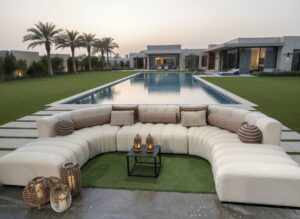
37. Avoid Choosing Materials by Appearance Alone
A material can look appropriate in a rendering or showroom but still be unsuitable for the final project environment.
Material selection should consider four areas together:
| Design | Environment |
| Commercial Use | Maintenance |
This is particularly important for international hospitality projects where the designer, procurement company, manufacturer and final project location may all be in different countries.
38. Compare Complete Material Specifications
When comparing quotations from different outdoor furniture manufacturers, make sure the material specifications are genuinely comparable.
A lower quotation can result from differences in frame construction, material grades, fabrics, foam, tabletop specifications or finishing methods.
Buyers should therefore compare the complete specification rather than only the product image and unit price.
39. Build a Material Schedule
For projects containing multiple furniture categories, a material schedule can help maintain consistency.
A simple schedule can identify:
| Furniture Component | Approved Material |
|---|---|
| Main Frames | Powder-Coated Aluminum |
| Timber Details | Teak |
| Decorative Weaving | Outdoor Rope |
| Upholstery | Approved Outdoor Fabric |
| Cushion System | Outdoor / Quick-Dry Construction |
| Tabletops | Approved Exterior-Suitable Surface |
| Hardware | Project-Specified Outdoor Hardware |
This provides a common reference for technical development, production and quality control.
40. Choose Materials as a Complete Outdoor System
The most effective commercial outdoor furniture specifications combine several materials according to their individual functions.
A hospitality outdoor sofa might use:
Aluminum Structural Frame + Outdoor Rope Detail + Quick-Dry Cushion + Outdoor Fabric + Teak Accent
A dining table might use:
Powder-Coated Aluminum Base + Teak or Exterior-Suitable Tabletop
A sun lounger might use:
Aluminum Frame + Outdoor Textile Surface + Adjustable Hardware
The material system should be developed according to the product, environment and project requirements rather than relying on a single material for every application.
Conclusion
There is no single material that is best for every commercial outdoor furniture project.
Aluminum provides a versatile structural solution for many hospitality applications. Teak introduces natural warmth and is widely used for premium resort furniture. Outdoor rope and synthetic weaving create distinctive seating surfaces and design details. Outdoor fabrics and appropriate cushion systems provide comfort, while stone, sintered surfaces, HPL, glass and other materials provide different tabletop solutions.
The correct specification depends on project environment, furniture function, exposure, commercial use, design requirements and maintenance expectations.
For hotel and resort procurement, the strongest approach is to evaluate the complete material system:
Frame → Finish → Weaving → Upholstery → Cushion → Tabletop → Hardware
When these components are coordinated from the beginning, outdoor furniture can achieve stronger consistency across pool, terrace, dining, beach and lounge areas while remaining aligned with the project’s design and operational requirements.
Outdoor Furniture Procurement & Production Questions
What is the best frame material for commercial outdoor furniture?
Powder-coated aluminum is widely used for hospitality outdoor furniture because it is versatile, relatively lightweight and suitable for many exterior applications. The correct choice still depends on construction, finish and the project environment.
Is teak suitable for hotel outdoor furniture?
Yes. Teak is commonly used for premium resort, poolside and outdoor dining furniture. Timber quality, construction, finish expectations and maintenance should be considered when specifying it.
Is rope suitable for outdoor furniture?
Outdoor-suitable rope is widely used for hotel and resort sofas, lounge chairs, dining chairs and daybeds. The material should be selected according to UV exposure, moisture conditions and the intended outdoor environment.
What is the best material for poolside furniture?
There is no single material for every poolside application. Powder-coated aluminum, outdoor fabrics, suitable cushion systems and exterior-suitable tabletop materials are commonly combined according to the furniture type and project conditions.
What materials are suitable for coastal resorts?
Coastal projects require particular attention to corrosion, salt air and moisture. Frames, coatings, hardware, fasteners, fabrics and other exposed components should all be considered as part of the complete furniture system.
Is quick-dry foam necessary for outdoor sofas?
It is commonly specified for exposed hospitality seating where moisture management is important. The required cushion system depends on the degree of exposure and the project specification.
Is aluminum better than teak for outdoor furniture?
They perform different functions and are frequently used together. Aluminum is commonly used structurally, while teak can be used for complete furniture or as tabletops, arm details and decorative elements. The appropriate choice depends on the product and project environment.
How should materials be approved before production?
Projects can establish approved physical references for metal finishes, timber, rope, fabrics, tabletops, cushion construction and hardware. These references can then be used for production and quality-control comparison.
Checking timber certification information
FSC provides a public search for certificate information. Certification documentation and outdoor product-performance evidence answer different questions and should be reviewed separately.
Published by Craftell Home · Custom Furniture Manufacturer & FF&E Project Supplier
Related outdoor furniture project
Our published Four Seasons Resort Bali at Sayan project describes the supply of outdoor furniture for private pool villas, pool decks, dining areas and lounge spaces. Review the stated supply scope when assessing its relevance to your own project.
This article provides manufacturing and procurement guidance. The final product configuration, acceptance criteria and delivery scope are defined by the approved drawings, specifications, samples and order documents for each project.
Explore Outdoor Furniture Project Resources
Continue with our outdoor furniture solutions and selected projects.