How to Coordinate Materials and Finishes Across a Luxury Residence
Review wood, metal, stone and upholstery samples together under the intended lighting. Record finish codes and retain the approved physical references; a screen image alone cannot define texture, gloss or the relationship between adjacent materials.
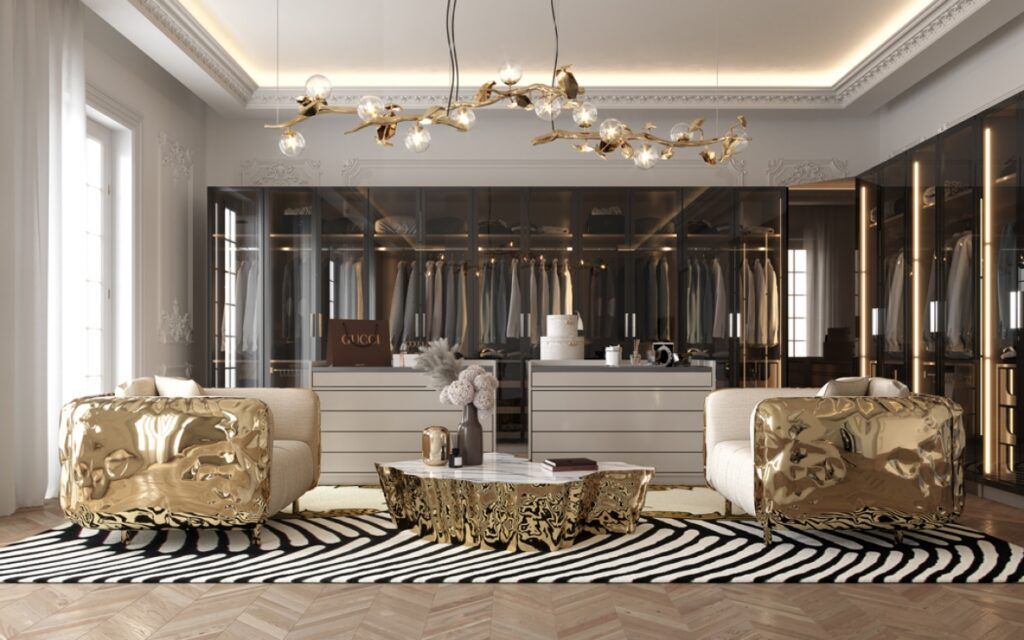
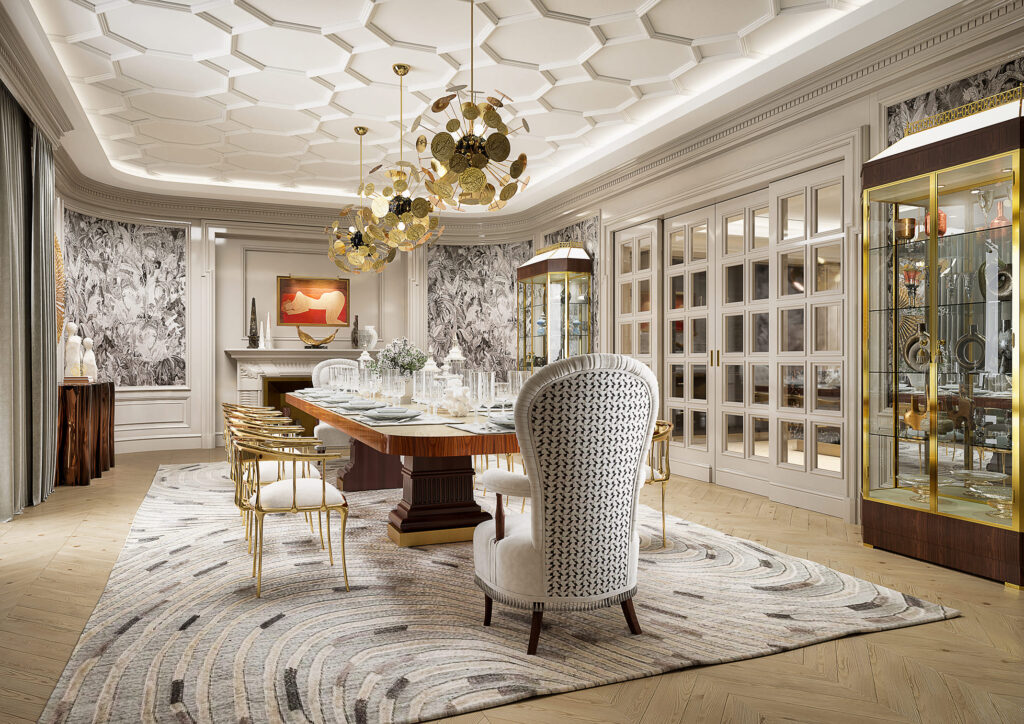
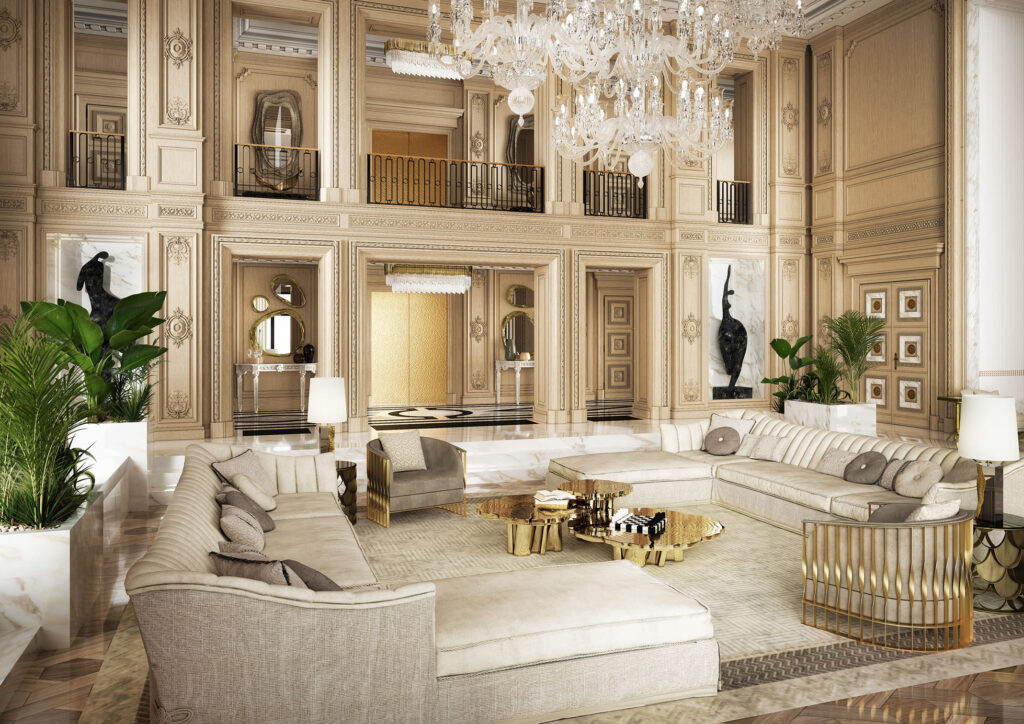
Material and finish coordination is one of the most important parts of a luxury residential furniture project. A high-end villa, penthouse or private residence may contain dozens of custom furniture pieces across living rooms, dining areas, bedrooms, studies, entertainment spaces and outdoor areas. Each space may have its own character, but the residence still needs to feel visually connected as one complete interior.
The challenge is not to use the same material everywhere. Effective coordination means creating a controlled relationship between wood, veneer, stone, metal, fabric, leather, glass, paint, rugs, decorative lighting and other finishes while allowing individual rooms to maintain their own identity.
For developers, interior designers, procurement teams and furniture manufacturers, this requires a structured material approval system rather than making finish decisions item by item during production.
This guide explains how to coordinate materials and finishes across a luxury residence from the initial material palette through sampling, approval, production and final installation.
Approve a Physical Finish Set
Review wood, metal, stone and upholstery samples together under the intended lighting. Record finish codes and retain the approved physical references; a screen image alone cannot define texture, gloss or the relationship between adjacent materials.
Craftell Home carries out paint finishing at the custom project factory, including finishing for residential products. Shared references help keep items from the two facilities aligned with the same project palette.
1. Start with an Overall Material Direction
Before selecting individual furniture finishes, establish the overall material direction for the residence.
This may include:
| Material Category | Examples |
|---|---|
| Wood & Veneer | Walnut, oak, ash, eucalyptus or other specified veneers |
| Stone | Marble, quartzite, travertine or engineered stone |
| Metal | Stainless steel, brass, bronze or coated metal |
| Upholstery | Fabric, leather and performance textiles |
| Glass | Clear, tinted, textured or decorative glass |
| Paint & Lacquer | Matte, satin, high-gloss or textured finishes |
| Soft Furnishings | Rugs, cushions and other textile elements |
The objective is to establish a common design language before individual furniture pieces enter production.
A residence can use many materials without appearing visually fragmented if those materials follow a controlled palette.
2. Build a Primary and Secondary Material Palette
Not every material should have equal visual importance.
A practical approach is to divide materials into primary materials and secondary materials.
Primary Materials
These are repeated throughout several important areas of the residence and create visual continuity.
Examples may include:
Walnut Veneer / Light Oak / Natural Stone / Champagne Metal / Warm Neutral Upholstery
Secondary Materials
These introduce variation and can be used selectively in individual rooms.
Examples may include:
Dark Metal / Colored Stone / Textured Fabric / Smoked Glass / Accent Leather
This creates a hierarchy.
The primary palette connects the residence, while secondary materials allow the living room, dining room, bedrooms and other areas to develop their own character.
3. Coordinate Materials by Room
The material palette should then be translated into a room-by-room schedule.
For example:
| Area | Primary Materials | Accent Materials |
|---|---|---|
| Formal Living | Walnut, light stone, neutral fabric | Champagne metal, textured leather |
| Dining Room | Walnut, stone | Metal, leather |
| Family Living | Oak, soft fabric | Dark metal, textured glass |
| Primary Bedroom | Walnut, fabric, leather | Stone, brushed metal |
| Secondary Bedrooms | Oak, fabric | Metal, lacquer |
| Study | Dark veneer, leather | Metal, glass |
| Outdoor | Weather-resistant metal / timber | Outdoor fabric, stone |
The materials do not need to be identical in every room.
What matters is that the transitions between spaces feel intentional.
4. Create a Master Finish Schedule
Once the overall palette is established, create a master finish schedule.
Each approved finish should have a unique reference code.
For example:
| Finish Code | Description | Typical Application |
|---|---|---|
| WF-01 | Walnut Veneer, Medium Brown, Matte | Living, Dining, Bedrooms |
| WF-02 | Light Oak Veneer, Natural Matte | Family Living, Secondary Bedrooms |
| MF-01 | Brushed Champagne Metal | Tables, Consoles, Lighting Details |
| MF-02 | Dark Bronze Metal | Study, Accent Furniture |
| ST-01 | Light Natural Stone | Coffee Tables, Dining Furniture |
| ST-02 | Dark Feature Stone | Consoles, Accent Tables |
| GL-01 | Smoked Glass | Cabinets, Display Furniture |
The finish code should then appear consistently in:
BOQ → Furniture Schedule → Shop Drawings → Sample Register → Production Documents → QC Records
This reduces the risk of the same finish being described differently by different project participants.
5. Coordinate Wood and Veneer Finishes
Wood is often one of the most repeated materials in a luxury residence.
Simply specifying “walnut” or “oak” is not enough.
A complete wood finish should consider:
| ✓ Wood / veneer species | ✓ Veneer cut |
| ✓ Grain direction | ✓ Grain matching |
| ✓ Base color | ✓ Stain color |
| ✓ Sheen level | ✓ Surface texture |
| ✓ Solid timber relationship | ✓ Acceptable natural variation |
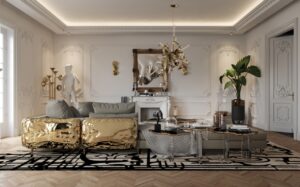
For example, two pieces of walnut veneer can appear very different if one uses a dark stain and the other uses a natural finish.
The project should therefore approve a physical master sample, not rely only on a written material name.
6. Control Veneer Grain Direction
Grain direction can significantly affect the appearance of custom furniture.
It should be shown clearly on shop drawings for products such as:
| • Cabinets | • Sideboards |
| • Dining tables | • Consoles |
| • Nightstands | • Desks |
| • Wall panels | • Wardrobes |
Depending on the design, veneer may run vertically, horizontally or follow a specific pattern.
For larger furniture surfaces, the project may also need to specify whether veneers are book-matched, slip-matched or arranged according to another approved sequence.
Grain direction should not be left for the factory to decide during production if it affects the intended design.
7. Manage Natural Material Variation
Natural materials are not completely uniform.
Wood, veneer, stone and leather can all contain natural variations in color, grain, texture or pattern.
The project team should distinguish between:
Natural Variation
and
Production Inconsistency
A natural stone slab will not reproduce exactly like a printed surface. Similarly, veneer cut from different logs may show different grain characteristics.
For important projects, approval should establish an acceptable variation range rather than expecting every piece to look identical.
8. Coordinate Stone Across Furniture Pieces
Stone is commonly used in luxury residential furniture for:
Dining Tables / Coffee Tables / Side Tables / Consoles / Sideboards / Vanities
The stone specification should consider:
| ✓ Stone type | ✓ Slab selection |
| ✓ Color range | ✓ Veining |
| ✓ Thickness | ✓ Edge profile |
| ✓ Surface finish | ✓ Reinforcement |
| ✓ Joint position | ✓ Weight |
Where several pieces use the same natural stone, slab selection and cutting layout may need to be coordinated.
For feature furniture, the position of major veins can become part of the design rather than simply a production detail.
9. Coordinate Metal Finishes
Metal details are often repeated throughout luxury interiors.
Typical applications include:
| • Table bases | • Chair frames |
| • Furniture trims | • Handles |
| • Decorative screens | • Lighting |
| • Cabinet details | • Furniture legs |
Terms such as “brass,” “bronze” or “champagne” can describe a wide range of appearances.
The specification should define:
Base Material + Finish Method + Color + Texture + Sheen
For example:
Stainless Steel + PVD + Champagne Tone + Brushed Finish
This is much more precise than simply specifying “champagne metal.”
10. Avoid Too Many Similar Metal Finishes
One common problem in luxury residential projects is using several metal finishes that are almost—but not quite—the same.
For example:
Champagne Gold / Light Bronze / Brushed Brass / Warm Stainless Steel
Individually, each may look attractive. When placed together in one space, small color differences can appear accidental.
Where possible, reduce unnecessary variations and establish common metal references across furniture and decorative elements.
This is especially important when furniture, lighting and architectural details are supplied by different manufacturers.
11. Coordinate Fabric and Leather
Upholstery often introduces the largest number of colors and textures into a residential project.
A complete upholstery schedule should identify:
| ✓ Supplier | ✓ Collection |
| ✓ Reference code | ✓ Color |
| ✓ Material type | ✓ Pattern repeat |
| ✓ Fabric direction | ✓ Application |
| ✓ Required quantity | ✓ Performance requirement |
The same neutral color can look very different in velvet, linen, bouclé or leather.
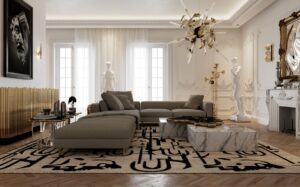
Material coordination should therefore consider not only color but also texture, reflectivity, scale and visual weight.
12. Build a Controlled Upholstery Palette
Instead of selecting every fabric independently, organize upholstery into a coordinated palette.
For example:
Primary Neutral → Main Sofas
Secondary Neutral → Lounge Chairs
Textured Accent → Occasional Chairs
Leather Accent → Dining Chairs / Study Furniture
Decorative Pattern → Cushions or Limited Feature Pieces
This creates variety without allowing the residence to become visually disconnected.
The same approach can be repeated in different rooms using variations in tone and texture.
13. Coordinate Furniture with Rugs
Custom rugs occupy large visual areas and therefore strongly influence the surrounding furniture.
A rug should be reviewed together with:
| • Sofa upholstery | • Lounge chairs |
| • Coffee tables | • Timber flooring |
| • Stone flooring | • Wall finishes |
| • Curtains | • Decorative lighting |
The rug does not necessarily need to match the furniture colors exactly.
Instead, it can connect several tones already present within the room.
For custom rugs, physical color samples are useful because yarn colors and pile texture can appear different from digital renderings.
14. Coordinate Decorative Lighting Finishes
Decorative lighting may introduce metal, glass, stone and other finishes into the same room.
When selecting furniture finishes, consider how they relate to:
Chandeliers / Pendant Lights / Floor Lamps / Table Lamps / Wall Lights
For example, if a dining room already contains a large bronze chandelier, adding several slightly different gold furniture finishes may create unnecessary visual competition.
Furniture and lighting should therefore be reviewed as part of the same finish environment.
15. Coordinate Fixed Interiors with Loose Furniture
Luxury residences frequently combine custom loose furniture with fixed interiors.
Fixed elements may include:
| • Wall panels | • Wardrobes |
| • Built-in cabinets | • Headboards |
| • Vanities | • TV walls |
| • Display units | • Built-in desks |
The loose furniture should relate to these architectural finishes without necessarily copying them exactly.
For example, a walnut wall panel can be paired with a lighter or darker walnut furniture finish, provided the relationship is intentional and approved.
Using exactly the same finish everywhere can sometimes make the interior appear flat.
16. Use Contrast Deliberately
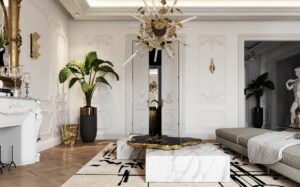
Luxury interiors do not need to be monochromatic.
Contrast can create depth and hierarchy.
Common combinations include:
Dark Wood + Light Upholstery
Light Stone + Dark Metal
Warm Veneer + Cool Stone
Matte Wood + Polished Metal
Smooth Leather + Textured Fabric
The important point is that contrast should be intentional.
If every furniture item introduces a new wood, metal, stone and fabric, the result can quickly become visually uncontrolled.
17. Control Sheen Levels
Finish coordination is not only about color.
Sheen can change how a material appears under natural and artificial lighting.
Common finish levels include:
Matte / Low Sheen / Satin / Semi-Gloss / High Gloss
A dark walnut veneer in matte finish may look completely different from the same color in high gloss.
Similarly, brushed metal reflects light differently from polished metal.
The finish schedule should therefore define sheen wherever it materially affects the appearance.
18. Review Materials Under Project Lighting
Material samples can appear different under different light sources.
Natural daylight, warm decorative lighting and cooler architectural lighting can change the perceived color of:
| • Wood stains | • Fabrics |
| • Leather | • Paint |
| • Stone | • Metal finishes |
Where possible, important materials should be reviewed under lighting conditions similar to the final residence.
This is particularly useful for subtle neutral colors where small undertone differences can become visible after installation.
19. Prepare a Physical Material Board
Digital renderings are useful for communicating design intent, but they should not be the only approval reference.
A physical material board can combine:
Wood + Stone + Metal + Fabric + Leather + Glass + Rug Samples
This allows the project team to review how materials interact under real light.
For whole-home projects, there may be:
One Master Residence Board
plus
Room-Specific Material Boards
for important spaces such as the formal living room, dining room and primary bedroom.
20. Create a Sample Approval Register
As the number of materials increases, approval status should be documented.
A sample register can include:
| Field | Example |
|---|---|
| Finish Code | WF-01 |
| Material | Walnut Veneer |
| Application | Living / Dining / Bedroom |
| Sample Number | SMP-WF-01 |
| Revision | Rev B |
| Status | Approved |
| Approval Date | Project Record |
| Comments | Reduce red tone; matte finish approved |
This prevents an outdated sample from accidentally being used during production.
21. Distinguish Approved Samples from Reference Images
Reference images are useful for communicating direction but should not automatically become production standards.
A photograph may be affected by:
| • Lighting | • Camera settings |
| • Screen calibration | • Image editing |
For critical finishes, the production standard should be a physical approved sample whenever practical.
The reference image explains the intention.
The approved physical sample defines the actual finish.
22. Control Changes and Substitutions
Materials sometimes need to change during a project.
Possible reasons include:
| • Material discontinued | • Insufficient stock |
| • Long lead time | • Budget adjustment |
| • Technical limitation | • Design revision |
A substitution should not be approved based only on a similar color.
Review:
Appearance → Performance → Dimensions → Cost → Lead Time → Compatibility
The replacement should then receive a new controlled approval reference.
23. Coordinate Material Availability Before Production
Luxury residential projects often use imported fabrics, specialty veneers, natural stone and custom metal finishes.
Some materials may have significantly longer lead times than the furniture manufacturing itself.
Before releasing production, confirm:
| ✓ Required quantity | ✓ Available stock |
| ✓ Material lead time | ✓ Minimum order quantity |
| ✓ Batch consistency | ✓ Expected wastage |
| ✓ Replacement availability | ✓ Delivery to factory |
A project should not reach the upholstery stage only to discover that the approved fabric is unavailable.
24. Allow for Material Wastage
Custom furniture manufacturing requires additional material beyond the visible finished dimensions.
Wastage can result from:
| • Pattern matching | • Veneer selection |
| • Stone veining | • Fabric defects |
| • Leather hide variation | • Cutting optimization |
| • Future replacement | • Production testing |
The required allowance varies by material and application.
For nominated materials, confirm who is responsible for calculating and ordering the required quantity.
25. Establish Production Master Samples
Once finishes are approved, selected samples should remain available at the factory as production references.
These may include:
Master Wood Finish / Master Metal Finish / Approved Stone / Approved Fabric / Approved Leather
Production teams and QC inspectors can compare finished furniture against these references.
This is particularly important when several furniture categories are manufactured at different times.
26. Control Batch Consistency
A luxury residence may contain the same finish across dozens of pieces.
For example:
WF-01 Walnut
may appear on:
Dining Table → Consoles → Side Tables → Nightstands → Cabinets
If each production batch is approved independently without a common master reference, visible color differences can develop.
Batch control should therefore compare new production against the same approved master sample.
27. Use First-Off Inspection for Important Finishes
Before completing a large quantity, inspect the first finished production item.
The first-off inspection can verify:
| ✓ Finish color | ✓ Sheen |
| ✓ Veneer direction | ✓ Metal tone |
| ✓ Upholstery | ✓ Stitching |
| ✓ Stone application | ✓ Overall material relationship |
If adjustments are needed, they can be made before the same issue is repeated across the entire production quantity.
28. Inspect the Complete Furniture Item
Individual material samples may all be correct while the finished furniture still feels visually unbalanced.
Final inspection should therefore evaluate the complete product.
For example, on a custom side table:
Wood Finish + Stone Top + Metal Detail + Hardware
should be reviewed together.
Similarly, a custom bed may combine:
Upholstery + Timber + Metal + Leather + Decorative Details
The final relationship between materials is as important as the approval of each individual sample.
29. Coordinate Outdoor Materials Separately
Outdoor furniture should follow the overall residential design direction while using materials appropriate for exterior environments.
Consider:
| ✓ UV resistance | ✓ Moisture resistance |
| ✓ Corrosion resistance | ✓ Weather-resistant materials |
| ✓ Quick-dry foam | ✓ Outdoor fabrics |
| ✓ Suitable finishes | ✓ Outdoor hardware |
An indoor wood or metal finish should not automatically be transferred to outdoor furniture simply to achieve visual consistency.
Instead, select an outdoor-compatible material that creates a related appearance.
30. Keep Material Records for Future Replacement
Luxury residences may require maintenance or replacement years after completion.
Maintain records of:
| • Finish codes | • Material suppliers |
| • Fabric references | • Leather references |
| • Stone information | • Metal finishes |
| • Hardware | • Approved samples |
This information can make future replacement or additional furniture production significantly easier.
For high-wear products, spare fabric or leather may also be retained where practical.
31. Common Material Coordination Mistakes
Several problems appear repeatedly in luxury residential furniture projects.
Too Many Similar Finishes
Several slightly different wood or metal finishes create visual inconsistency.
Approving from Images Only
Digital colors do not accurately establish the production standard.
No Finish Codes
The same finish is described differently across drawings and schedules.
Ignoring Grain Direction
Furniture is technically correct but does not match the design intent.
Mixing Material Batches
Fabric, leather, veneer or stone varies noticeably across related furniture.
Changing Materials Without Updating Documents
The sample, drawing and BOQ describe different versions.
Reviewing Furniture in Isolation
Each product looks good individually but the complete room lacks coordination.
32. Luxury Residential Material & Finish Checklist
Before mass production, confirm:
| ✓ Overall material palette | ✓ Room-specific palette |
| ✓ Master finish schedule | ✓ Finish codes |
| ✓ Wood / veneer samples | ✓ Grain direction |
| ✓ Stone references | ✓ Metal finishes |
| ✓ Fabric schedule | ✓ Leather schedule |
| ✓ Glass references | ✓ Paint / lacquer |
| ✓ Rug colors | ✓ Decorative lighting finishes |
| ✓ Physical material boards | ✓ Sample approval register |
| ✓ Approved substitutions | ✓ Material availability |
| ✓ Production master samples | ✓ Batch-control method |
Material coordination should be completed as a controlled project process rather than a collection of independent purchasing decisions.
From Material Palette to Finished Residence
A successful luxury residential interior does not depend on using the largest possible number of premium materials. It depends on how those materials relate to one another across furniture, fixed interiors and decorative FF&E.
A practical coordination process can follow:
Design Concept → Material Palette → Room Schedule → Finish Codes → Physical Samples → Material Boards → Approval → Shop Drawings → Production Master Samples → First-Off Inspection → Batch Control → Final Furniture Inspection → Installation
For whole-home projects, this process helps maintain consistency while still allowing individual rooms to have different identities.
Craftell Home works as a Custom Furniture Manufacturer & FF&E Project Supplier, supporting luxury villas, apartments, penthouses and private residences with material coordination, custom furniture development, sampling, production, quality control, packing and international project delivery.
Luxury Residential Procurement Questions
Should every room in a luxury residence use the same materials?
No. Different rooms can use different materials and finishes. The objective is to establish a coordinated palette so transitions between spaces feel intentional while each room maintains its own character.
How should wood finishes be approved?
Approve a physical sample that defines the wood or veneer species, stain color, grain characteristics, texture and sheen. Important veneer grain directions should also be shown on the shop drawings.
Can one metal finish be used throughout the residence?
Yes, a common metal finish can help create continuity, but it is not mandatory. Multiple metal finishes can be used if their relationship is intentional and controlled.
Why are finish codes important?
Finish codes connect the BOQ, drawings, sample register, production and quality-control records to the same approved material reference.
How should natural stone variation be controlled?
The project should approve the stone type and acceptable variation range. For important furniture, slab selection and vein positioning can also be reviewed before cutting.
Should furniture materials be approved from renderings?
Renderings are useful for design direction but should not be the only production reference. Physical samples are more reliable for critical colors, textures and finishes.
How can finish consistency be controlled during production?
Keep approved master samples at the factory, conduct first-off inspections and compare later production batches against the same controlled reference.
Published by Craftell Home · Custom Furniture Manufacturer & FF&E Project Supplier
Related luxury residential furniture project
Our published Emirates Hills project describes the supply of custom living, dining and bedroom furniture, decorative lighting and rugs. Review the stated supply scope when assessing its relevance to your own project.
This article provides manufacturing and procurement guidance. The final product configuration, acceptance criteria and delivery scope are defined by the approved drawings, specifications, samples and order documents for each project.
Explore Luxury Residential Project Resources
Continue with our luxury residential solutions and selected projects.