How to Choose a Custom Furniture Manufacturer for a Luxury Residential Project
For a custom sofa or bed, compare the frame, upholstery pattern, seams and overall proportions with the approved sample. An attractive reference photograph does not define the internal construction or the final comfort.
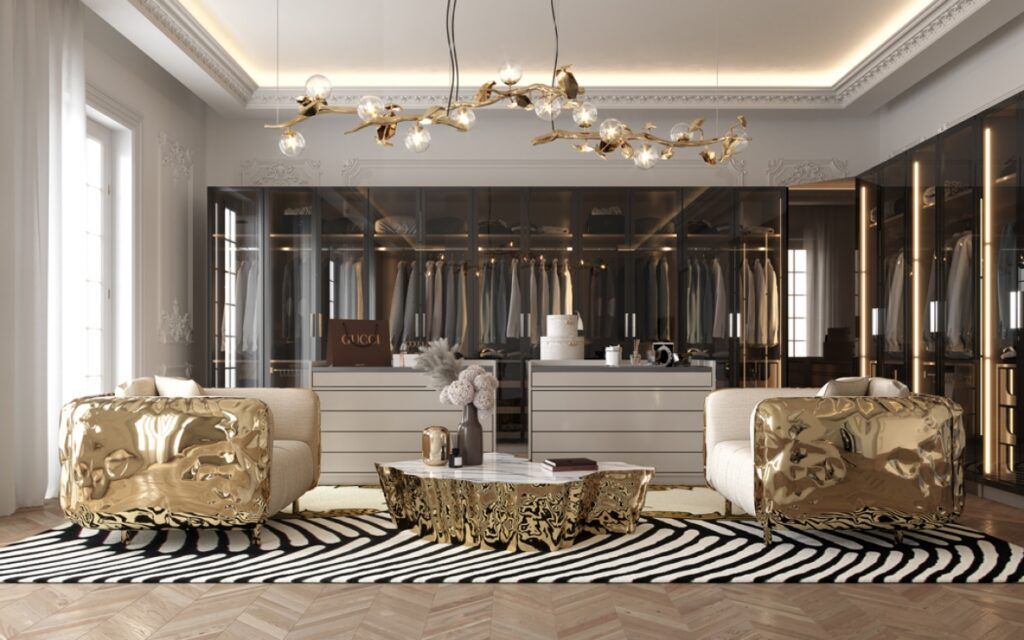
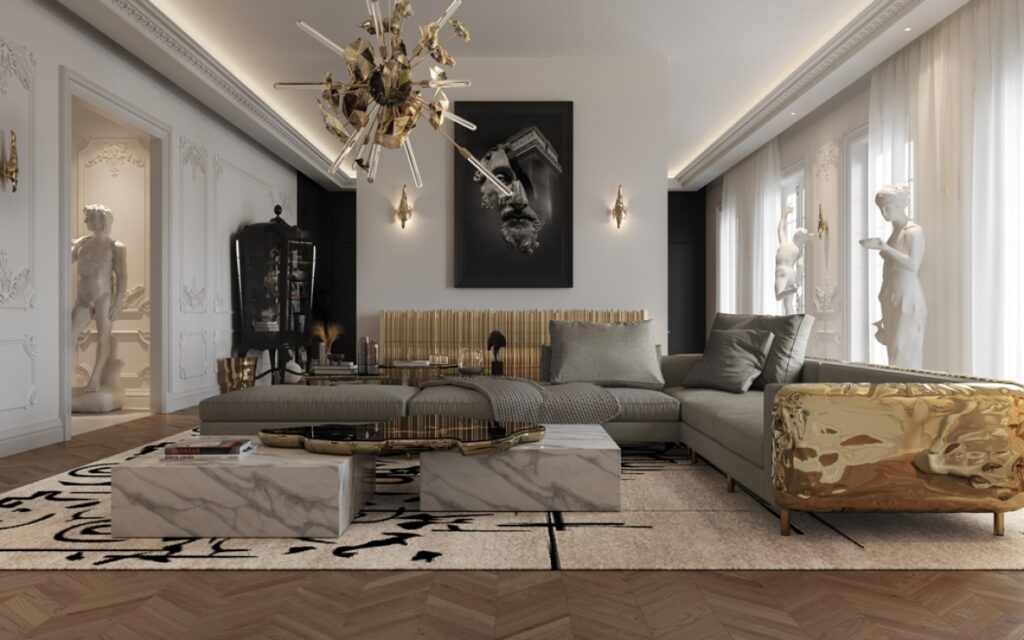
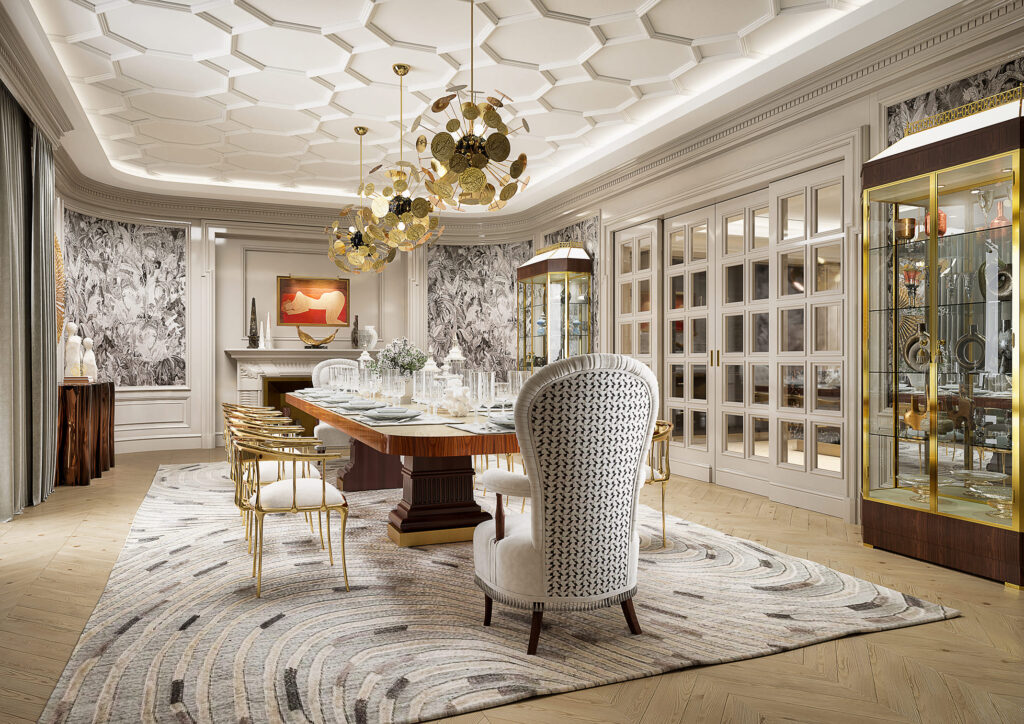
Luxury residential furniture projects are different from standard furniture purchasing. A private villa, penthouse or high-end apartment may involve dozens or even hundreds of customized items across living rooms, dining areas, bedrooms, studies, entertainment spaces and outdoor areas.
The project may combine loose furniture, fixed interiors, mattresses, custom rugs, decorative lighting, artwork and interior decorative accessories, with each category requiring coordinated dimensions, materials, finishes and installation conditions.
For developers, procurement companies, interior designers and private residential project teams, choosing the right custom furniture manufacturer is therefore not simply about comparing product prices. The manufacturer needs to understand drawings, develop custom details, coordinate multiple materials, control samples and finishes, manage production across different product categories and prepare the complete package for international delivery.
This guide explains the key factors to evaluate when selecting a custom furniture manufacturer for a luxury residential project.

Check Construction as Well as Design Similarity
For a custom sofa or bed, compare the frame, upholstery pattern, seams and overall proportions with the approved sample. An attractive reference photograph does not define the internal construction or the final comfort.
Craftell Home’s established bed, sofa and lounge-chair development experience supports this review. Confirm the actual project materials and workmanship instead of assuming that factory scale or a showroom price determines the result.
1. Start with the Complete Project Scope
Before evaluating manufacturers, define what the residential project actually requires.
A luxury residence may include:
| • Living room furniture | • Dining room furniture |
| • Bedroom furniture | • Study furniture |
| • Lounge furniture | • Mattresses |
| • Fixed interiors | • Custom rugs |
| • Decorative lighting | • Artwork |
| • Decorative accessories | • Outdoor furniture |
The wider the scope, the more important coordination becomes.
If the project requires only dining chairs, selecting a specialist chair manufacturer may be sufficient. But if the requirement covers an entire villa or penthouse, working with several unrelated suppliers can increase the amount of coordination required for materials, finishes, dimensions, samples, packing and delivery.
For whole-residence projects, evaluate whether the manufacturer can manage the required categories as one coordinated FF&E package.
2. Check Experience with Luxury Residential Projects
Luxury residential furniture requires a different approach from standard retail or volume furniture production.
A suitable manufacturer should understand the requirements of projects such as:
| • Private villas | • Luxury apartments |
| • Penthouses | • Branded residences |
| • High-end residential developments | • Private estates |
Review whether previous work demonstrates the level of customization relevant to your project.
Do not evaluate experience only by the number of project photographs. Look at the complexity behind the work: custom dimensions, mixed materials, curved furniture, detailed upholstery, special finishes, fixed joinery and coordination across multiple rooms.
A manufacturer experienced in project furniture should be able to explain how the furniture was developed and delivered, not simply show finished images.
3. Evaluate the Manufacturer’s Customization Capability
Luxury residential furniture is frequently developed specifically for the interior design rather than selected directly from a standard catalog.
The manufacturer may need to customize:
| ✓ Dimensions | ✓ Proportions |
| ✓ Internal construction | ✓ Wood species |
| ✓ Veneer | ✓ Stone |
| ✓ Metal details | ✓ Upholstery |
| ✓ Foam construction | ✓ Hardware |
| ✓ Colors | ✓ Surface finishes |
Customization should involve technical development, not just changing fabric colors.
For example, a custom sofa may require adjustments to its overall dimensions, seat depth, backrest angle, arm profile, internal frame, foam combination, upholstery details and base construction.
Ask how the manufacturer converts the designer’s concept into production-ready information.
4. Review Drawing and Technical Development Capability
Design drawings and renderings often communicate the intended appearance but do not contain every detail required for manufacturing.
The manufacturer may need to develop or coordinate:
Design Drawing → Furniture Detail → Shop Drawing → Material Specification → Sample → Production
Shop drawings should resolve important information such as:
| • Overall dimensions | • Construction details |
| • Material thicknesses | • Joint details |
| • Veneer direction | • Upholstery seams |
| • Metal profiles | • Stone details |
| • Hardware | • Fixing methods |
For fixed interiors, technical coordination becomes even more important because the furniture may interact directly with walls, floors, lighting, electrical services and architectural finishes.
5. Check Material Sourcing Capability
Luxury residential projects often combine many different materials within the same furniture package.
Typical materials may include:
| • Solid wood | • Natural veneer |
| • Engineered panels | • Natural stone |
| • Engineered stone | • Stainless steel |
| • Brass / bronze finishes | • Glass |
| • Fabric | • Leather |
| • Decorative hardware | • Specialty finishes |
The manufacturer should be able to source materials according to the project specifications and maintain traceable references during sampling and production.
For specified fabrics, leather, stone or hardware, confirm whether the material will be supplied by the manufacturer, nominated by the designer or provided by the client.
Material responsibility should be clear before quotation.
6. Examine Finish Management
Luxury furniture is particularly sensitive to finish quality.
Two furniture pieces can use the same basic material while looking completely different because of veneer selection, stain color, sheen, metal finishing or upholstery execution.
Important finish controls include:
| ✓ Wood stain color | ✓ Veneer grain |
| ✓ Veneer matching | ✓ Paint color |
| ✓ Sheen level | ✓ Metal finish |
| ✓ Stone selection | ✓ Fabric color |
| ✓ Leather tone | ✓ Decorative details |
Approved physical samples should become the production reference.
For projects with furniture distributed throughout multiple rooms, consistency between different production batches is especially important.
7. Look at Upholstery Capability
Luxury residential projects usually contain a significant amount of upholstered furniture:
Sofas / Sectional Sofas / Lounge Chairs / Dining Chairs / Beds / Benches / Ottomans / Headboards
The quality of these products depends on more than the external fabric.
Review:
| ✓ Internal frame construction | ✓ Suspension |
| ✓ Foam density | ✓ Layered foam construction |
| ✓ Seat comfort | ✓ Backrest comfort |
| ✓ Fabric cutting | ✓ Pattern alignment |
| ✓ Stitching | ✓ Piping |
| ✓ Tufting | ✓ Cushion filling |
A sofa can look attractive in photographs but perform poorly if its internal construction and foam specifications are unsuitable.
For important upholstered items, physical samples or prototypes can help establish the required comfort standard.
8. Check Woodworking and Joinery Capability
Luxury residential furniture often contains detailed woodworking, particularly in dining tables, cabinets, beds, sideboards, consoles and fixed interiors.
The manufacturer should be able to control:
| • Veneer selection | • Grain direction |
| • Solid timber details | • Edge construction |
| • Curved components | • Cabinet construction |
| • Drawer alignment | • Door gaps |
| • Concealed fixing | • Integrated hardware |
If the project includes fixed interiors, review the manufacturer’s capability separately from loose furniture.
Fixed interiors may include wardrobes, vanities, wall panels, built-in cabinets, headboards, storage and other architectural furniture.
9. Evaluate Mixed-Material Manufacturing
Luxury furniture increasingly combines several materials within one item.
A single console may contain:
Veneer + Metal + Stone + Glass + Hardware
A dining table may combine:
Stone Top + Timber Structure + Metal Base
A bed may combine:
Timber + Upholstery + Metal Details + Integrated Lighting
The challenge is not simply producing each individual component. The manufacturer must control tolerances and interfaces so the different materials assemble correctly.
This is an important capability to examine when the project contains complex custom designs.

10. Review Sample and Prototype Procedures
Sampling is one of the most important stages in custom residential furniture procurement.
Depending on the project, approval may include:
| • Wood finish samples | • Metal finish samples |
| • Stone samples | • Fabric / leather samples |
| • Upholstery details | • Hardware samples |
| • Furniture prototypes | • Fixed-interior mock-ups |
For key furniture items, a full prototype can help evaluate:
Dimensions → Proportions → Comfort → Materials → Finish → Construction
Any approved changes should then be reflected in the final drawings and production documents.
Do not rely only on verbal comments or photographs when controlling important design changes.
11. Check Whether the Manufacturer Can Manage Multiple Rooms
Whole-residence projects involve more coordination than purchasing isolated furniture pieces.
A villa may contain:
Entrance → Formal Living → Family Living → Dining → Bedrooms → Study → Entertainment → Outdoor Areas
Each space may use different materials and furniture while still belonging to one overall design concept.
The manufacturer needs a clear item-coding and document-control system so every product can be connected to:
| ✓ Room / area | ✓ Furniture code |
| ✓ Drawing | ✓ Quantity |
| ✓ Material | ✓ Finish |
| ✓ Sample | ✓ Packing label |
This becomes increasingly important as the number of customized items grows.
12. Review the BOQ and Quotation Structure
A professional quotation should allow the buyer to understand exactly what is included.
The furniture BOQ should normally identify:
| Field | Purpose |
|---|---|
| Item Code | Connects quotation, drawings and production |
| Product Name | Identifies the furniture item |
| Room / Area | Shows where the item is used |
| Quantity | Defines production quantity |
| Dimensions | Confirms product size |
| Materials | Defines construction and visible materials |
| Finish | Defines appearance |
| Drawing Reference | Connects the item to technical information |
Avoid comparing quotations only by the final total.
One supplier may quote natural veneer, specified stone and premium upholstery construction while another quotation may be based on alternative materials.
The assumptions behind the price need to be compared.
13. Confirm What Is Included and Excluded
Luxury residential packages may involve furniture and decorative products from several categories.
Before selecting a manufacturer, clarify whether the quotation includes:
| ✓ Loose furniture | ✓ Fixed interiors |
| ✓ Mattresses | ✓ Custom rugs |
| ✓ Decorative lighting | ✓ Artwork |
| ✓ Decorative accessories | ✓ Outdoor furniture |
| ✓ Samples | ✓ Packaging |
| ✓ Export documentation | ✓ Delivery |
| ✓ Installation coordination | ✓ Spare items |
Clear exclusions are just as important as clear inclusions.
This reduces commercial disputes later in the project.
14. Evaluate Quality Control Procedures
Quality control should occur throughout production rather than only when the furniture is finished.
A practical QC process may include:
Incoming Materials → Component Inspection → Assembly → Finish → Upholstery → Final Inspection → Packing Inspection
Typical inspection points include:
| ✓ Dimensions | ✓ Stability |
| ✓ Joinery | ✓ Surface finish |
| ✓ Veneer direction | ✓ Color consistency |
| ✓ Upholstery | ✓ Stitching |
| ✓ Hardware | ✓ Function |
| ✓ Cleanliness | ✓ Quantity |
| ✓ Labels | ✓ Packaging |
For customized projects, inspectors should check products against the approved drawings and samples rather than against generic factory standards alone.
15. Ask How Production Consistency Is Controlled
Producing one good sample is different from producing an entire residential package consistently.
This is especially important when multiple pieces use the same:
Wood Finish / Metal Finish / Fabric / Leather / Stone / Decorative Detail
The manufacturer should establish approved master samples and use them during production.
For repeated furniture items, first-off inspection can identify problems before the same mistake is repeated across the complete quantity.
16. Check Production Capacity and Project Management
A manufacturer should have sufficient production capacity for the project schedule, but factory size alone does not guarantee successful delivery.
Evaluate how the project will actually be managed.
Ask about:
| ✓ Project manager | ✓ Drawing coordination |
| ✓ Material tracking | ✓ Sample tracking |
| ✓ Production planning | ✓ QC reporting |
| ✓ Progress reporting | ✓ Packing schedule |
| ✓ Shipping coordination | ✓ Change management |
Luxury residential projects often contain many low-quantity custom items rather than thousands of identical products.
The manufacturer therefore needs flexibility as well as production capacity.
17. Understand How Design Changes Are Managed
Changes are common in custom residential projects.
A dimension may change after site measurement. A fabric may become unavailable. The designer may adjust a finish after reviewing a sample.
Every change should identify:
Affected Item → Drawing Revision → Material / Finish Change → Cost Impact → Lead-Time Impact → Approval
Without revision control, production teams may accidentally manufacture from outdated information.
The selected manufacturer should have a clear method for managing approved revisions.
18. Review Fixed Interior Coordination
If the project includes fixed interiors, manufacturing cannot be separated from site conditions.
Typical fixed residential products include:
| • Wardrobes | • Built-in cabinets |
| • Vanities | • Headboards |
| • Wall panels | • TV walls |
| • Storage | • Display units |
| • Decorative joinery | • Built-in desks |
Before production, the project team may need to confirm wall dimensions, floor levels, electrical positions, lighting interfaces, stone interfaces and installation tolerances.
For international projects, a practical structure is often:
Manufacturing in China → Export Delivery → Local Joinery / Fit-Out Installation
This should be agreed before the fixed furniture enters production.
19. Evaluate Packing Standards
Luxury furniture can be damaged during international transportation even when manufacturing quality is excellent.
Packing should reflect the product and finish risk.
For example:
| Product / Finish | Protection Focus |
|---|---|
| High-Gloss Finish | Scratch and abrasion protection |
| Natural Stone | Reinforced packing and edge protection |
| Glass / Mirror | Rigid protection and fragile handling |
| Metal Finish | Surface separation and scratch protection |
| Upholstery | Dirt, moisture and compression protection |
| Decorative Lighting | Component separation and fragile protection |
The packaging should also be practical for site receiving and unpacking.
20. Check Project Labeling and Room Identification
A luxury residence may contain many similar-looking packages.
Each package should be identifiable without opening it.
Typical information can include:
| • Project name | • Item code |
| • Product name | • Room / area |
| • Package number | • Quantity |
| • Handling marks | • Installation reference |
For multi-floor villas or apartment developments, room and floor identification can significantly improve site distribution.
21. Review International Export Experience
If the furniture is manufactured in another country, evaluate the supplier’s experience with international project delivery.
The manufacturer should understand:
| ✓ Export packing | ✓ Packing lists |
| ✓ Container planning | ✓ Shipping marks |
| ✓ Commercial documents | ✓ Loading records |
| ✓ Destination requirements | ✓ Delivery coordination |
Project furniture export is different from shipping individual retail products.
The packing list and item identification should connect directly to the project BOQ.
22. Clarify Installation Responsibility
Installation responsibility should be confirmed before quotation rather than after the furniture reaches the project site.
Common options include:
Client / Local Contractor
Loose furniture may require only assembly and positioning, while fixed interiors need experienced local joinery or fit-out installation.
The installation team should receive the latest approved drawings and clear package identification.
23. Check Communication and Response Quality
Custom projects require continuous communication between the buyer, designer, manufacturer and other project participants.
Before placing an order, observe how the manufacturer handles technical questions.
A suitable project supplier should be able to identify unclear information rather than simply proceed with assumptions.
Useful communication should distinguish between:
| • Approved information | • Information awaiting approval |
| • Manufacturer proposal | • Client instruction |
| • Design revision | • Commercial change |
| • Production status | • Project risk |
Clear communication becomes particularly important when the project team and manufacturer are located in different countries and time zones.
24. Visit the Factory When the Project Justifies It
For major luxury residential projects, a factory visit can provide useful information before final supplier selection.
During the visit, review more than the showroom.
Look at:
| ✓ Material storage | ✓ Woodworking |
| ✓ Upholstery production | ✓ Metal coordination |
| ✓ Assembly | ✓ Finishing |
| ✓ Sample development | ✓ QC |
| ✓ Packing | ✓ Project management |
A showroom demonstrates finished products. The production floor shows how those products are actually made.
25. Compare Manufacturers on Project Capability, Not Only Price
The lowest quotation does not necessarily represent the lowest project cost.
A purchasing decision should consider the complete project process:
Technical Development + Materials + Samples + Manufacturing + Quality Control + Packing + Export Delivery + Project Coordination
Problems with dimensions, finishes, quantities or packing can create additional costs far beyond the initial price difference.
For luxury residential projects, the objective should be to select a manufacturer capable of reproducing the approved design consistently and delivering the complete package in a controlled way.
26. Custom Furniture Manufacturer Evaluation Checklist
Before selecting a manufacturer, review:
| ✓ Luxury residential project experience | ✓ Custom manufacturing capability |
| ✓ Drawing development | ✓ Loose furniture capability |
| ✓ Fixed-interior capability | ✓ Upholstery capability |
| ✓ Woodworking capability | ✓ Mixed-material capability |
| ✓ Material sourcing | ✓ Finish control |
| ✓ Sampling procedures | ✓ Prototype capability |
| ✓ Production capacity | ✓ Quality control |
| ✓ Project management | ✓ Revision control |
| ✓ Export packing | ✓ International delivery |
| ✓ Installation coordination | ✓ Communication |
The appropriate supplier should match the actual complexity and scope of the project.
From Residential Design Brief to International Delivery
Selecting a custom furniture manufacturer is only the beginning of the procurement process.
A well-managed luxury residential project typically follows:
Project Brief → Furniture Scope → BOQ → Drawings → Materials & Finishes → Samples → Prototype Approval → Production → Quality Control → Packing → Export Delivery → Local Installation
The more customized the project becomes, the more important technical coordination and document control become.
Craftell Home works as a Custom Furniture Manufacturer & FF&E Project Supplier, supporting luxury villas, apartments, penthouses and private residences with loose furniture, fixed interiors, mattresses, custom rugs, decorative lighting, outdoor furniture, artwork and interior decorative accessories.
Luxury Residential Procurement Questions
What should I look for in a luxury residential furniture manufacturer?
Look for relevant residential project experience, custom manufacturing capability, technical drawing support, material and finish management, sampling, quality control, project coordination, export packing and international delivery capability.
Should one manufacturer supply the entire residential furniture package?
It depends on the project. For larger villas, penthouses and luxury apartments, consolidating multiple furniture categories with a capable project supplier can simplify coordination of materials, finishes, samples, quantities, packing and delivery.
What information should I send before requesting a quotation?
Provide the furniture BOQ or schedule, floor plans, furniture drawings, dimensions, quantities, material requirements, finish references, fabric or leather information, delivery destination and expected project schedule.
Are furniture samples necessary for a luxury residential project?
For custom projects, material and finish samples are important. Full furniture prototypes are particularly useful for key upholstered products, complex custom furniture or repeated items.
Can a furniture manufacturer also supply fixed interiors?
Some project manufacturers can supply both loose furniture and fixed interiors. Fixed work requires additional technical development and coordination with actual site dimensions, walls, floors, electrical services and installation conditions.
How should fixed furniture be installed on an overseas project?
A common structure is manufacturing in China with installation completed by an experienced local joinery or fit-out contractor. Installation responsibility should be defined before production.
How can buyers control furniture quality before shipment?
Use approved drawings, material and finish samples, prototype references, in-process inspection, first-off checks, final inspection and packing inspection as controlled project references.
Published by Craftell Home · Custom Furniture Manufacturer & FF&E Project Supplier
Related luxury residential furniture project
Our published Emirates Hills project describes the supply of custom living, dining and bedroom furniture, decorative lighting and rugs. Review the stated supply scope when assessing its relevance to your own project.
This article provides manufacturing and procurement guidance. The final product configuration, acceptance criteria and delivery scope are defined by the approved drawings, specifications, samples and order documents for each project.
Explore Luxury Residential Project Resources
Continue with our luxury residential solutions and selected projects.