How to Choose a Decorative Lighting Manufacturer for Hotel & Commercial Projects
Published by Craftell Home · Custom Furniture Manufacturer & FF&E Project Supplier
Choosing a decorative lighting manufacturer for a hotel or commercial project requires more than comparing fixture designs and prices. Decorative lighting must coordinate with the interior concept, architectural dimensions, furniture, fixed interiors, materials, finishes and electrical requirements while remaining consistent across the complete project quantity.
For hotel groups, developers, FF&E procurement companies, design firms and project buyers, the manufacturer should be evaluated on custom manufacturing capability, technical development, material and finish control, electrical specifications, production consistency, quality control, project-based packing and international delivery.
Ask for Evidence That Matches the Proposed Light
When reviewing a lighting supplier, connect each document to a product reference. Request a drawing revision, sample identification and component schedule for the fixture being proposed. A certificate or report for a different lamp does not establish the status of a bespoke chandelier.
Clarify who controls final assembly and checks the complete product after finishing. Metalwork quality and electrical documentation answer different questions, so evaluate both. Record open technical items before comparing prices, instead of assuming that similar photographs represent identical construction and components.
1. Start with the Project Lighting Scope
Before selecting a manufacturer, define the decorative lighting scope.
The project can include:
| Chandeliers | Pendant Lights |
| Wall Lights | Table Lamps |
| Floor Lamps | Custom Decorative Lighting |
The exact categories should be connected with the actual project areas and BOQ.
2. Define the Project Areas
Different areas require different decorative lighting solutions.
For hotel and commercial projects, typical areas include:
| Hotel Projects | Commercial Projects |
|---|---|
| Guest Rooms & Suites | Reception Areas |
| Lobby & Public Areas | Offices & Workspaces |
| Restaurants & Bars | Retail Spaces |
| Ballrooms & Meeting Areas | Showrooms |
| Lounges | Customer Areas |
| Corridors & Feature Areas | Feature Spaces |
Separating the project by area makes quantity and specification control easier.
3. Build a Decorative Lighting BOQ
Every fixture should have a unique item code.
A practical BOQ includes:
| Field | Information |
|---|---|
| Item Code | Unique lighting reference |
| Project Area | Location or room type |
| Fixture Type | Chandelier, pendant, wall light, etc. |
| Dimensions | Overall fixture dimensions |
| Quantity | Required project quantity |
| Materials | Main decorative materials |
| Finish | Approved finish reference |
| Electrical | Approved electrical specification |
The same item codes should continue through quotation, production, QC, packing and delivery.
4. Evaluate Custom Manufacturing Capability
Hotel and commercial projects frequently require lighting developed specifically for the interior design.
Customization can involve:
| Fixture Dimensions | Overall Proportions |
| Metal Construction | Glass Components |
| Decorative Materials | Fabric Shades |
| Finish Colors | Suspension Lengths |
The manufacturer should be able to translate approved design information into manufacturable lighting products.
5. Evaluate Technical Development Capability
A concept image alone is not sufficient for production.
The manufacturer should be able to work from project drawings and approved design information to define:
Dimensions → Construction → Materials → Finishes → Components → Electrical Requirements → Assembly Details
Technical development is particularly important for large custom chandeliers and complex feature lighting.
6. Review Lighting Drawings
Lighting drawings should provide enough information for manufacturing and project coordination.
Review:
| Overall Dimensions | Fixture Construction |
| Suspension Length | Canopy Dimensions |
| Backplate Dimensions | Material Details |
| Finish References | Electrical Information |
Critical information should be confirmed before production begins.
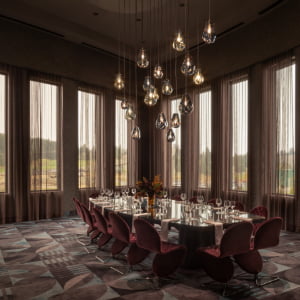
7. Coordinate Fixture Dimensions with the Space
Decorative lighting should be evaluated within the actual architectural environment.
A chandelier that appears correctly proportioned in isolation can look too large or too small once installed within the complete space.
Review the relationship between:
Fixture Width → Fixture Height → Ceiling Height → Furniture Layout → Surrounding Architecture
8. Confirm Suspension and Drop Heights
Pendant lights and chandeliers require clear suspension information.
Confirm:
| Fixture Body Height | Suspension Length |
| Overall Drop | Ceiling Height |
| Finished Fixture Level | Adjustable Range, if required |
This is particularly important above dining tables, reception areas, bars and feature spaces.
9. Coordinate Lighting with Furniture
Decorative lighting and furniture are visually connected.
Examples include:
Dining Table + Pendant Light
Bedside Table + Table Lamp
Lounge Furniture + Floor Lamp
Reception Counter + Feature Pendant
Bar Counter + Decorative Lighting
Dimensions and proportions should therefore be reviewed together.
10. Coordinate Lighting with Fixed Interiors
Lighting can also interact directly with fixed furniture and architectural finishes.
Check coordination with:
| Headboards | Wall Panels |
| Reception Counters | Bar Counters |
| Built-In Joinery | Feature Walls |
| Display Units | Decorative Screens |
This helps avoid dimensional or visual conflicts within the finished space.
11. Evaluate Metal Manufacturing Capability
Metal is a major component in many decorative lighting products.
The manufacturer should be able to control:
Cutting → Forming → Welding → Grinding → Surface Preparation → Finishing → Assembly
The required processes depend on the approved fixture design.
12. Review Metal Finish Quality
Metal finishes can strongly influence the perceived quality of decorative lighting.
Common design requirements can involve different metallic colors, textures and sheen levels.
The project should confirm:
| Finish Color | Texture |
| Gloss Level | Surface Direction |
| Approved Sample | Consistency Standard |
The physical finish sample should become the production reference.
13. Evaluate Glass Capability
Glass can be one of the most visually important components of a decorative fixture.
Review:
| Glass Color | Transparency |
| Texture | Shape |
| Thickness | Edge Finish |
| Pattern | Overall Consistency |
For repeated components, visual consistency is particularly important.
14. Evaluate Mixed-Material Capability
Custom decorative lighting can combine several materials in one fixture.
For example:
Metal + Glass
Metal + Stone
Metal + Fabric
Metal + Crystal
Metal + Acrylic / Resin
The manufacturer should be able to coordinate the connections and finish transitions between these materials.
15. Review Fabric Shade Construction
For table lamps, floor lamps, wall lights and some chandeliers, fabric shades form an important part of the final appearance.
Check:
| Shade Dimensions | Shade Shape |
| Fabric | Color |
| Lining | Frame |
| Edge Detail | Stitching / Finish |
The approved shade should be included in the complete fixture sample.
16. Evaluate Finish Consistency
A project can contain multiple fixture types using the same finish family.
For example, the same metal finish can appear across:
Chandeliers → Wall Lights → Table Lamps → Floor Lamps
The manufacturer should maintain a coordinated appearance across the complete decorative lighting package.
17. Establish Approved Finish Samples
Finish descriptions alone are not always sufficient.
Terms such as brushed brass, antique bronze or blackened metal can vary significantly between manufacturers.
Use physical approved samples to establish:
Color → Texture → Gloss → Surface Character → Acceptance Standard
18. Define Electrical Requirements
Decorative lighting is both a visual product and an electrical product.
The project specification should identify relevant electrical requirements, including:
| Voltage | Lamp Source |
| Wattage | Color Temperature |
| Lamp Holder | Driver |
| Dimming Requirement | Other Project Requirements |
These requirements should be confirmed according to the actual project and destination.
19. Confirm the Destination Market
Electrical requirements can vary between countries and project specifications.
The manufacturer should know the project destination before finalizing electrical components.
Confirm:
Destination → Project Requirements → Electrical Specification → Required Documentation
This should happen before mass production.
20. Review Applicable Testing and Compliance
If the project requires particular testing, certification or documentation, identify this during the specification stage.
Requirements can affect:
| Electrical Components | Wiring |
| Lamp Holders | Drivers |
| Materials | Product Construction |
Do not leave compliance requirements until production is complete.
21. Evaluate Sample Development
Customized decorative lighting should be reviewed through physical samples where required.
A sample allows the project team to evaluate:
Dimensions → Proportions → Materials → Finish → Glass → Shade → Assembly → Lighting Appearance
Required changes can then be completed before mass production.
22. Review the Sample Against the Design
The sample should be compared with the approved drawings and finish references.
Check:
| Overall Shape | Dimensions |
| Proportions | Materials |
| Finish | Decorative Details |
| Electrical Components | Overall Appearance |
Do not approve the sample only because it is functional.
23. Record Sample Modifications
Changes identified during sample review should be documented.
Typical modifications include:
Adjust Fixture Dimensions
Change Suspension Length
Modify Metal Finish
Adjust Glass Color
Revise Shade Proportions
Change Decorative Details
The final technical information should reflect all approved revisions.
24. Establish an Approved Production Standard
After approval, the sample and technical documentation should become the production benchmark.
The approved standard should control:
| Dimensions | Construction |
| Materials | Finishes |
| Decorative Components | Electrical Components |
| Workmanship | Overall Appearance |
Mass production should reproduce this standard consistently.
25. Evaluate Production Capacity
The manufacturer should have sufficient capacity for the actual project quantity and schedule.
Hotel and commercial projects can contain many repeated fixtures as well as low-volume custom feature pieces.
Production planning should therefore distinguish between:
Standard Repeated Fixtures → Customized Room Fixtures → Large Feature Lighting
26. Evaluate Production Consistency
Making one attractive sample is different from reproducing it across a complete project.
Production consistency should cover:
| Dimensions | Metal Finish |
| Glass | Shades |
| Decorative Components | Assembly |
| Electrical Components | Workmanship |
The approved sample should remain the comparison standard.
27. Review Welding and Joint Quality
For metal lighting structures, inspect visible and structural joints.
Check:
Welding → Grinding → Joint Alignment → Surface Preparation → Final Finish
Poor preparation can remain visible after plating, painting or other surface finishing.
28. Review Surface Finish Quality
Finished metal surfaces should be inspected under suitable lighting.
Look for:
| Color Variation | Uneven Texture |
| Scratches | Surface Marks |
| Finish Coverage | Visible Joint Problems |
| Gloss Variation | Overall Consistency |
Feature lighting can make surface imperfections particularly noticeable.
29. Inspect Glass and Decorative Components
Repeated decorative components should remain visually coordinated.
Check:
Shape → Size → Color → Transparency → Texture → Alignment → Surface Condition
For large chandeliers containing many repeated components, small inconsistencies can become highly visible.
30. Review Assembly Accuracy
A decorative fixture can contain many separate parts.
Final assembly should verify:
| Alignment | Symmetry |
| Component Position | Fixture Stability |
| Shade Position | Glass Position |
| Decorative Details | Overall Proportion |
The completed fixture should correspond with the approved drawing and sample.
31. Inspect Electrical Components
Electrical components should correspond with the approved project specification.
Check the required:
Wiring → Lamp Holders → Drivers → Light Sources → Connections → Dimming Components
The exact inspection requirements should follow the approved project specification.
32. Complete Final Quality Control
Before packing, complete a final inspection.
Review:
| Item Code | Quantity |
| Dimensions | Materials |
| Finish | Glass |
| Shade | Assembly |
| Electrical Specification | Appearance |
| Accessories | Packing Readiness |
The inspection record should connect the finished fixture with its project item code.
33. Evaluate Large Feature Lighting Capability
Hotels and commercial interiors can contain oversized custom feature lighting.
These fixtures require additional coordination of:
| Overall Dimensions | Component Breakdown |
| Weight | Suspension Points |
| Assembly Structure | Packing Method |
| Transportation Size | Project Identification |
The manufacturer should consider these requirements during technical development rather than after production.
34. Plan Component Breakdown
Large chandeliers may need to be separated into components for transportation.
The technical and packing plan should identify:
Main Structure → Arms / Frames → Glass → Shades → Decorative Components → Hardware
Each component should remain traceable to the correct fixture.
35. Review Packing Standards
Decorative lighting contains fragile and finished surfaces that require suitable protection.
Packing should consider:
| Finished Metal | Glass |
| Crystal | Stone |
| Fabric Shades | Electrical Components |
| Decorative Parts | Hardware |
Different components can require different protection methods.
36. Use Project-Based Package Labels
Package labels can identify:
Project → Area → Item Code → Fixture Type → Quantity → Package Number
This is particularly important when one fixture is divided across several packages.
37. Prepare Component Lists
For fixtures shipped in separate components, the packing documentation should identify what belongs to each item.
A component list can include:
| Main Fixture | Canopy |
| Suspension Components | Glass |
| Shades | Decorative Parts |
| Hardware | Accessories |
This makes project receiving and product identification easier.
38. Coordinate Packing Lists with the BOQ
The final packing list should connect directly with the project item codes.
Use:
Item Code → Product Description → Quantity → Package Number → Component Reference
The physical labels should correspond with the packing documentation.
39. Evaluate Export Delivery Capability
For international hotel and commercial projects, the manufacturer should be able to coordinate products through export delivery.
A structured workflow can follow:
Production → Quality Control → Project-Based Packing → Container Loading → Export Delivery
Packing and shipment planning should form part of the project process.
40. Compare Quotations on the Same Specification
Lighting prices cannot be compared accurately when suppliers are quoting different materials or constructions.
Before comparing price, confirm that proposals are based on comparable:
| Dimensions | Materials |
| Metal Finish | Glass |
| Decorative Components | Electrical Specification |
| Quantity | Packing |
| Required Documentation | Delivery Scope |
This creates a more meaningful commercial comparison.
41. Evaluate Communication and Change Control
Custom lighting projects can involve revisions during technical development and sample approval.
The manufacturer should maintain current records of:
BOQ → Drawings → Material References → Finish Samples → Electrical Specifications → Approved Samples → Production Status
Superseded information should not continue into production.
42. Review the Manufacturer as Part of the FF&E Package
Decorative lighting rarely exists independently within a hotel or commercial interior.
It should coordinate with:
| Loose Furniture | Fixed Interiors |
| Rugs | Materials & Finishes |
| Headboards | Wall Panels |
| Tables & Counters | Overall Interior Palette |
A manufacturer familiar with FF&E project coordination can review decorative lighting within this broader context.
43. Use a Final Manufacturer Evaluation Checklist
Before selecting a decorative lighting manufacturer, review the complete capability.
| Custom Manufacturing | Technical Development |
| Drawing Coordination | Metal Manufacturing |
| Glass Capability | Mixed-Material Capability |
| Finish Control | Electrical Specifications |
| Sample Development | Production Capacity |
| Quality Control | Project-Based Packing |
| Export Delivery | Project Coordination |
The evaluation should consider the complete project process rather than fixture price alone.
Conclusion
Choosing a decorative lighting manufacturer for a hotel or commercial project requires evaluating design interpretation, technical development, manufacturing, materials, finishes, electrical requirements and project delivery as one connected process.
The manufacturer should be able to translate approved design information into controlled technical specifications, develop and approve materials and samples, reproduce the approved standard during production, inspect the completed fixtures and prepare them for international project delivery.
A structured decorative lighting procurement process can follow:
Project Brief → Lighting Scope & BOQ → Technical Drawings → Material & Finish Approval → Electrical Specifications → Sample Development → Sample Approval → Mass Production → Quality Control → Project-Based Packing → Export Delivery
This approach gives hotel groups, developers, design firms and FF&E procurement teams a clearer basis for comparing manufacturers and maintaining consistency across the complete decorative lighting package.
Decorative Lighting Procurement & Production Questions
What should be provided to a decorative lighting manufacturer?
Provide the lighting BOQ, fixture drawings or design references, dimensions, quantities, material requirements, finish references, electrical specifications, project destination and expected delivery schedule.
What decorative lighting can be customized for hotel projects?
The project scope can include chandeliers, pendant lights, wall lights, table lamps, floor lamps and other custom decorative lighting according to the approved design.
Why are physical finish samples important?
Metal and decorative finish descriptions can vary between suppliers. An approved physical sample provides a clearer reference for color, texture, gloss and overall surface appearance.
Should custom decorative lighting be sampled before mass production?
For customized project lighting, a physical sample provides an opportunity to review dimensions, proportions, materials, finishes, electrical components and overall appearance before repeated production.
What should be checked during decorative lighting quality control?
QC should cover dimensions, construction, metal finishes, glass and decorative components, shades, assembly, electrical specifications, workmanship, accessories and packing readiness.
How should large custom chandeliers be prepared for export?
Large fixtures can require component breakdown, individual component identification, suitable protection for fragile parts, project-based package labels and coordinated packing documentation.
How can finish consistency be maintained across different lighting types?
Use approved physical finish references and compare repeated chandeliers, wall lights, table lamps and floor lamps against the same project standard throughout production.
What should be compared when evaluating decorative lighting quotations?
Compare dimensions, construction, materials, finishes, glass, decorative components, electrical specifications, quantities, packing requirements, required documentation and delivery scope.
Checking lighting safety documentation
UL Solutions provides an overview of lighting safety testing. Confirm the applicable requirements and exact product configuration with the responsible technical parties.
Published by Craftell Home · Custom Furniture Manufacturer & FF&E Project Supplier
Related decorative lighting project
Our published Omni PGA Frisco project describes the supply of custom chandeliers, pendant lights, table lamps, floor lamps and wall sconces. Review the stated supply scope when assessing its relevance to your own project.
This article provides manufacturing and procurement guidance. The final product configuration, acceptance criteria and delivery scope are defined by the approved drawings, specifications, samples and order documents for each project.
Explore Lighting Project Resources
Continue with our lighting solutions and selected projects.