How to Coordinate Furniture, Lighting, Rugs & Accessories for a Luxury Villa
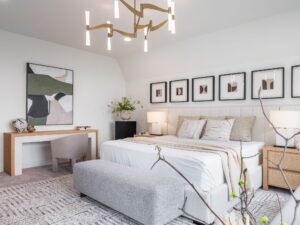
Check the dining table and pendant position together, and confirm the bed, bedside furniture and lighting as one layout. Assign each rug and accessory to a room code so the package can be checked without relying on styling photographs.
A luxury villa interior is rarely defined by furniture alone. The overall result depends on how furniture, decorative lighting, rugs, artwork, and accessories work together across each room and throughout the entire residence.
A sofa can have the correct dimensions and materials but still feel disconnected if the rug is too small, the side tables are incorrectly proportioned, or the decorative lighting does not relate to the seating arrangement. The same applies to bedrooms, dining rooms, entrance areas, lounges, and outdoor living spaces.
For a complete villa furniture package, these categories should therefore be coordinated as one system:
Furniture → Decorative Lighting → Custom Rugs → Artwork → Interior Decorative Accessories
The objective is not to make every room identical. It is to establish a consistent design language while allowing individual spaces to have their own function and character.
Coordinate Interfaces Before Ordering Accessories
Check the dining table and pendant position together, and confirm the bed, bedside furniture and lighting as one layout. Assign each rug and accessory to a room code so the package can be checked without relying on styling photographs.
Craftell Home coordinates furniture manufacturing with complementary FF&E supply. Keep each category’s approved dimensions and finish references connected to the same room schedule.
1. Start with the Furniture Layout
Furniture should establish the basic structure of the room before decorative elements are finalized.
The layout determines:
| Main Furniture Positions | Seating Relationships |
| Circulation Routes | Focal Points |
| Table Locations | Rug Dimensions |
| Lighting Positions | Artwork Locations |
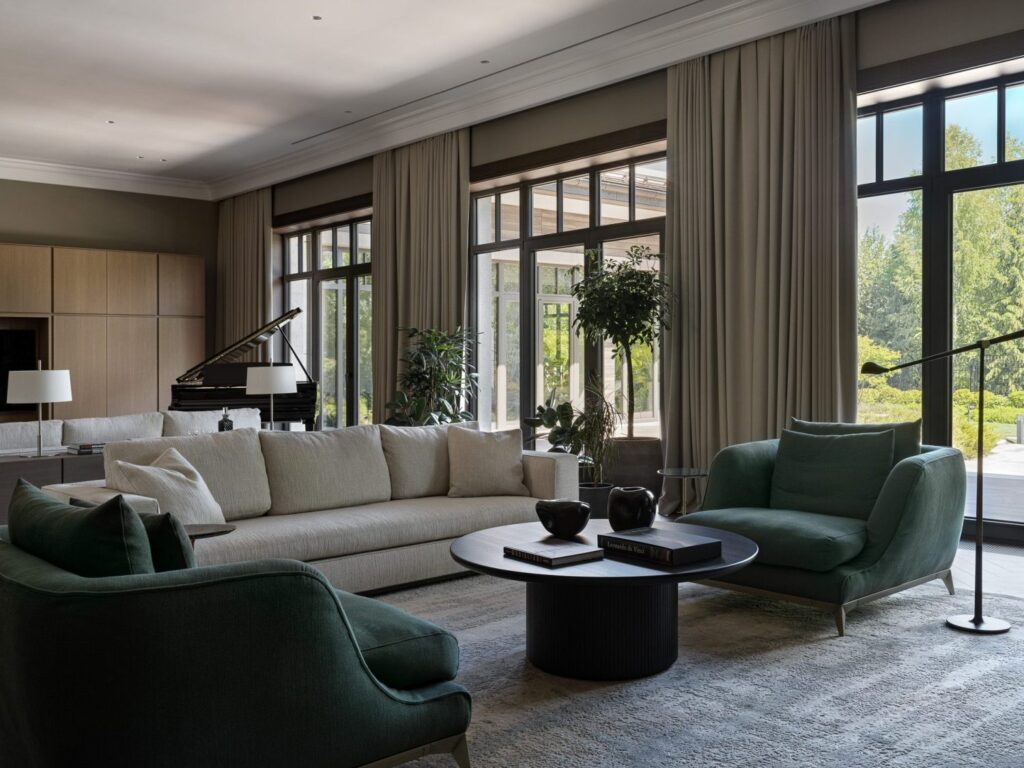
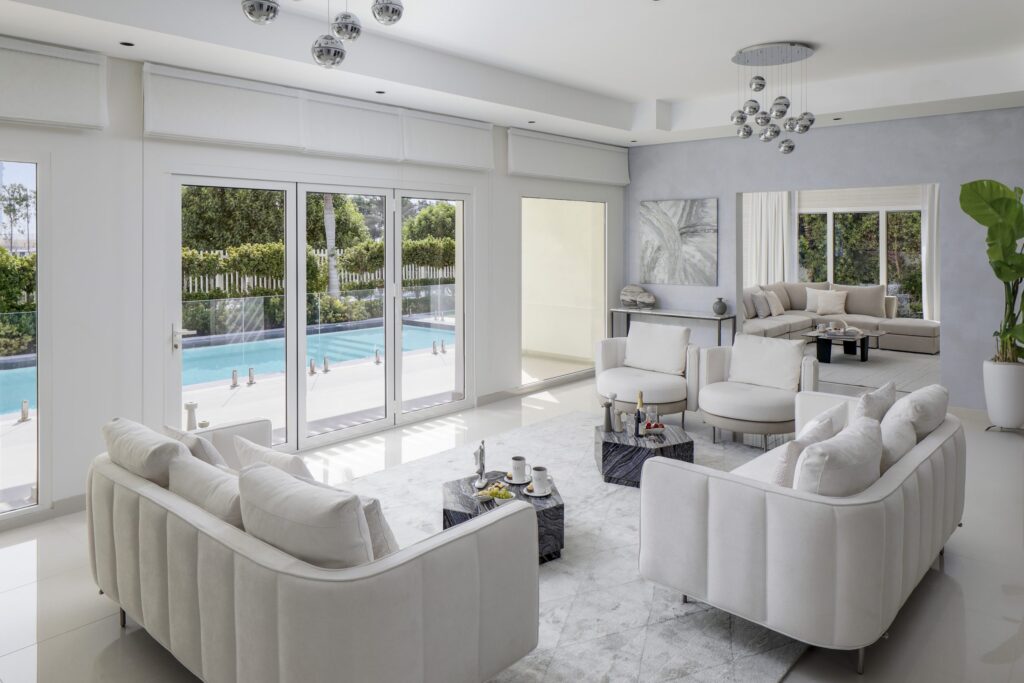
For example, a living-room composition normally begins with the main sofa and lounge chairs. Coffee tables, side tables, rugs, floor lamps, artwork, and accessories can then be coordinated around this primary furniture arrangement.
This prevents decorative products from being selected independently and later forced into spaces where their scale or position does not work.
2. Establish a Clear Visual Hierarchy
Not every object in a luxury villa should compete for attention.
Each room should have a clear visual hierarchy.
A living room might use:
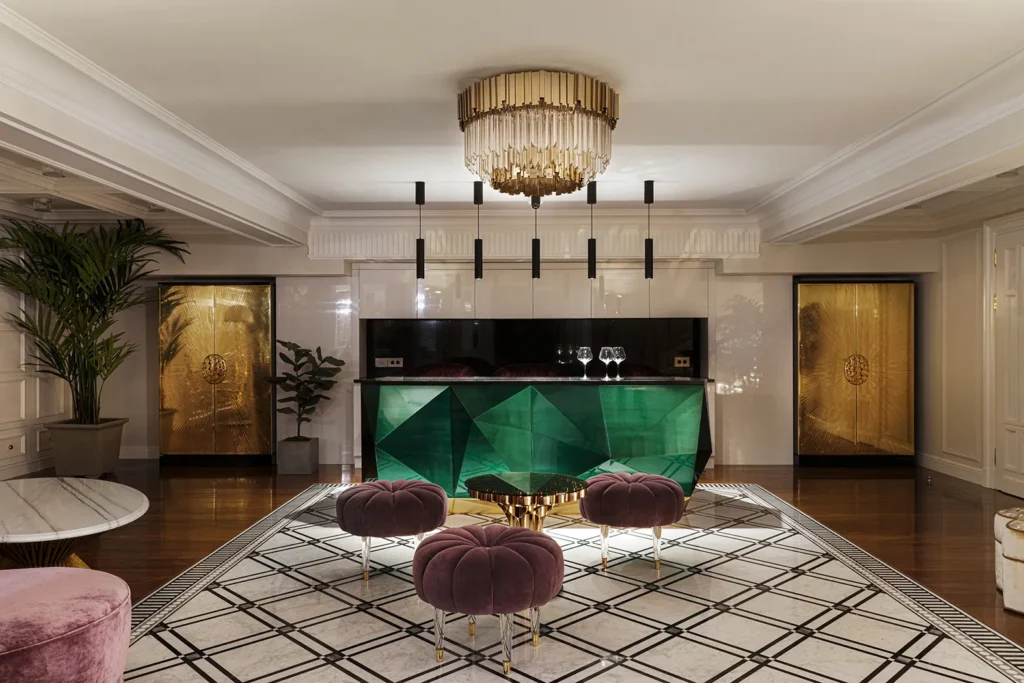
Feature Sofa → Statement Coffee Table → Custom Rug → Decorative Lighting → Artwork → Accessories
A dining room might use:
Dining Table → Chandelier → Dining Chairs → Rug → Sideboard → Artwork
The hierarchy can change from room to room, but the principle remains the same: determine which elements should dominate and which should support them.
Too many statement pieces can make a room visually fragmented.
3. Coordinate Proportions Before Style
Before considering colors and decorative details, check the proportions between different elements.
Important relationships include:
| Furniture | Related Elements |
|---|---|
| Sofa | Coffee Table, Rug, Floor Lamp |
| Dining Table | Chandelier, Dining Chairs, Rug |
| Bed | Bedside Tables, Lamps, Rug |
| Console | Mirror, Artwork, Table Lamps |
| Lounge Chair | Side Table, Floor Lamp |
| Sideboard | Artwork, Decorative Objects |
A large sofa paired with a very small coffee table can make the room feel unbalanced. An oversized chandelier above a small dining table can have the same effect.
Scale should therefore be coordinated before individual products are approved.
4. Build a Whole-Villa Material Palette
Luxury villas often contain many furniture categories and materials.
Typical materials include:
| Natural Veneer | Solid Wood |
| Natural Stone | Engineered Stone |
| Metal | Glass |
| Fabric | Leather |
| Decorative Finishes | Hardware |
The objective is not to use the same material everywhere.
Instead, establish a controlled material palette that can be interpreted differently across individual rooms.
For example, one veneer family can appear on living-room casegoods, dining-room furniture, bedroom furniture, and fixed interiors, while different stone, metal, or upholstery combinations create variation.
5. Establish Primary, Secondary and Accent Finishes
A practical way to control a large villa is to organize finishes into levels.
Primary Finishes establish the dominant material language.
Secondary Finishes provide variation between furniture categories and rooms.
Accent Finishes introduce smaller decorative details through metal, stone, leather, hardware, or accessories.
This creates a hierarchy such as:
Primary Veneer → Secondary Upholstery → Stone Feature → Metal Accent → Decorative Detail
The result is more controlled than selecting each product finish independently.
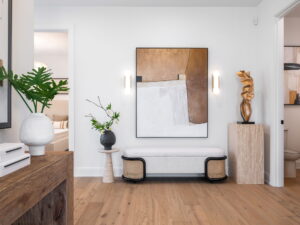
6. Coordinate Colors Across Different Rooms
Whole-villa consistency does not require one color scheme for every space.
A formal living room can use warmer tones while a master bedroom uses a softer palette and an entertainment room uses darker finishes.
The connection can come from recurring materials or controlled color relationships.
For example:
Warm Veneer + Neutral Upholstery + Bronze Metal
can become:
Darker Veneer + Textured Upholstery + Bronze Metal
in another room.
The spaces remain different, but they still belong to the same residence.
7. Coordinate Furniture and Rugs as One Composition
Rugs should be planned according to furniture layouts rather than selected as independent decorative pieces.
In a living room, the rug defines the seating group.
In a bedroom, it establishes the relationship between the bed, bedside tables, and surrounding floor area.
In a dining room, it connects the table and chairs into one composition.
The correct sequence is:
Furniture Layout → Furniture Dimensions → Rug Dimensions → Rug Pattern & Color
This prevents a common problem where a visually attractive rug is selected but does not fit the actual furniture arrangement.
8. Determine the Correct Living Room Rug Size
A living-room rug should relate directly to the seating composition.
Depending on the room size and furniture arrangement, the rug can sit beneath the entire furniture group or extend beneath the front portions of the main seating pieces.
The important point is visual connection.
The rug should help unify:
Sofa + Lounge Chairs + Coffee Table + Side Tables
rather than appearing as a separate object in the center of the room.
In large villa living rooms, custom rug dimensions are particularly useful because standard retail sizes may not match the scale of the furniture arrangement.
9. Coordinate Dining Rugs with Tables and Chairs
Dining-room rugs should be planned around both the table and the movement of the dining chairs.
The rug needs sufficient dimensions so that chairs remain appropriately positioned when moved away from the table.
The planning relationship is:
Dining Table Size → Chair Position → Chair Movement → Rug Size
Rug shape should also correspond with the dining composition.
Rectangular tables generally work naturally with rectangular rugs, while round dining arrangements can support round or appropriately proportioned custom rugs.
10. Coordinate Bedroom Rugs with the Bed
The bed usually establishes the primary axis of the bedroom.
The rug should then relate to:
| Bed Width | Bed Length |
| Bedside Tables | Bed Bench |
| Circulation | Room Dimensions |
A custom rug can sit beneath the bed and extend into the surrounding walking areas, or it can be positioned according to a specific furniture composition.
Its scale should reinforce the bed rather than visually competing with it.
11. Use Rugs to Define Open-Plan Spaces
Large villas frequently contain open-plan living and dining spaces.
Rugs can help establish separate functional zones without physical partitions.
For example:
Living Area Rug → Defines Sofa Group
Dining Area Rug → Defines Dining Group
The materials and patterns do not need to be identical, but they should relate through color, texture, pattern scale, or overall design language.
This helps create visual separation while preserving continuity across the open space.
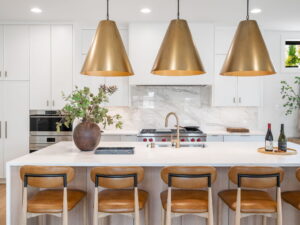
12. Coordinate Decorative Lighting with Furniture Positions
Decorative lighting should follow the furniture plan.
Typical relationships include:
| Furniture | Decorative Lighting |
|---|---|
| Dining Table | Chandelier / Pendant |
| Bedside Table | Table Lamp / Wall Light |
| Sofa | Floor Lamp |
| Lounge Chair | Reading Lamp |
| Console Table | Table Lamp |
| Sideboard | Decorative Lamp |
A decorative light can function as both illumination and a visual object, so its scale should be coordinated with the furniture around it.
13. Plan Chandeliers Around the Furniture Below
Chandeliers and pendants should be positioned according to the furniture composition rather than simply the geometric center of the room.
This is especially important above:
Dining Tables → Entrance Tables → Kitchen Islands → Lounge Tables
A dining-room chandelier, for example, should relate to the dining table’s center, dimensions, and shape.
If the furniture position changes after the lighting position has been fixed, the composition can become visually misaligned.
Furniture and decorative lighting should therefore be reviewed together during the planning stage.
14. Coordinate Bedside Lighting with the Bed Composition
Bedroom lighting requires close coordination with the bed, headboard, and bedside tables.
Review:
Bed Width → Headboard Width → Bedside Table Position → Lamp / Wall Light Position
For table lamps, the scale should suit the bedside table.
For wall-mounted decorative lights, positions should be coordinated with the headboard design and bedside-table dimensions.
Electrical points should also be confirmed before fixed wall elements enter production.
15. Use Floor Lamps to Complete Seating Areas
Floor lamps are particularly effective beside sofas, lounge chairs, reading areas, and bedroom seating groups.
Their position should consider:
| Furniture Height | Shade Diameter |
| Seating Position | Side Table Position |
| Circulation | Electrical Access |
A floor lamp should support the seating composition without interfering with movement.
Its height and visual weight should also correspond with the surrounding furniture.
16. Coordinate Table Lamps with Furniture Scale
Table lamps should be selected according to the furniture supporting them.
A large console or sideboard can accommodate a larger decorative lamp or symmetrical pair, while a compact bedside table requires a more controlled scale.
The lamp base should leave enough usable surface on the table.
This is especially important for bedside tables where space is also required for personal items, switches, or charging devices.
17. Treat Artwork as Part of the Furniture Composition
Artwork should not be planned only according to empty wall space.
Its position and dimensions should relate to the furniture below or around it.
Common relationships include:
| Furniture | Artwork Position |
|---|---|
| Sofa | Artwork Above Seating |
| Console | Artwork / Mirror Above |
| Sideboard | Artwork Above Storage |
| Bed | Artwork / Feature Above Headboard |
| Dining Furniture | Feature Wall Artwork |
Artwork should reinforce the furniture composition rather than appear isolated from it.
18. Coordinate Artwork Scale with Wall and Furniture Width
Artwork that is too small can look disconnected from a large sofa or console.
Artwork that is too large can overpower the furniture composition.
Review three dimensions together:
Wall Width → Furniture Width → Artwork Width
For larger villa walls, a single oversized artwork, grouped artwork composition, or sculptural feature can work better than several unrelated small pieces.
The appropriate choice depends on the furniture arrangement and architectural scale.
19. Use Accessories to Complete, Not Overload, the Space
Accessories provide the final decorative layer.
They include:
| Vases | Sculptures |
| Decorative Objects | Trays |
| Bowls | Books |
| Table Objects | Display Accessories |
The objective is not to fill every available surface.
Accessories should support the overall composition and create selected focal points.
A restrained arrangement generally allows the furniture materials, lighting, artwork, and architecture to remain visible.
20. Coordinate Coffee Table Accessories with Table Size
Coffee-table styling should respond to the dimensions and shape of the table.
Large coffee tables can support several grouped objects, while smaller tables require fewer pieces.
Accessories can be organized through differences in:
Height → Shape → Material → Texture
However, sufficient usable surface should remain.
This is particularly important in living rooms where coffee tables serve both decorative and practical functions.
21. Coordinate Consoles and Sideboards as Complete Vignettes
A console or sideboard often combines several decorative elements.
A complete composition can include:
Console / Sideboard → Artwork / Mirror → Table Lamp → Decorative Objects
The elements should be coordinated in scale.
For example, a long sideboard can support a larger artwork or grouped wall composition, while a narrow console may work better with a single vertical mirror or artwork.
The objective is to treat the entire wall elevation as one composition.
22. Coordinate Different Metal Finishes
Luxury furniture, lighting, and accessories frequently contain metal details.
Examples include:
Brushed Brass → Bronze → Stainless Steel → Blackened Metal → Antique Finishes
Too many unrelated metal finishes can make a villa feel inconsistent.
A better approach is to define a primary metal finish and use secondary finishes selectively where the design requires variation.
Furniture legs, handles, lighting frames, decorative accessories, and fixed interior hardware should be reviewed together.
23. Coordinate Stone Across Furniture and Decorative Elements
Stone can appear in:
| Coffee Tables | Side Tables |
| Dining Tables | Console Tables |
| Sideboards | Decorative Objects |
| Fixed Interiors | Feature Surfaces |
Using stone across multiple categories requires attention to color, veining, surface finish, and visual weight.
Not every stone surface needs to be identical, but they should form part of a controlled material strategy.
Natural stone variation should also be considered when approving finishes.
24. Coordinate Wood Finishes Across Loose and Fixed Furniture
Wood and veneer often provide one of the strongest visual links across a villa.
The same or related finish can appear in:
Loose Furniture → Wardrobes → Wall Panels → TV Units → Vanities → Built-In Cabinets
However, consistency requires more than selecting the same veneer name.
Veneer tone, grain direction, sheen level, panel matching, edge treatment, and finish process should be controlled.
This is particularly important when loose furniture and fixed interiors appear within the same room.
25. Coordinate Upholstery with Rugs and Artwork
Upholstery is often one of the largest color and texture surfaces in a room.
Fabric and leather should therefore be reviewed together with:
Rugs → Artwork → Curtains / Interior Textiles → Decorative Accessories
Neutral upholstery can provide a stable base for stronger rugs or artwork.
Alternatively, a feature chair or sofa can introduce a stronger color while surrounding elements remain more restrained.
The balance depends on the intended hierarchy of the room.
26. Use Texture to Create Depth
Luxury does not depend only on expensive materials.
Texture plays an important role in creating visual depth.
A room can combine:
Smooth Stone → Natural Veneer → Textured Fabric → Leather → Metal → Soft Rug
The contrast between these surfaces can create richness even within a restrained color palette.
Texture should therefore be considered alongside color when coordinating furniture and decorative products.
27. Maintain Consistency Without Repetition
Whole-villa coordination should not result in identical rooms.
A stronger approach is to repeat selected design elements while varying others.
For example:
| Maintain | Vary |
|---|---|
| Veneer Family | Upholstery Color |
| Metal Finish | Rug Pattern |
| Quality Level | Artwork |
| Furniture Proportions | Decorative Accessories |
| Design Language | Room Character |
This allows each room to have an individual identity while remaining connected to the overall villa.
28. Create a Room-by-Room Coordination Schedule
For larger projects, furniture and decorative products should be organized by room.
A coordination schedule can include:
| Project Information | Product Information |
|---|---|
| Floor | Item Code |
| Room / Area | Product Category |
| Furniture Reference | Dimensions |
| Lighting Reference | Finish |
| Rug Reference | Quantity |
| Artwork / Accessory Reference | Remarks |
This helps ensure that every item has a defined destination.
It also makes it easier to identify missing products before production and procurement are finalized.
29. Use Product Codes Across All Categories
Product codes should not be limited to furniture.
A coordinated coding system can cover:
Furniture → Lighting → Rugs → Artwork → Accessories
For example:
LR-SF-01 — Living Room Sofa
LR-LT-01 — Living Room Decorative Light
LR-RG-01 — Living Room Rug
LR-AR-01 — Living Room Artwork
LR-AC-01 — Living Room Accessory
This makes room allocation, documentation, packing, and delivery easier to control.
30. Review the Complete Room Before Production
Individual products should not be approved only in isolation.
Before production, review the complete room composition:
| Furniture Layout | Furniture Proportions |
| Material Relationships | Finish Relationships |
| Upholstery | Rug Dimensions |
| Decorative Lighting | Artwork |
| Accessories | Fixed Interior Interfaces |
This is the point where inconsistencies between different product categories are easiest to identify.
31. Coordinate Quality Across Different Product Categories
A complete villa package can involve products manufactured through very different processes.
Furniture requires structural and finish control. Rugs require dimensions, color, pattern, and edge control. Decorative lighting requires finish and component checks. Artwork and accessories require dimensions, appearance, and quantity verification.
Despite these differences, all categories should follow the same project references and room allocation system.
This allows the finished villa to maintain a consistent quality level across different product types.
32. Inspect Furniture and Decorative Products Before Packing
Before packing, products should be checked against the approved project information.
Confirm:
Correct Item → Correct Room → Correct Dimensions → Correct Material → Correct Finish → Correct Quantity
For coordinated packages, it is also important to verify that products intended for the same room correspond correctly.
For example, a living-room sofa, rug, decorative lighting, and accessories should match the approved room schedule rather than being treated as unrelated shipments.
33. Pack and Label Products by Room
Room-based packing and labeling simplifies project delivery.
Labels can include:
| Project Name | Floor |
| Room / Area | Product Category |
| Item Code | Product Name |
| Package Number | Quantity |
Fragile categories such as lighting, artwork, stone products, mirrors, and decorative accessories require packing appropriate to their materials.
The packing list should follow the same product codes and room references used throughout the project.
34. Coordinate Export Delivery as One Project Package
Furniture, lighting, rugs, artwork, and accessories can have very different packing formats, but the project documentation should connect them.
A coordinated workflow is:
Room Schedule → Product Codes → Production → Quality Control → Packing → Labels → Packing List → Container Loading → Export Delivery
This reduces the risk of products becoming disconnected from their intended rooms during international transportation and project receiving.
35. Villa Furniture & Furnishing Coordination Checklist
Before finalizing the complete villa package, confirm:
| ✓ Furniture Layouts Confirmed | ✓ Furniture Dimensions Confirmed |
| ✓ Material Palette Defined | ✓ Finish References Defined |
| ✓ Upholstery Coordinated | ✓ Rug Dimensions Confirmed |
| ✓ Decorative Lighting Coordinated | ✓ Artwork Allocated |
| ✓ Accessories Allocated | ✓ Fixed Interiors Coordinated |
| ✓ Room Schedule Completed | ✓ Product Codes Assigned |
| ✓ Quality Requirements Defined | ✓ Packing Requirements Defined |
| ✓ Room Labels Prepared | ✓ Export Delivery Information Confirmed |
The objective is to ensure that every category contributes to the same overall interior rather than functioning as an independent procurement package.
From Individual Products to a Coordinated Villa Interior
Successful luxury villa furnishing depends on the relationship between products.
Furniture establishes the room structure. Rugs define and connect furniture groups. Decorative lighting introduces functional and visual emphasis. Artwork creates focal points, while accessories complete the final layer of detail.
The coordination process can be summarized as:
Room Layout → Furniture → Materials & Finishes → Rugs → Decorative Lighting → Artwork → Accessories → Quality Control → Packing → Export Delivery
When these categories are planned together, individual rooms can retain their own character while the entire residence maintains a consistent material language, scale, and quality standard.
For international villa projects, Craftell Home supports custom furniture manufacturing, fixed interiors, mattresses, custom rugs, decorative lighting, artwork, interior decorative accessories, outdoor furniture, material and finish coordination, quality control, export packing, and project delivery.
Villa Furniture Procurement Questions
Why should furniture, lighting, rugs and accessories be coordinated together?
These elements share the same space and directly affect scale, color, material relationships, and visual balance. Coordinating them together creates a more consistent overall interior.
Should the furniture layout be completed before selecting rugs?
Yes. Rug dimensions should be based on the actual furniture arrangement, room proportions, and circulation rather than selected independently.
How should decorative lighting be coordinated with furniture?
Decorative lighting should correspond with furniture positions and dimensions. Dining chandeliers should relate to dining tables, bedside lighting to beds and bedside tables, and floor lamps to seating arrangements.
Should every room in a luxury villa use the same materials and colors?
No. Different rooms can have individual palettes. Consistency can be maintained through recurring veneer families, metal finishes, material quality, proportions, or other controlled design elements.
How should artwork be sized?
Artwork should be considered in relation to both the available wall and the furniture composition below or around it. Wall width, furniture width, and artwork dimensions should be reviewed together.
How are furniture and decorative products organized for a large villa?
A room-by-room schedule can assign product codes, locations, dimensions, finishes, quantities, and references to furniture, lighting, rugs, artwork, and accessories.
Can furniture, rugs, lighting and accessories be supplied as one project package?
Yes. These categories can be coordinated within one villa procurement package, with consistent room references, product codes, quality control, packing, and export delivery.
Is on-site installation included?
No. On-site installation is not included in Craftell Home’s scope of supply. It is handled by the client or local contractor.
Published by Craftell Home · Custom Furniture Manufacturer & FF&E Project Supplier
Related villa furniture project
Our published Palm Jumeirah Private Villa project describes the supply of living, dining and bedroom furniture, mattresses, rugs, decorative lighting and interior accessories. Review the stated supply scope when assessing its relevance to your own project.
This article provides manufacturing and procurement guidance. The final product configuration, acceptance criteria and delivery scope are defined by the approved drawings, specifications, samples and order documents for each project.
Explore Villa Furniture Project Resources
Continue with our villa furniture solutions and selected projects.